
What Neuroplasticity Actually Is (And Isn't)
You have probably seen neuroplasticity cited as proof that you can rewire your brain to become smarter, faster, or more creative - almost like installing a software update. That framing is an overstatement, and it does a disservice to genuinely useful science.
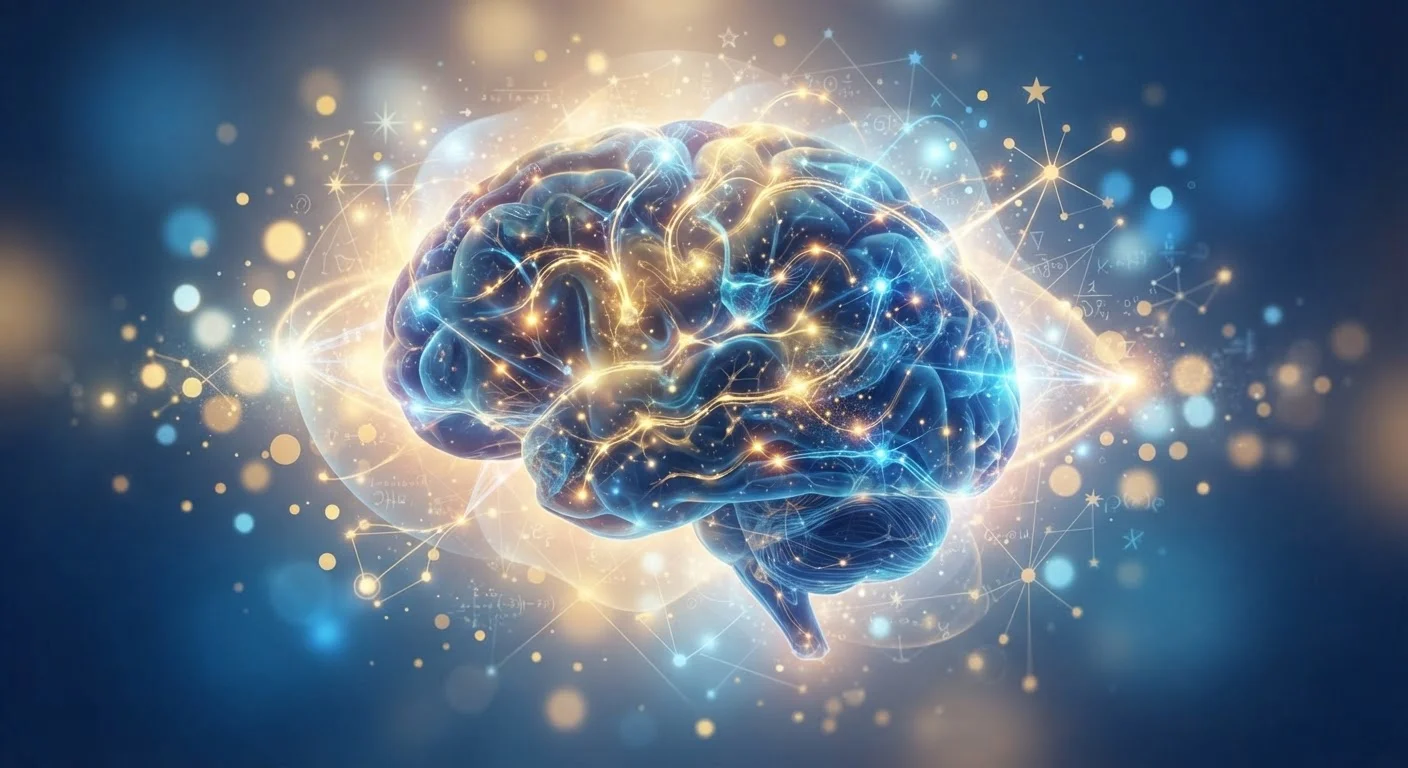
Neuroplasticity refers to the brain's capacity to physically reorganize itself by forming, strengthening, or pruning connections between neurons. Every time you learn something new - a chord on a guitar, a word in another language, a new route home - your brain is making microscopic structural adjustments. Neurons that fire together repeatedly begin to wire together more efficiently. This is sometimes summarized as Hebb's rule, named after psychologist Donald Hebb.
What neuroplasticity does not mean is that the brain changes effortlessly or without limits. Significant neural change requires sustained, effortful practice. It is also worth distinguishing neuroplasticity from neurogenesis - the growth of entirely new neurons - which is a far more limited and debated process in adult humans, primarily associated with a region called the hippocampus.
Neuroplasticity Is Not the Same for Every Brain
Individual differences in genetics, age, health conditions, and prior learning history all affect how readily and extensively neural changes occur. The research establishes that change is possible across the lifespan - not that the rate or degree of change is identical for everyone. Be cautious of claims that specific products or techniques can reliably 'boost' neuroplasticity.
Why This Matters for Learning as an Adult
For decades, a popular assumption held that the brain was mostly fixed after early childhood. Research over the past several decades has substantially revised that view. Adults demonstrably retain the capacity for meaningful neural change, though the mechanisms and pace differ from those seen in young children.
This has real implications for skill-building. Whether you are learning to code, developing public speaking skills, or trying to shift a long-standing habit, the brain's plasticity means these goals are biologically achievable - provided you engage in the kind of practice that actually drives change.
25%
Brain volume dedicated to motor cortex in expert musicians
Research has found measurable differences in motor cortex representation between trained musicians and non-musicians, illustrating how sustained practice physically shapes brain structure.
66 days
Average time for a new behavior to become automatic
A study published in the European Journal of Social Psychology found that habit formation took an average of 66 days, with a range from 18 to 254 days depending on complexity and consistency.
Deliberate, focused practice matters far more than passive exposure or time spent. Simply reading about a skill or watching others perform it produces far less neural change than actively attempting, failing, and correcting. That is why research-backed learning habits such as spaced repetition and retrieval practice are so closely tied to durable skill acquisition.
The Connection to Habit Formation and Mindset
Habits are, in a biological sense, well-worn neural pathways. When a behavior is repeated consistently - especially when it is rewarded - the neural circuits supporting it become more efficient and automatic. This is why habits feel effortless once established, and why changing an existing habit requires deliberate effort to reroute those same pathways.
This is also where the concept of a growth mindset connects to neuroplasticity. Believing that your abilities can improve is psychologically useful, but the brain science suggests why: effort actually does change your brain's wiring over time. Holding both ideas together - the mindset and the mechanism - can make the process feel more grounded and less like wishful thinking. For a closer look at the evidence behind mindset frameworks, see what the research actually says about growth vs. fixed mindset.
Sleep Is a Learning Tool
Neural consolidation - the process by which new learning becomes stable - happens largely during sleep. Pulling an all-nighter to cram information actually interferes with this process. Prioritizing consistent, quality sleep is one of the most evidence-supported habits you can build to support neuroplasticity.
It is also worth understanding what works against plasticity. Chronic stress, poor sleep, and lack of physical activity all appear to impair the brain's ability to consolidate new learning. These are not minor lifestyle footnotes - they are core inputs to how well your brain adapts.
Putting It Into Practice Without Overhyping It
The most grounded takeaway from neuroplasticity research is straightforward: consistent, effortful practice of a skill - combined with adequate rest and stress management - produces real, measurable change in how your brain works. This is encouraging, but it is not magic.
If you are ready to apply this to structured self-improvement, a logical next step is building a personal learning plan from scratch - a framework for translating the biology of change into a concrete, trackable approach. For a broader view of how these ideas fit together with habit formation, the complete picture on habit formation and mindset change offers a more comprehensive resource.
The science does not promise transformation on a specific schedule. It does, however, support a simple and durable idea: the effort you put into learning is never wasted - it leaves a trace in the brain every time.