
Why Nutrition Basics Matter
Understanding nutrition doesn't require a science degree - but it does require moving past the noise. Diet trends, conflicting headlines, and social media "wellness" content make eating feel far more complicated than it needs to be. The truth is that the fundamentals of good nutrition are relatively stable and well-established.
What you eat consistently influences your energy levels, concentration, mood, and long-term health. That's not a reason for anxiety - it's a reason to feel motivated. Small improvements, applied regularly, add up. This guide walks you through the core principles so you can make more confident, informed choices at every meal. And if you're also wondering where beginners typically stumble, common nutrition mistakes beginners make are worth reviewing alongside this foundation.
This article is for general educational purposes only and is not a substitute for personalised medical or nutritional advice. Consult a qualified healthcare professional for guidance specific to your health situation.
The Core Food Groups Explained
Balanced eating draws from several key food groups, each contributing something your body needs:
Macronutrients
The three main nutrients your body needs in larger amounts: carbohydrates, proteins, and fats. Each provides energy and plays distinct roles in bodily functions.
Micronutrients
Vitamins and minerals needed in smaller quantities that support processes like immunity, bone health, and metabolism. They're found across a wide variety of whole foods.
Dietary fibre
A type of carbohydrate found in plant foods that the body cannot fully digest. It supports digestive health, helps maintain steady blood sugar levels, and promotes a sense of fullness.
Satiety
The feeling of being comfortably full and satisfied after eating. Eating slowly and choosing fibre- and protein-rich foods can help you recognise this signal more reliably.
Whole grains
Grains that retain their bran, germ, and endosperm layers - such as oats, brown rice, and whole wheat - providing more fibre and nutrients than their refined counterparts.
Antioxidants
Compounds found in many fruits, vegetables, and other plant foods that help protect cells from damage caused by unstable molecules called free radicals.
- Vegetables and fruit: Rich in vitamins, minerals, fibre, and antioxidants. Aim for variety and colour - different hues generally signal different beneficial compounds.
- Whole grains: Oats, brown rice, quinoa, and whole-wheat products provide sustained energy and dietary fibre. Unlike refined grains, they retain their outer bran and germ layers.
- Protein sources: Lean meats, poultry, fish, eggs, legumes, tofu, and dairy all contribute amino acids essential for tissue repair and immune function. For a deeper look, see this overview of plant-based versus animal protein.
- Healthy fats: Found in nuts, seeds, avocado, and oils like olive oil, these support brain function and help absorb fat-soluble vitamins.
No single food group should be routinely eliminated without a specific medical reason. Variety across all groups supports a broader range of nutrients.
Building Your Plate: Proportions That Work
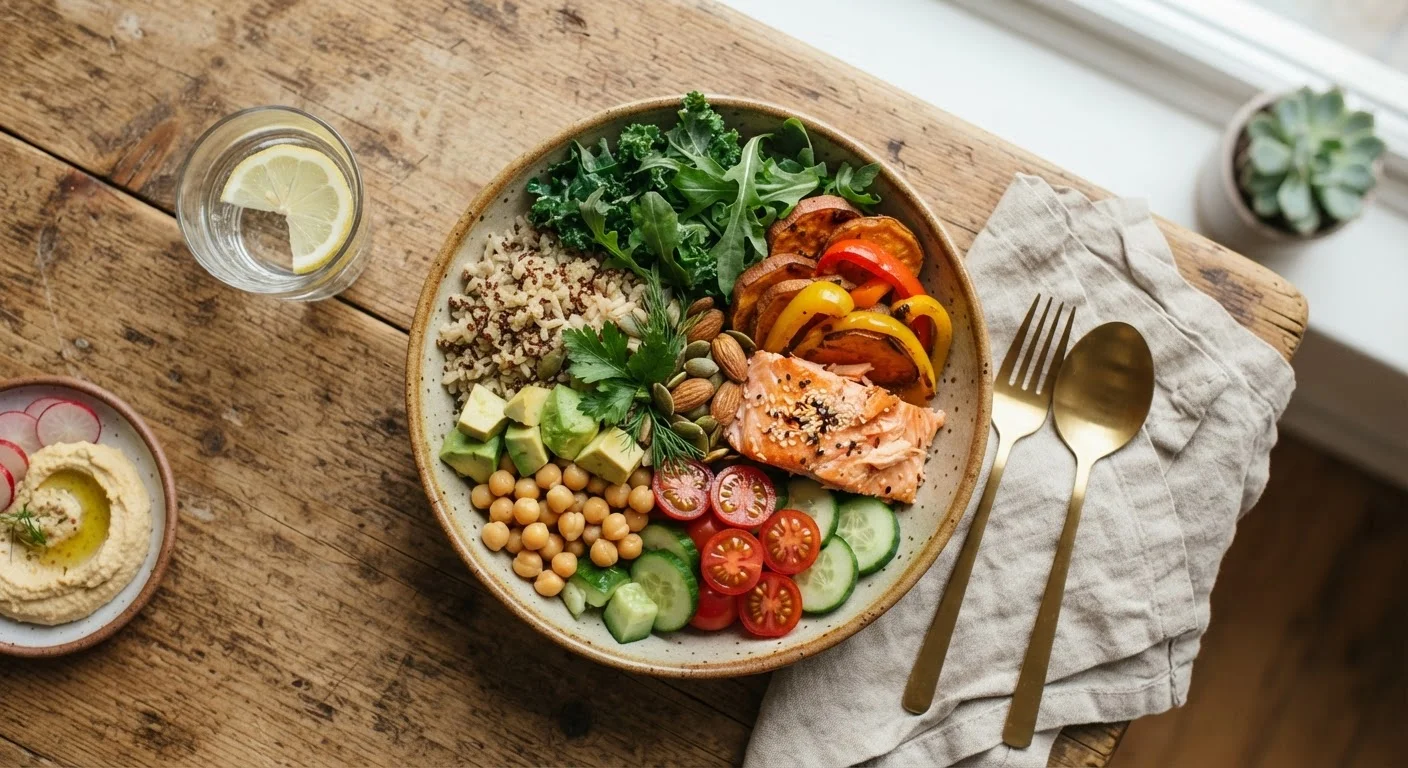
One accessible framework used in nutritional education is a simple plate model: divide your plate visually rather than weighing ingredients. Fill approximately half with non-starchy vegetables (and some fruit), one quarter with whole grains or starchy vegetables, and one quarter with a protein source. A small serving of healthy fat completes the picture.
This approach is flexible enough for most eating styles - including vegetarian and vegan patterns - and doesn't require calorie tracking. It also translates easily to restaurant meals and takeout, where you can mentally adjust portions on the fly.
Use Your Hand as a Portion Guide
You don't need a kitchen scale to estimate portions. A cupped hand approximates a serving of grains or legumes, a palm-sized portion works for protein, and a fist is a reasonable vegetable reference. These are rough guides, not precise measures - the goal is awareness, not perfection.
When you're ready to take your planning further, knowing what to look for before you shop can make the plate model much easier to put into practice consistently.
Listening to Your Body's Hunger Cues
Hunger and fullness are physical signals - not moral judgments. Hunger cues include a growling stomach, low energy, or difficulty concentrating. Fullness cues include a sense of physical satisfaction and reduced interest in food. Learning to recognise both is a practical skill that supports sustainable eating habits.
Eating slowly and minimising distractions during meals gives your body time to register satiety (the feeling of being comfortably full), which typically occurs around 15-20 minutes after eating begins. This isn't a strict rule, but a useful observation supported by research on eating behaviour.
Emotional eating - turning to food in response to stress, boredom, or anxiety - is common and not something to feel shame about. Recognising the pattern is the first step toward addressing it, ideally with professional support if it's causing distress.
Simple Habits to Start Today
Improving nutrition doesn't require a complete lifestyle overhaul. A few consistent habits create meaningful change over time:
- Add before you subtract: Focus on including more vegetables, whole grains, and protein rather than obsessing over what to cut out.
- Learn to read labels: Understanding what's in packaged food takes practice. Reading a nutrition label without getting lost is a practical next step.
- Plan ahead when possible: Having ingredients available makes balanced choices easier, especially on busy days.
- Stay hydrated: Water supports digestion, concentration, and energy. Thirst is sometimes confused with hunger.
- Cook more at home: Home cooking gives you control over ingredients and portions. If your kitchen setup feels like a barrier, setting up a functional kitchen from scratch can remove that hurdle.
If cost is a concern, good nutrition doesn't have to be expensive. Eating well on a budget explores realistic habits that work without a dietitian or a premium grocery bill.