The Three Core Components and What They Each Do
Your braking system is a team effort between three main parts. Understanding each one individually makes it much easier to recognize problems and have informed conversations with a mechanic.
Brake Pads
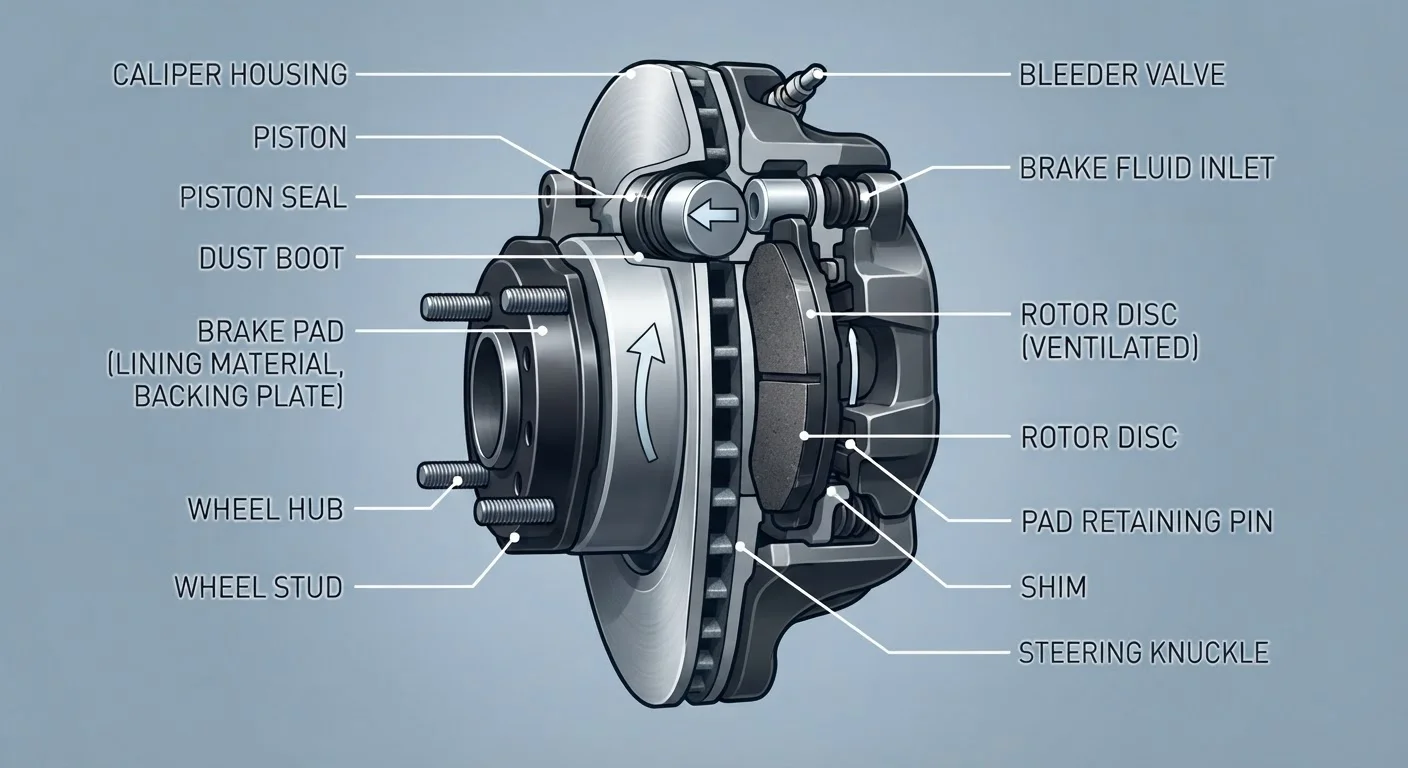
Brake pads are flat, friction-material blocks that press against the rotor to slow its spin. They're consumable - meaning they wear down over time and must be replaced periodically. Most pads are made from one of three materials: organic (quieter, less durable), semi-metallic (common, good performance), or ceramic (quieter, longer-lasting, typically higher cost). Each pad has a wear indicator - a small metal tab that creates a squealing sound when the pad material gets too thin, signaling it's time for inspection.
Rotors
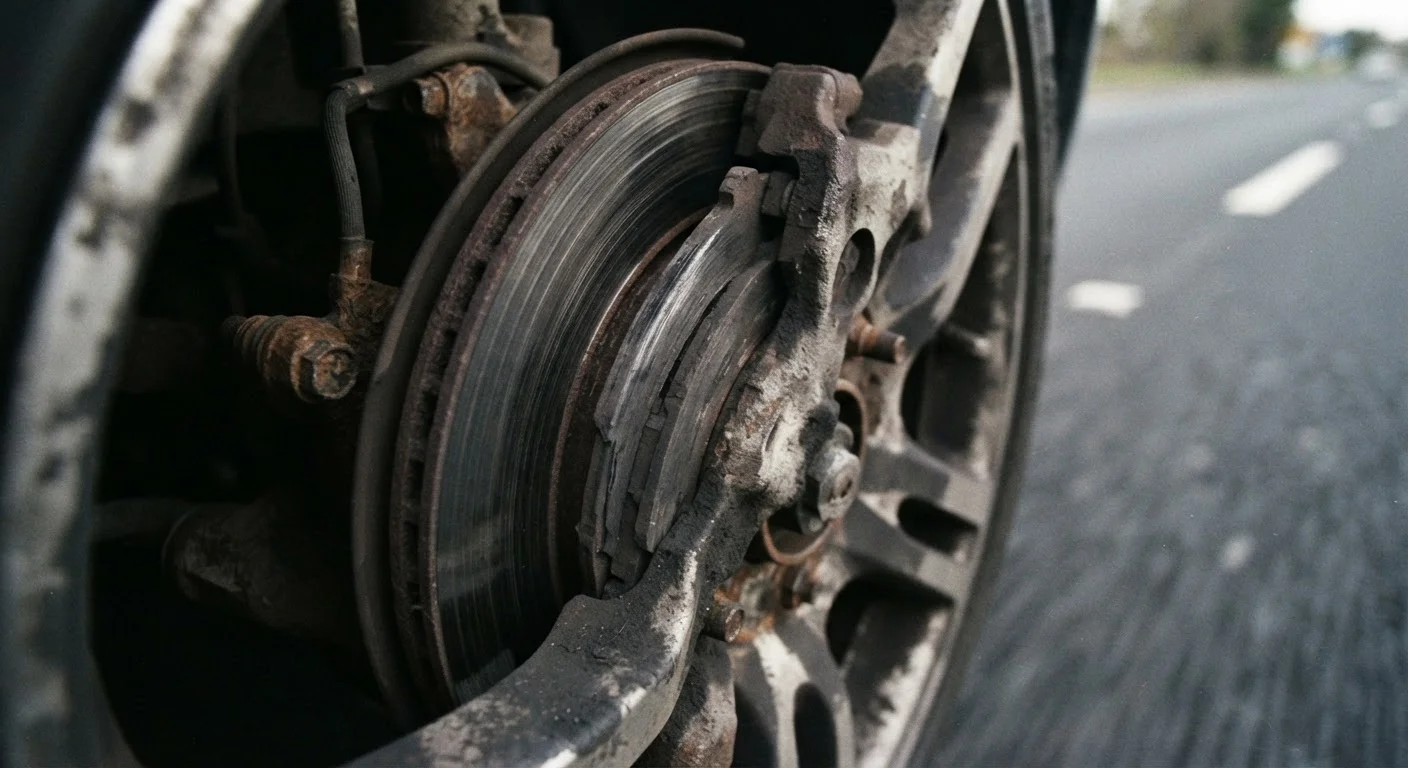
The rotor (also called a brake disc) is the large metal disc mounted to the wheel hub that spins with the wheel. When you brake, the pads clamp against both sides of the rotor's flat face. Over time, rotors develop surface grooves from pad contact and can warp from repeated heat cycles. A rotor that's too thin or badly grooved reduces braking effectiveness and must be resurfaced or replaced.
Calipers
The caliper is the hydraulic clamp that straddles the rotor and squeezes the brake pads against it when you press the pedal. Inside the caliper are pistons driven by brake fluid pressure. Calipers rarely fail as often as pads or rotors, but a seized caliper - one that doesn't release fully - can cause uneven pad wear, pulling to one side, or a burning smell after driving.
Front vs. Rear Brakes: Not Equal Wear
In most front-wheel-drive and all-wheel-drive vehicles, the front brakes handle a larger share of stopping force - sometimes up to 70% - because weight shifts forward under braking. This means front brake pads typically wear out faster than rear pads. It's normal to replace front pads more frequently, and a good mechanic will check all four corners during any brake service.
How the System Works When You Press the Pedal
Braking is a hydraulic chain reaction. When your foot pushes the brake pedal, it compresses fluid in the master cylinder - the central hub of your brake hydraulic system. That pressure travels through brake lines to each wheel's caliper, pushing the pistons outward. The pistons force the brake pads against the spinning rotor, and friction converts the vehicle's kinetic energy (motion) into heat, slowing the car.
This is why brake fluid matters so much. If the fluid level is low, or if the fluid has absorbed moisture over time (which it does naturally), the hydraulic pressure weakens - and so does your stopping power. Most manufacturers recommend flushing brake fluid every two to three years as a precaution.
It's also worth understanding that stopping distance isn't solely determined by your brakes. Tyre grip, road surface, and your reaction time all play a role - as explained in our article on what really affects stopping distance.
Practice Anticipatory Braking to Extend Pad Life
Instead of braking hard at the last moment, ease off the accelerator well ahead of a stop and allow the car to decelerate gradually before applying the brakes gently. This reduces the heat and friction each braking event generates, significantly extending the life of your pads and rotors over thousands of miles of driving.
Warning Signs and When to Act
Brakes rarely fail without warning. Here are the signals to watch for, ranked roughly from early-stage to urgent:
- Squealing when braking: Usually the wear indicator doing its job - schedule an inspection soon.
- Grinding or metal-on-metal sound: Pad material is gone; rotor damage is likely occurring. Act promptly.
- Vibration through the pedal or steering wheel: Often indicates warped rotors.
- Pulling to one side when braking: May point to a seized caliper or uneven pad wear.
- Soft or spongy pedal feel: Suggests air in the brake lines or fluid issues - have this checked immediately.
- Longer stopping distances: Any noticeable increase in how far it takes to stop warrants professional inspection.
Aggressive driving habits like hard, frequent braking accelerate wear considerably. Smooth, anticipatory stops - letting off the accelerator early and braking gradually - are genuinely one of the most effective ways to extend the life of your pads and rotors.
For a broader look at how your maintenance habits affect overall vehicle longevity, the Car Maintenance Decoded guide is a useful starting point for new owners.
This article provides general educational information about vehicle braking systems. For any brake inspection, repair, or safety-related concern, consult a qualified, licensed mechanic. Do not delay professional evaluation if you notice changes in your vehicle's braking performance.