The Two-Part Equation Most Drivers Overlook
Most new drivers hear that speed increases stopping distance - and that's true. But speed is only one variable in a more complex equation. Stopping distance is actually the sum of two separate distances: reaction distance and braking distance.
Reaction distance is covered while your brain detects a hazard, decides to brake, and moves your foot to the pedal. At 60 mph, an alert driver traveling for just 1.5 seconds covers roughly 132 feet before the brakes engage at all. Braking distance then adds more feet on top of that before the car reaches a standstill.
Understanding both phases helps you see why telling yourself "I'll just brake harder" is not a complete safety strategy. If the tyres, road surface, or your alertness level aren't up to the task, harder braking won't save the distance you hope it will. See our key stopping-distance figures every driver should know for the reference numbers behind these concepts.
What Tyre Condition Actually Does to Your Braking
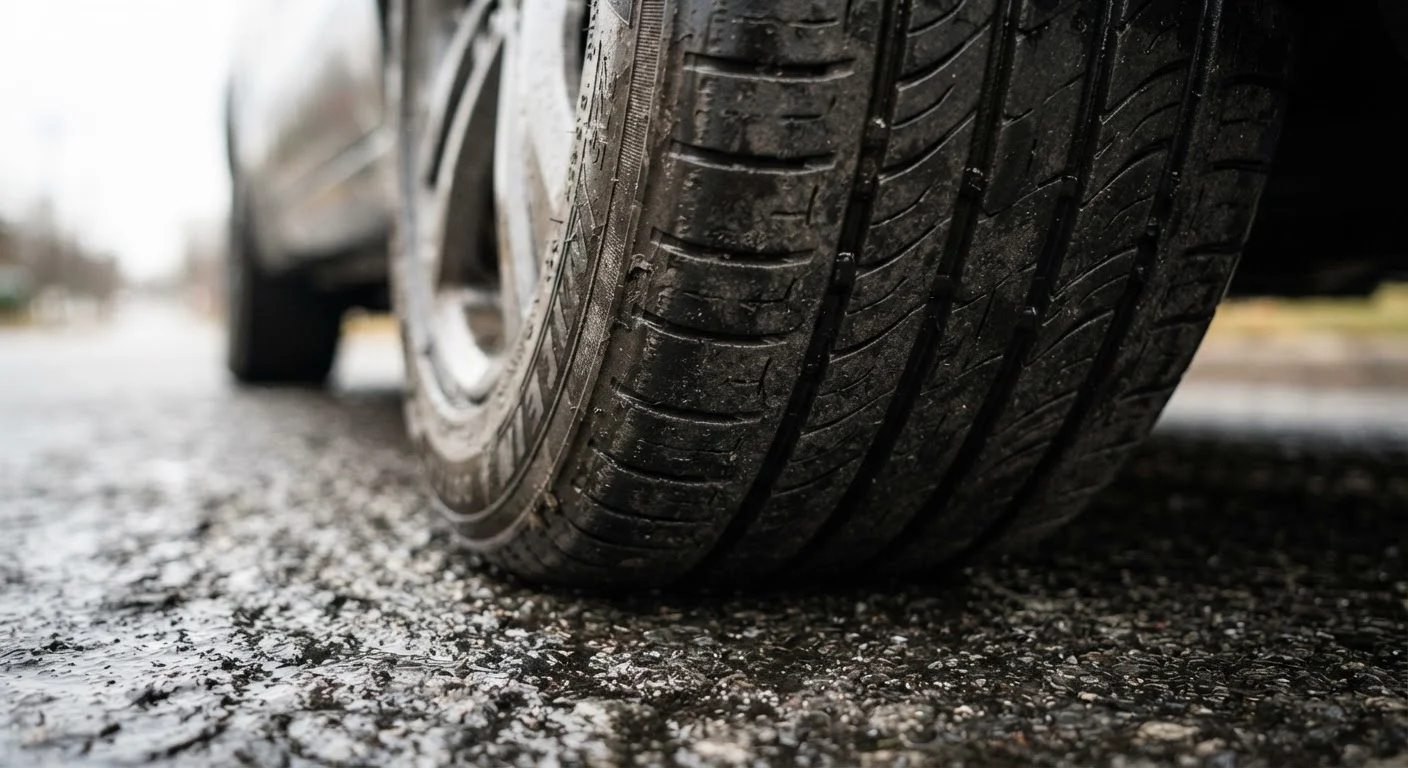
Your car stops because the tyres grip the road. That grip depends on the tyre's rubber compound, inflation pressure, and - critically - tread depth. Tyre tread channels water away from the contact patch between the rubber and the road surface. When tread wears down, that channel gets shallower and less effective.
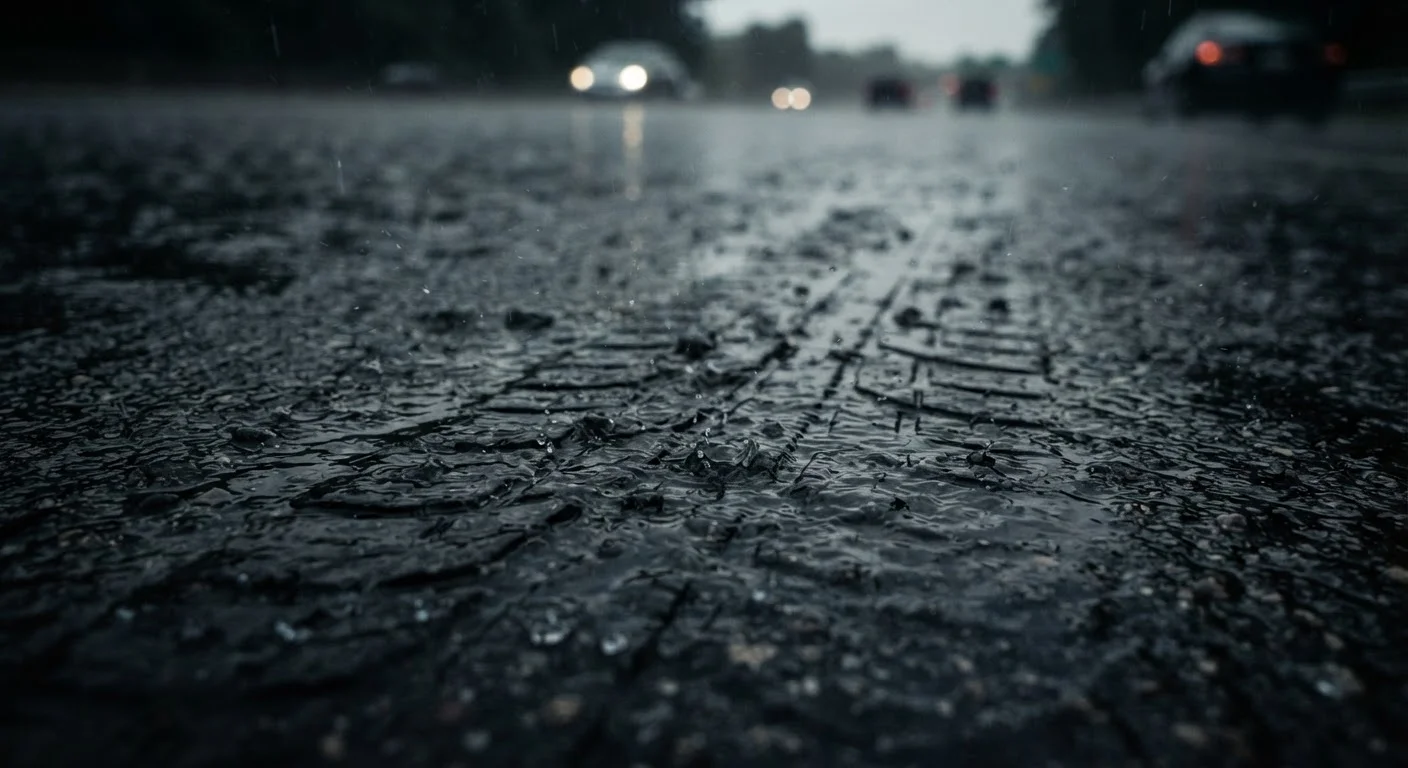
On a dry road, worn tyres can still provide adequate grip at moderate speeds. On a wet road, the risk escalates rapidly. Water that can't be displaced sits between the tyre and the road, reducing friction. In extreme cases, the tyre can ride on a thin film of water rather than the road surface - a condition called aquaplaning (sometimes called hydroplaning). When aquaplaning occurs, steering and braking become largely ineffective until the tyre regains road contact.
Check Tyre Pressure Monthly
Use a simple tyre pressure gauge to verify your tyres are inflated to the manufacturer's recommended level, found on the sticker inside the driver's door jamb. Correct pressure keeps the full contact patch on the road and helps maintain predictable braking performance. This takes about two minutes and costs nothing.
Tyre pressure matters too. An underinflated tyre deforms unevenly under load, reducing the effective contact patch and potentially extending braking distance. A quick monthly pressure check is one of the simplest habits that pays off in safety. For a broader look at tyre misconceptions, our article on common tyre myths covers what many drivers get wrong.
Road Surface and Weather: Factors Outside Your Control
The road surface itself plays a major role in how quickly friction can slow a vehicle. Dry, clean asphalt offers the highest friction. Each of the following conditions reduces that friction and extends braking distance:
- Wet asphalt - can roughly double stopping distance compared to dry conditions.
- Loose gravel or sand - tyres cannot grip individual particles as effectively as a solid surface.
- Ice or packed snow - friction is dramatically reduced; stopping distances can be four times longer or more than on dry pavement.
- Painted road markings or metal surfaces - manhole covers, bridge expansion joints, and road paint become especially slippery when wet.
Weather compounds the problem. Rain reduces visibility (affecting reaction time) while simultaneously reducing traction (extending braking distance). Fog and glare do the same to perception. Because you cannot control the road or weather, the only lever available is your following distance and speed - giving yourself more room is the most reliable buffer. Our guide to defensive driving mental habits explains how experienced drivers factor these conditions into their thinking before a hazard appears.
~2x
Stopping distance increase on wet roads
Wet pavement roughly doubles stopping distance compared to dry asphalt, according to established road safety principles used in driver education programs.
132 ft
Distance covered at 60 mph in 1.5 seconds
This represents the reaction distance alone - the car's travel before the brakes even begin to engage - for an alert, unimpaired driver.
4x+
Stopping distance increase on ice vs. dry road
Ice can reduce tyre-road friction so severely that stopping distances exceed four times those on dry pavement, a figure commonly cited in winter driving safety literature.
Reaction Time: The Factor That Lives in Your Head
Braking distance gets most of the attention, but reaction distance is where many real-world incidents begin. An average, alert driver has a reaction time somewhere around 1.5 seconds. That sounds short, but distance adds up quickly:
| Speed | Distance covered in 1.5 seconds |
|---|---|
| 30 mph | ~66 feet |
| 45 mph | ~99 feet |
| 60 mph | ~132 feet |
Fatigue, distraction, and alcohol or medication impairment all lengthen reaction time. A tired driver may have a reaction time of 2.5 seconds or more - adding 50 to 100 extra feet before the brakes engage at highway speeds. That is the length of a typical house, covered before any braking force is applied.
Phone use is particularly significant. Cognitive distraction - even using a hands-free device - has been shown in research to slow hazard recognition, not just manual reaction. Keeping your phone out of the decision loop while driving is one of the most direct ways to protect your reaction distance. For more on how driving behavior affects your vehicle over time, see our article on the hidden costs of aggressive driving.
Vehicle Condition: Brakes, Load, and Maintenance
The mechanical condition of your vehicle sets the ceiling on how quickly your car can stop, regardless of how well you drive. Two areas deserve particular attention:
Brake system health: Worn brake pads have less friction material to grip the rotors. Warped rotors create uneven contact. Low or degraded brake fluid reduces hydraulic pressure in the system. Any of these can extend braking distance measurably. If your brakes feel spongy, take longer to slow you down, or produce grinding noises, have them inspected by a qualified mechanic. Our explainer on how your car's braking system works covers the components involved.
Vehicle load: A heavier vehicle requires more force to decelerate. Carrying extra cargo or passengers increases the load your brakes and tyres must manage. Towing a trailer compounds this further, which is why towing speed limits and following distance recommendations differ from normal driving.
Anti-Lock Brakes Help, But Aren't Magic
Anti-lock braking systems (ABS) prevent the wheels from locking up during hard braking, helping the driver maintain steering control. However, ABS does not shorten stopping distance on all surfaces - on loose gravel or deep snow, a locked wheel may actually stop the vehicle in a shorter distance than ABS allows. Understanding what your safety systems do and do not do helps you drive with realistic expectations.
This article is for general informational and educational purposes. Always follow applicable traffic laws and consult a qualified mechanic for any concerns about your vehicle's braking system or tyre condition.