
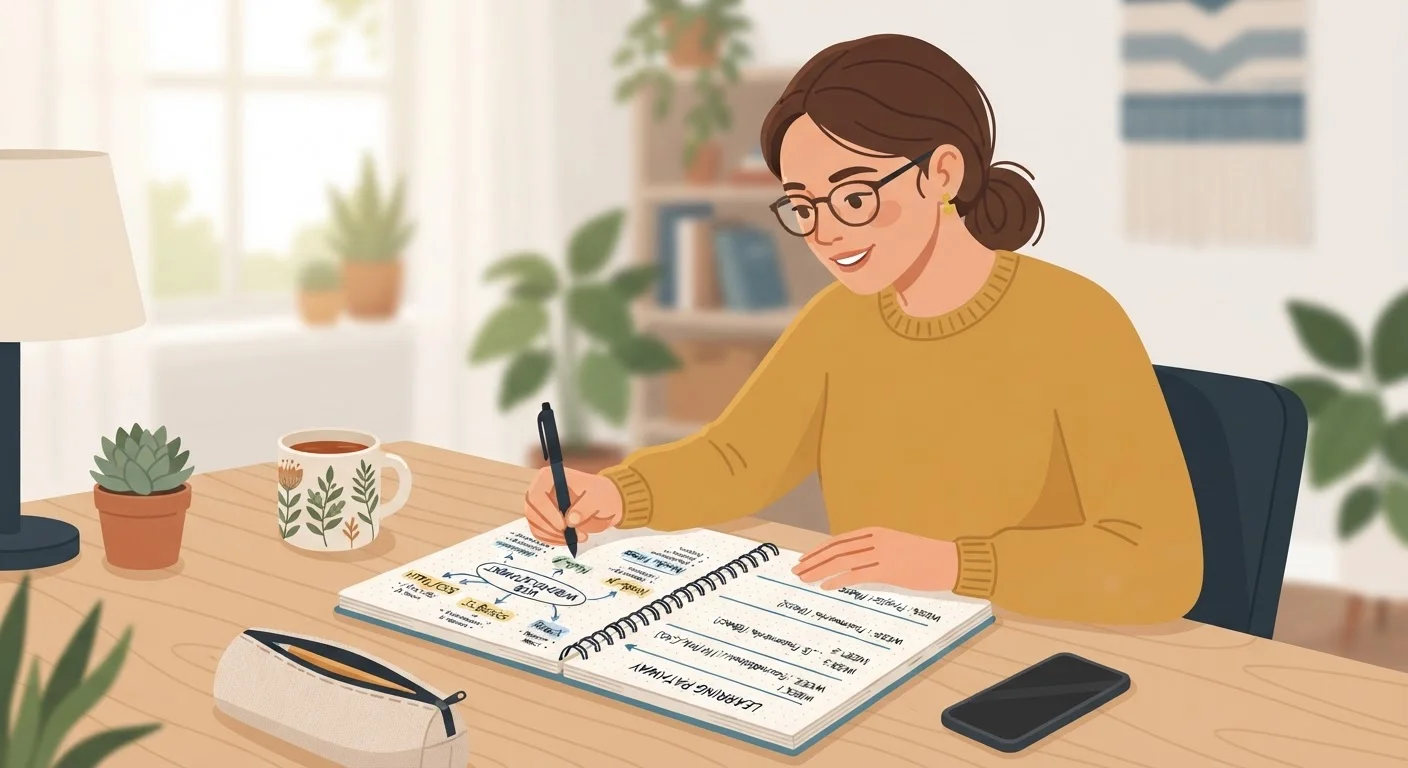
Why Most Self-Taught Efforts Stall - and What Changes That
Self-directed learning offers genuine flexibility, but flexibility without structure often leads to what researchers describe as learning drift - you consume content, feel busy, but never build usable skill. The missing element is almost always a plan: a document that names the destination, maps the route, and creates checkpoints along the way.
A personal learning plan doesn't replace motivation - it makes motivation less necessary by reducing daily decisions. When you open your notes on a Tuesday evening, you don't have to decide what to study, which resource to use, or whether you're making progress. Those decisions were made once, up front, so your limited energy goes toward learning rather than planning.
This approach is especially valuable for beginners, who tend to underestimate scope and overestimate their initial pace. A written plan surfaces those miscalibrations early - when they're easy to correct - rather than after weeks of wasted effort. For a broader view of what self-directed learning involves from start to finish, see Self-Directed Learning: A Full Roadmap from Curiosity to Competence.
Vague Goals Kill Learning Plans
The single most common reason personal learning plans fail is an undefined goal. "Get better at design" gives you nothing to measure or schedule. Before writing a single milestone, you must be able to complete this sentence: 'In [X weeks], I will be able to [specific, observable skill].' Every other element of your plan depends on this clarity.
What You'll Need Before You Start
Building a useful learning plan takes under an hour if you come prepared. You don't need specialized tools - the basics are enough to get started effectively.
What you will need
If you want to pressure-test your readiness before committing, Before You Start a New Course: A Readiness Checklist walks through the key questions to answer first.
Notebook or Digital Document
Captures your goal statement, milestones, and weekly schedule in one place you can revisit easily.
Calendar or Scheduling App
Blocks dedicated learning time each week so sessions happen consistently rather than when convenient.
Progress Tracker (spreadsheet or habit app)
Records completed sessions and milestone checkpoints to make your progress visible and motivating.
Accountability Partner
A peer or mentor who checks in on your progress and helps you troubleshoot when momentum drops.
The Seven Steps to Build Your Plan
Follow these steps in order. Each one builds on the previous - skipping ahead typically produces a plan that looks complete but falls apart in practice.
Define a specific, observable learning goal
Start by narrowing your interest into a goal you can actually measure. Broad interests like "learn coding" or "improve communication" are starting points, not goals. Push further by asking: What will I be able to do when I'm done? A workable goal sounds like: "Write a basic Python script that pulls data from a spreadsheet" or "Deliver a five-minute presentation without reading from notes."
Keep the scope realistic for three to six months of part-time effort. If the skill connects to career direction, the Starter Framework for Ambitious Beginners can help you align learning goals with longer-term plans.
Audit what you already know
Before building forward, map where you currently stand. List what you already understand about the subject, what you've tried before, and where you consistently get stuck. This prevents you from wasting time re-covering familiar ground and identifies the genuine starting point for your plan.
A simple method: write down five things you know confidently, five things you're fuzzy on, and five things you don't understand at all. This three-column audit doubles as an early milestone map.
Break the goal into three to five milestones
Milestones are intermediate checkpoints that prove you're advancing - not just activities you're completing. Each milestone should describe a capability, not a task. Instead of "finish Chapter 4," write "explain the difference between X and Y in plain language."
Space milestones roughly two to four weeks apart. This interval is short enough to maintain momentum and long enough to develop genuine depth. If your goal spans several months, consider how it connects to larger plans - Turning a Five-Year Career Plan into Monthly Action Items walks through this kind of breakdown in a career context.
Choose your primary learning format
Your plan needs a core resource or method - the thing you return to most often. This might be a structured textbook, a curated playlist of videos, a hands-on project, or a combination. The right format depends on how you retain information best and what the subject demands.
If you're undecided, Online Courses vs. Structured Textbooks: Choosing Your Learning Format offers a practical comparison. For subjects where practice matters more than content consumption, Passion Projects vs. Structured Curricula examines when self-directed projects outperform formal sequencing.
Schedule learning sessions and set a weekly target
Decide how many hours per week you will dedicate and block those times in your calendar as non-negotiable commitments. Research on habit formation consistently supports shorter, more frequent sessions over infrequent marathon sittings. Three 30-minute sessions often produce better retention than one 90-minute block.
If your schedule is unpredictable, Microlearning Explained: Small Sessions, Real Progress describes a format designed specifically for learners with fragmented time.
Build in a feedback mechanism
Learning without feedback is guesswork. Build at least one feedback loop into each milestone: a practice project someone can review, a self-assessment quiz, or a conversation with someone more experienced. Even writing an explanation of what you just learned - without looking at your notes - is a proven recall technique.
If you want external feedback, Finding a Mentor When You're Starting from Zero offers a realistic approach to locating and approaching someone with relevant experience.
Review and revise your plan weekly
Set aside 10 minutes at the end of each week to assess what happened: Did you complete your planned sessions? Did you hit friction - a concept that confused you, a resource that wasn't clicking? Adjust next week's sessions accordingly. A plan that gets revised regularly is far more likely to succeed than one set in stone at the start.
[tip_callout]
Keeping the Plan Working Over Time
A personal learning plan is a living document, not a contract. The goal is not to follow it perfectly - it's to keep it useful. Plans that feel rigid get abandoned; plans that feel responsive get followed.
The most common adjustment point is scope: beginners routinely underestimate how long foundational concepts take to internalize. If you reach your first milestone review and realize you need more time, that's not failure - it's the plan working correctly. Revise the timeline, keep the goal intact.
As your skills develop, your plan will naturally shift from structured input (reading, watching, following tutorials) toward applied output (building, creating, producing). That shift is a sign of real progress. If you're thinking about how skill development connects to career advancement, the Career & Goals hub offers frameworks specifically designed for that transition.
Don't Over-Engineer Your First Plan
Beginners often spend more time designing their plan than actually learning. Limit your initial setup to 30-45 minutes. An imperfect plan you start today outperforms a perfect plan you never finish building. You can refine as you go - and you should.