
When Freedom Becomes a Trap
Self-directed learning is genuinely powerful. You set the pace, choose the topics, and follow your curiosity. But that same freedom, without any guardrails, can quietly work against you. Hours accumulate, resources multiply, and yet tangible skills stay frustratingly out of reach.
The problem isn't effort - most self-taught learners work hard. The problem is structure, or rather the absence of it. Understanding where unstructured learning breaks down is the first step toward fixing it. If you've ever wondered why you hit a wall despite consistent effort, our article on why self-taught learners plateau explores the deeper cognitive and motivational patterns at play.
Consuming content without applying it - watching tutorials or reading chapters without any hands-on practice.
Why it happens: Passive learning feels efficient because you can cover a lot of ground quickly. It also carries less risk of failure than trying something yourself.
Topic-hopping between subjects before reaching any depth in a single area.
Why it happens: Novelty triggers a genuine dopamine response, making new topics feel exciting just as the current one starts to require real effort. Beginners often mistake this feeling for a signal that they've learned enough.
Skipping review and assuming that covering new material builds on what came before.
Why it happens: Most self-learners allocate all their time to new content because progress feels visible there. Review sessions feel redundant until forgetting becomes obvious.
Setting vague goals like 'learn coding' or 'get better at writing' with no measurable endpoint.
Why it happens: Broad goals feel motivating at the start because they leave room for exploration. The cost only becomes clear weeks later when there's no way to measure progress or know when to move forward.
Avoiding feedback by learning entirely in isolation, with no external check on understanding.
Why it happens: Sharing work-in-progress feels vulnerable, especially for beginners. It's easier to keep learning privately than to risk judgment on something unfinished.
How to Build Guardrails Without Losing Flexibility
Adding structure to your learning doesn't mean replicating a rigid classroom schedule. It means introducing just enough scaffolding to keep your effort directed. A few practical adjustments can eliminate most of the hidden costs described above.
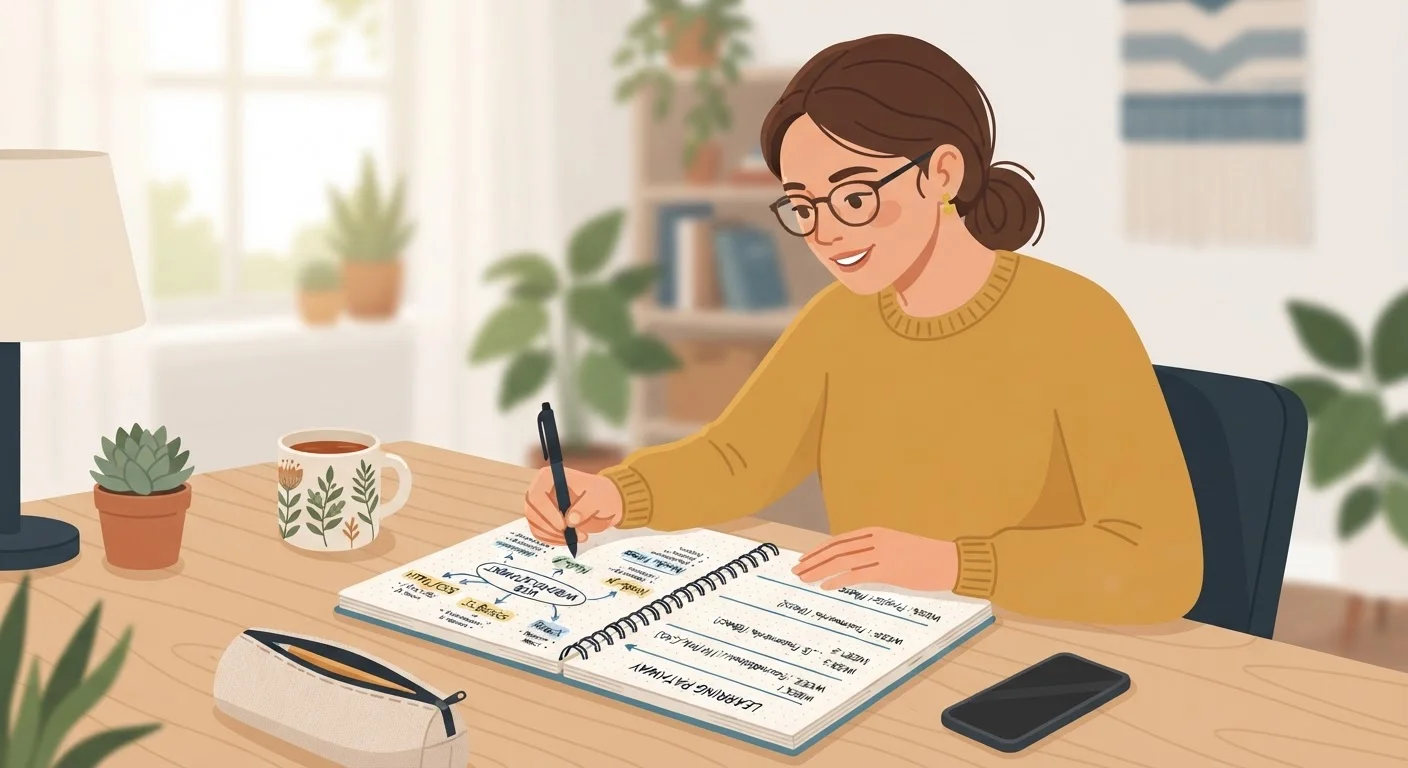
Start with a written learning plan. Define what skill you want to build, why it matters, and what a realistic milestone looks like in 30, 60, and 90 days. Our guide to building a personal learning plan from scratch walks through this process step by step without requiring a formal course enrollment.
Commit to one resource at a time. Choose a primary source - a textbook, a course, a project - and finish a defined unit before exploring supplements. Curiosity is an asset, but it needs a container.
Schedule review sessions. Block time each week - even 20 minutes - specifically for revisiting what you've already covered. Spaced repetition, the practice of reviewing material at increasing intervals, is one of the most well-supported methods in learning science for moving knowledge into long-term memory.
Don't Confuse Familiarity With Mastery
Recognizing a concept when you see it is very different from being able to use it independently. Many self-learners overestimate their skill level because content feels familiar after repeated exposure. Test yourself by trying to apply knowledge without looking at your notes before assuming you've truly learned something.
Track output, not hours. Measure what you can actually do - a project completed, a concept explained in your own words, a problem solved - rather than how long you sat in front of material. For a comprehensive look at the full self-directed learning process, see our full roadmap from curiosity to competence.