The Battery: Your Car's Power Reserve
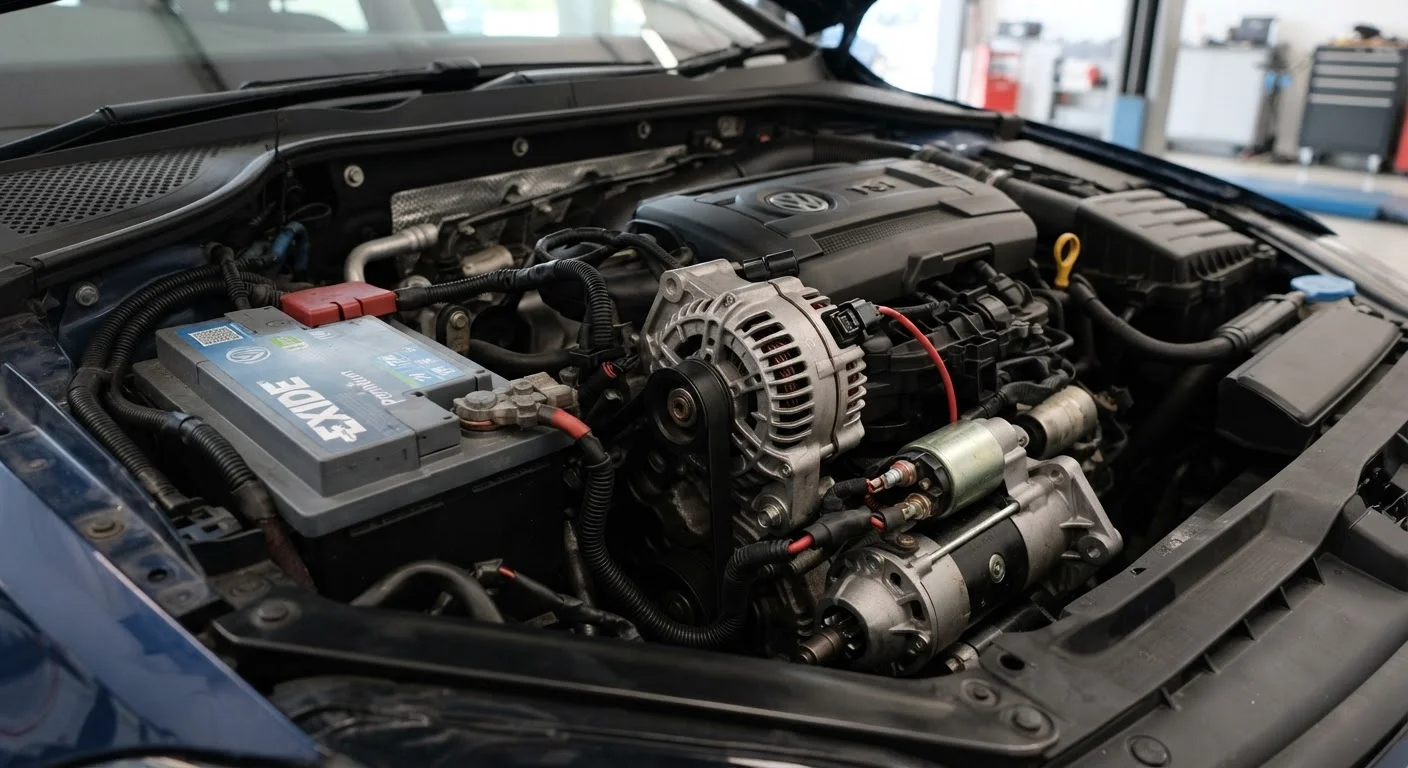
Think of the battery as a rechargeable storage tank for electrical energy. When you turn the ignition key or press the start button, the battery delivers a large burst of electricity to the starter motor - enough to get the engine cranking. It also powers everything else when the engine is off: the interior lights, the clock, and the alarm system.
Car batteries are rated in cold cranking amps (CCA), which measures how much power they can deliver in cold conditions. Cold weather is particularly hard on batteries because chemical reactions inside slow down, reducing available power. A battery that works fine in summer may struggle or fail in January.
Most batteries last three to five years. Warning signs of a weakening battery include:
- Engine cranking slowly or sluggishly when starting
- Headlights that appear dimmer than usual
- A battery warning light on the dashboard
- The car not starting at all after sitting overnight
Many auto parts stores offer free battery testing with a handheld tester - a simple step worth doing before winter every few years.
Test Your Battery Before Winter
Cold weather is the leading trigger for unexpected battery failure. Having your battery tested in the fall - after two or three years of use - gives you a chance to replace a weakening battery on your schedule, not when you're stuck in a parking lot. Many auto parts retailers offer free battery testing without an appointment.
The Alternator: Keeping the Battery Alive While You Drive
A common misconception is that the battery powers the car while it's running. In reality, once the engine starts, the alternator takes over. The alternator is a generator driven by the engine's serpentine belt. It converts mechanical energy from the spinning engine into electrical energy, which it uses to power all the car's electrical systems and simultaneously recharge the battery.
This is why a car can run for a while after a jump-start - the alternator is doing the work. But if the alternator is failing, the battery drains without being replenished, and the car will eventually stall, sometimes within minutes.
3-5 years
Typical car battery lifespan
Most automotive sources and battery manufacturers cite three to five years as the average lifespan, with heat and short trips accelerating degradation.
~40%
Starting system failure causes that are battery-related
Industry estimates consistently identify the battery as the single most common cause of vehicle no-start situations, accounting for a large share of roadside assistance calls.
30-45 min
Typical time to test battery, alternator, and starter
A mechanic with basic diagnostic equipment can generally test all three components in a single short shop visit, making diagnosis relatively inexpensive.
Signs that an alternator may be failing include:
- A battery or ALT warning light on the dashboard
- Lights flickering or electronics behaving erratically while driving
- A burning rubber smell (from a slipping belt driving the alternator)
- The car dying shortly after being jump-started
Alternator replacement involves working around live electrical components and is generally a job for a qualified mechanic. Costs vary widely depending on vehicle make and model, so getting a diagnostic confirmation before replacing parts can prevent unnecessary expense.
The Starter: Turning Potential Into Motion
The starter motor is a small but powerful electric motor with one job: to spin the engine fast enough that it can fire on its own. When you turn the ignition, the battery sends current to the starter, which engages a small gear (called a pinion gear) that meshes with the engine's flywheel and cranks it over. Once the engine starts running, the starter disengages automatically.
Starters are generally reliable, but they do wear out - especially on high-mileage vehicles. The solenoid (a type of electromagnetic switch) inside the starter is often the first part to fail.
Common starter failure symptoms:
- A rapid clicking sound when turning the key (often a solenoid problem)
- A single loud clunk with no engine cranking
- The engine cranking only intermittently
- Grinding noise during starting (worn pinion gear)
It's worth noting that a rapid click is sometimes caused by a dead battery rather than a bad starter. Testing the battery first - before assuming the starter is at fault - can save money on an unnecessary repair.
How the Three Work Together (and How to Diagnose Problems)
Because the battery, alternator, and starter are interdependent, a failure in one can look like a failure in another. Here's a simple mental framework:
- Car won't start, no sounds: Start with the battery. Check for loose or corroded terminals, and have the battery tested.
- Car won't start, rapid clicking: Likely the battery or starter solenoid. A jump-start attempt will help distinguish them - if it starts and runs fine, the battery is probably the culprit.
- Car starts but dies shortly after a jump: The alternator is likely not charging. Do not keep driving; have it inspected.
- Lights and electronics work, but engine won't crank: This pattern points toward the starter motor, as the battery clearly has charge.
A qualified mechanic can test all three components with basic diagnostic tools in a short visit. Diagnosing yourself before going in - even just describing the symptoms accurately - can make that conversation more productive and help avoid being upsold on repairs you may not need. For broader context on knowing when to tackle a problem yourself and when to hand it off, see our guide on DIY versus mechanic decisions.
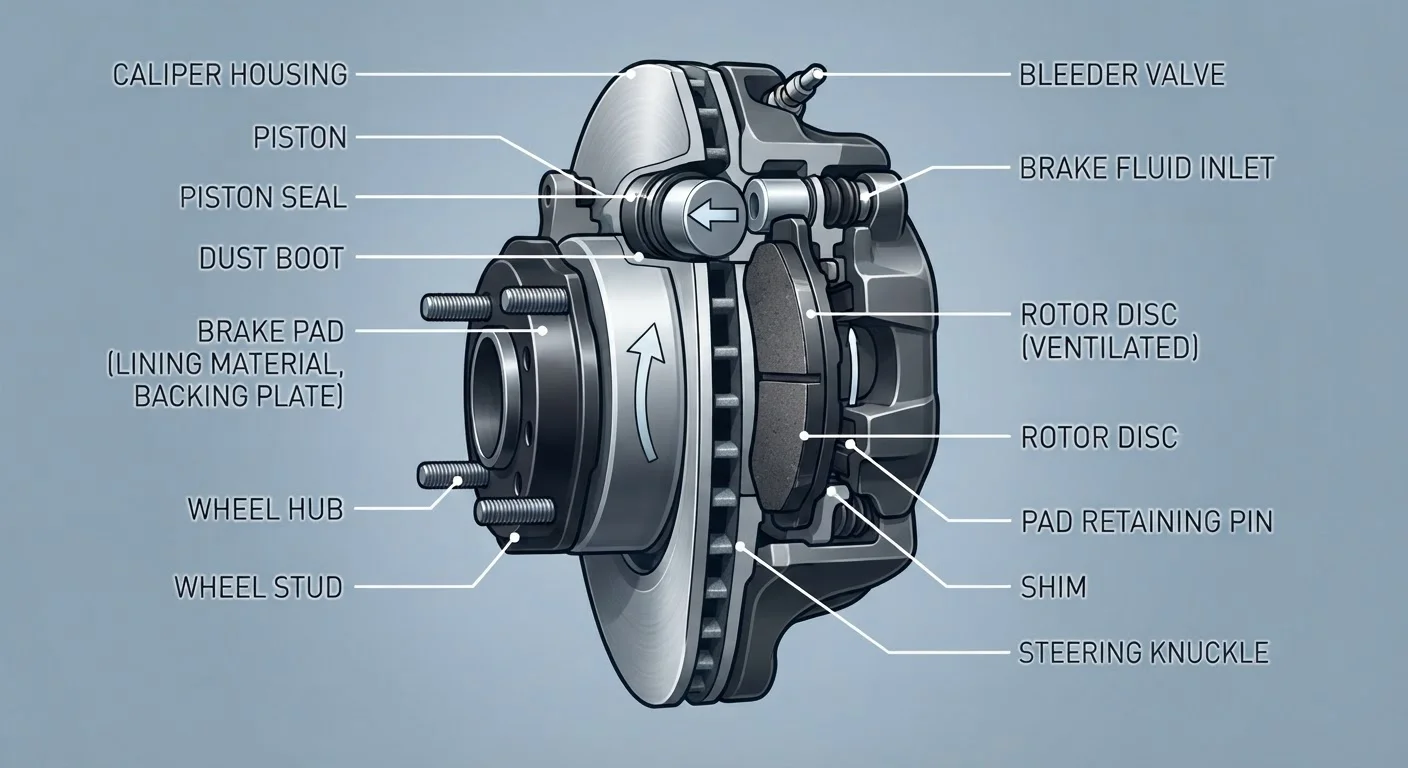
Like the braking system - another group of components that are simpler to understand once you know the parts involved - the starting system rewards basic familiarity. Knowing what each piece does means fewer surprises and better conversations with mechanics. You can build on that same approach by reading about how brake pads, rotors, and calipers work.