
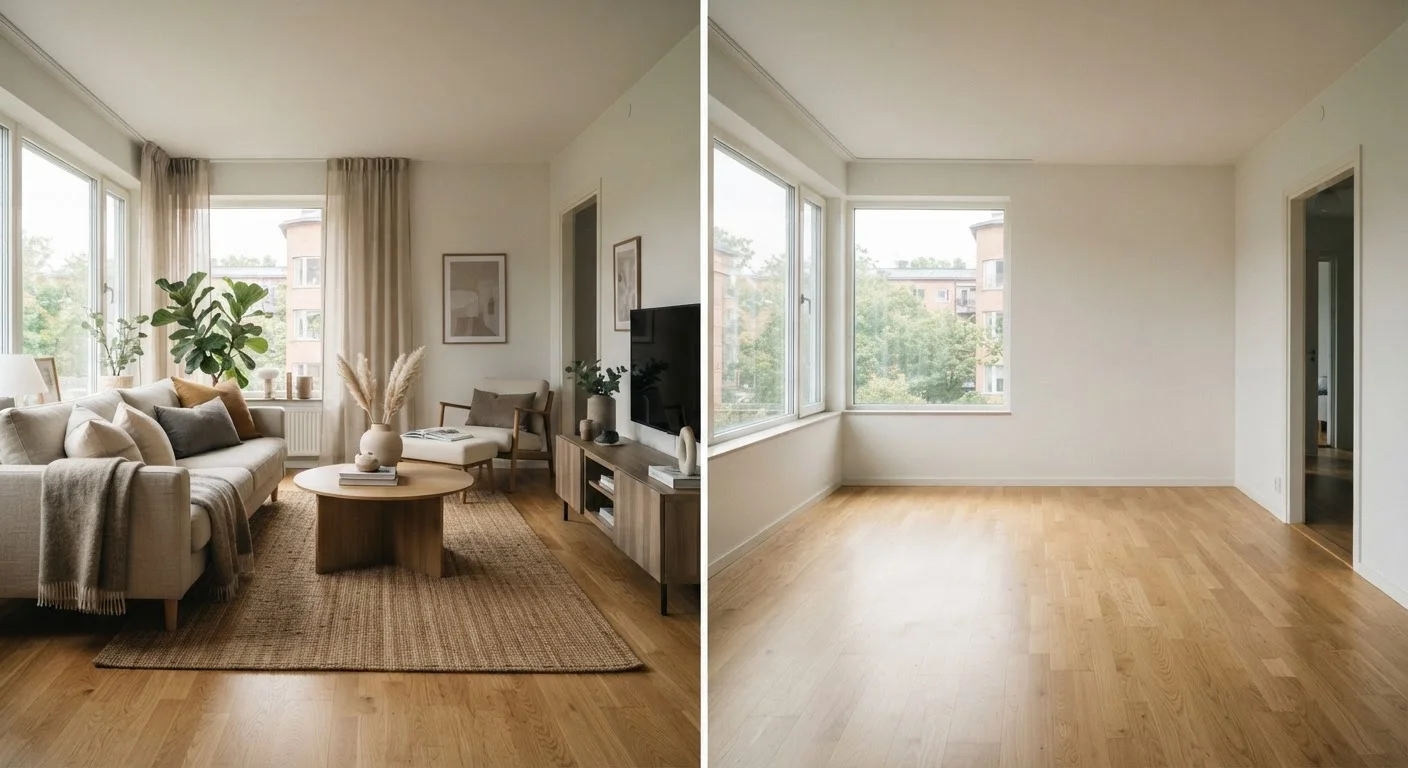
The Real Price Gap Between Furnished and Unfurnished
When you compare two listings side by side, a furnished apartment almost always carries a higher monthly rent - often 15% to 30% more than a comparable unfurnished unit in the same building or neighborhood. But that premium is only part of the picture.
With an unfurnished rental, you're trading a lower monthly payment for a potentially significant upfront cost: buying or acquiring furniture. Outfitting even a modest one-bedroom apartment from scratch - bed frame, mattress, sofa, dining table, and basics - can run anywhere from a few hundred dollars (if you shop secondhand) to several thousand dollars for new pieces.
The math shifts depending on your timeline. If you're signing a 6-month lease, paying extra monthly for a furnished place may actually cost less in total than buying furniture you'll need to move or sell when you leave. Stretch that to 18 or 24 months, and the equation often flips. Hidden costs beyond rent can catch either type of renter off guard, so build a full budget before deciding.
| Furnished Rental | Unfurnished Rental | |
|---|---|---|
| Monthly rent | Typically 15-30% higher | Lower baseline cost |
| Upfront furniture cost | None required | Hundreds to thousands of dollars |
| Lease flexibility | Often shorter terms available | Usually 12-month standard |
| Personalization | Limited - landlord's items | Full control of space |
| Damage liability | Responsible for landlord's furniture | Only responsible for unit itself |
| Best lease length | Under 12 months | 12 months or longer |
What 'Furnished' Actually Means (It Varies)
There's no universal standard for what a furnished rental includes. One landlord's definition might mean a bed and a couch; another's might include full kitchen equipment, linens, and a smart TV. Before you sign, get a written inventory of exactly what's provided.
Common items in furnished rentals include: bed frames and mattresses, sofas, dining tables and chairs, and basic window coverings. Less commonly included: cookware, bedding, small appliances, and workspace furniture. If you assume these are included and they're not, you'll end up spending money anyway - erasing part of the convenience premium you paid.
Always Request a Written Furniture Inventory
Before you move in, ask your landlord for a complete written list of every item included in the rental. Walk through the unit together, note any existing damage, and take dated photos. This protects your security deposit when you move out and eliminates disputes about what was already broken or worn before you arrived.
It's also worth checking the condition and quality of the furniture provided. Worn-out pieces or outdated appliances can affect daily life, and you may have limited ability to replace them. Costly lease assumptions often involve exactly this kind of detail - things that seem obvious until they become a problem.
Flexibility, Liability, and the Long Game
Furnished rentals tend to attract shorter lease terms - sometimes month-to-month or 3-6 month agreements - which suits renters who need flexibility. But that flexibility comes with trade-offs: higher monthly rent, less control over the space, and potential liability for the landlord's furniture.
Damage to furnished items is a real financial risk. If a piece of the landlord's furniture is damaged, the cost can come out of your security deposit - or you may be billed beyond it. Documenting the condition of every item at move-in (photos, written notes) is essential protection.
Unfurnished rentals typically come with standard 12-month leases and give you full control of the space. You can choose furniture that fits your lifestyle, arrange it how you want, and build a home that feels like yours. Over time, the furniture you buy becomes an asset you keep - or sell - when you eventually move. Just factor in moving costs for heavier pieces when your lease ends.
For a broader picture of budgeting across major life expenses, weighing the real trade-offs of renting is worth reviewing before you commit to either path.
Making the Decision Work for Your Situation
The right choice comes down to three practical questions: How long are you staying? What furniture do you already own? And what's your cash position right now?
- Short stay (under 12 months): A furnished rental usually makes sense. The monthly premium is often less than the cost of buying and then selling or moving furniture.
- Longer stay (12+ months): Run the numbers. Multiply the monthly premium by your lease length and compare it to what you'd spend furnishing the place yourself.
- Tight move-in budget: A furnished rental reduces the cash you need upfront, beyond the security deposit. That can matter a lot when you're also covering a moving truck and utility setup fees.
- Already own furniture: Unfurnished almost always makes more sense - you're paying for something you don't need in a furnished unit.
Whichever direction you go, read the lease carefully and understand exactly what you're agreeing to. Understanding the real difference between these arrangements before signing protects you from surprises later.