
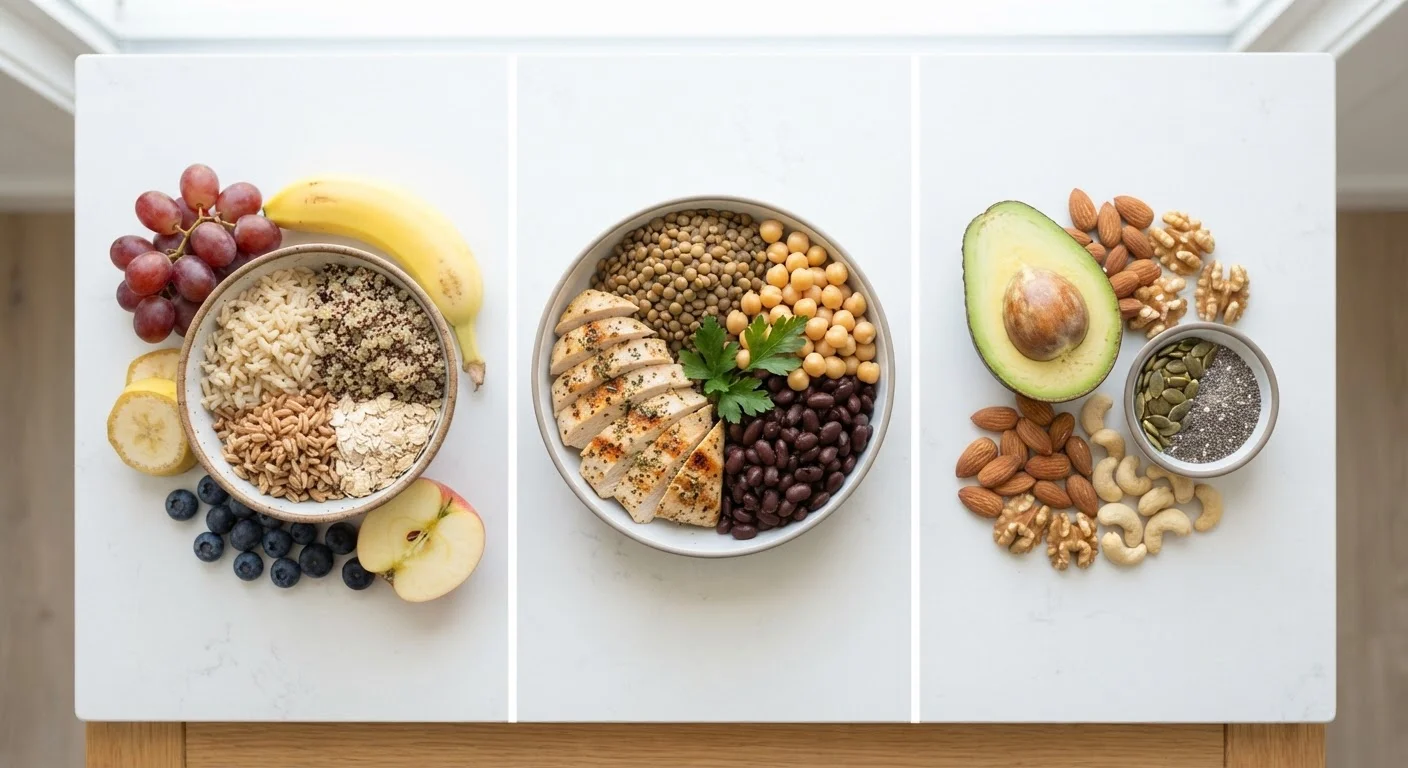
Why Macronutrients Matter
If you've ever felt confused by nutrition advice - eat more protein, cut the carbs, avoid fat - you're not alone. Much of that noise stems from misunderstanding what these nutrients actually do. Macronutrients aren't rivals. They're collaborators, each contributing something the others can't fully replace.
Every time you eat, you're providing your body with raw materials: energy to power your cells, building blocks to repair tissue, and compounds to regulate biological processes. Carbohydrates, protein, and fat divide those responsibilities. Understanding their roles makes it easier to evaluate nutrition claims with a clear head - and harder to be misled by diet trends that demonize one group entirely.
For a broader picture of how nutrition fundamentals connect, see our guide to micronutrients - the vitamins and minerals that work alongside macros to keep your body running.
4 kcal
Energy per gram of carbohydrate or protein
Both carbohydrates and protein provide 4 calories per gram, compared with 9 calories per gram for fat - a standard reference figure used in nutritional science.
~95%
Of Americans fall short of recommended fiber intake
Research published in the American Journal of Lifestyle Medicine estimates that the vast majority of U.S. adults do not meet dietary fiber recommendations, despite fiber being widely available in whole-food carbohydrate sources.
9
Essential amino acids required from diet
Of the 20 amino acids used to build proteins in the human body, 9 are classified as essential because the body cannot synthesize them and must obtain them through food.
Carbohydrates: Your Body's Preferred Fuel
Carbohydrates are broken down into glucose (a simple sugar), which cells - especially brain cells and working muscles - use as their primary energy source. When you eat carbs, your digestive system converts them to glucose, which enters the bloodstream and is either used immediately or stored as glycogen in the liver and muscles for later use.
Not all carbohydrates behave the same way. Simple carbohydrates (found in refined sugars and white flour) digest quickly, causing a faster rise in blood glucose. Complex carbohydrates (found in whole grains, legumes, and vegetables) digest more slowly, providing steadier energy and typically delivering fiber, which supports digestive health and helps you feel full longer.
Fiber - technically a carbohydrate - deserves a special mention. It isn't absorbed as energy, but it feeds beneficial gut bacteria, helps regulate blood sugar, and is linked to lower risks of certain chronic conditions. Most Americans fall well short of recommended fiber intake, making fiber-rich carb sources especially worth including in your diet.
Choose Carbs With Fiber When Possible
When selecting carbohydrate sources, foods with naturally occurring fiber - whole grains, legumes, fruits, and vegetables - tend to offer more sustained energy and additional nutritional benefits compared to refined alternatives. You don't need to eliminate refined carbs, but making whole-food options your default is a practical habit worth building.
Protein: Builder, Repairer, Regulator
Protein is made of amino acids - often described as the body's building blocks. Your body uses 20 different amino acids to build and repair muscle tissue, produce enzymes and hormones, support immune function, and transport molecules through the blood. Of those 20, nine are considered essential, meaning your body can't synthesize them and must obtain them from food.
Complete proteins - found in animal products like meat, fish, eggs, and dairy - contain all nine essential amino acids. Most plant proteins are incomplete on their own, but eating a variety of plant foods throughout the day (beans, lentils, tofu, whole grains, nuts) provides your body with the full range it needs. You don't need to combine specific foods at every meal to achieve this.
Protein also plays a role in satiety. It tends to be the most filling macronutrient, partly because it slows digestion and influences appetite-regulating hormones. This is one reason higher-protein eating patterns are often associated with reduced overall calorie intake - though individual responses vary.
If you exercise regularly, protein needs increase because physical activity - especially resistance training - causes small amounts of muscle fiber breakdown that the body repairs and reinforces with dietary protein. For more on how exercise interacts with nutrition, see our overview of strength training vs. cardio.
Fat: Essential, Not the Enemy
Dietary fat has had a complicated reputation, but the science is clear: fat is an essential macronutrient, not an optional one. It supports the structure of every cell membrane in your body, enables the absorption of fat-soluble vitamins (A, D, E, and K), cushions organs, and is critical for brain development and function.
Fat is also the raw material for many hormones, including sex hormones and stress hormones. Without adequate dietary fat, these systems can be disrupted.
The type of fat matters more than the total amount. Unsaturated fats - found in olive oil, avocados, nuts, seeds, and fatty fish - are generally associated with favorable health outcomes. Saturated fats (found in animal products and some tropical oils) warrant moderation according to most major health guidelines, though research here continues to evolve. Trans fats, largely eliminated from packaged foods in the U.S. through regulatory action, are widely considered harmful and best avoided.
Because fat contains more than twice as many calories per gram as carbs or protein, it contributes significantly to total calorie intake - but that's a reason for awareness, not avoidance. Common nutrition myths often misrepresent dietary fat, so it's worth checking the evidence rather than relying on outdated headlines.
Putting It All Together
No macronutrient works in isolation, and none of them is inherently harmful. A diet dominated by any one of them at the extreme expense of the others is unlikely to serve your long-term health well. The goal isn't perfect ratios - it's a pattern of eating that consistently delivers all three in reasonable proportions from varied, minimally processed food sources.
When you're ready to go deeper, learning to read a nutrition label is a practical next step - it puts macronutrient information right in your hands. And if you want to understand how food quality interacts with macronutrient content, our article on whole foods vs. processed foods offers useful context.
This article is intended for general informational and educational purposes only and does not constitute medical or dietary advice. Individual nutritional needs vary. Please consult a registered dietitian or qualified healthcare professional for guidance specific to your health circumstances.