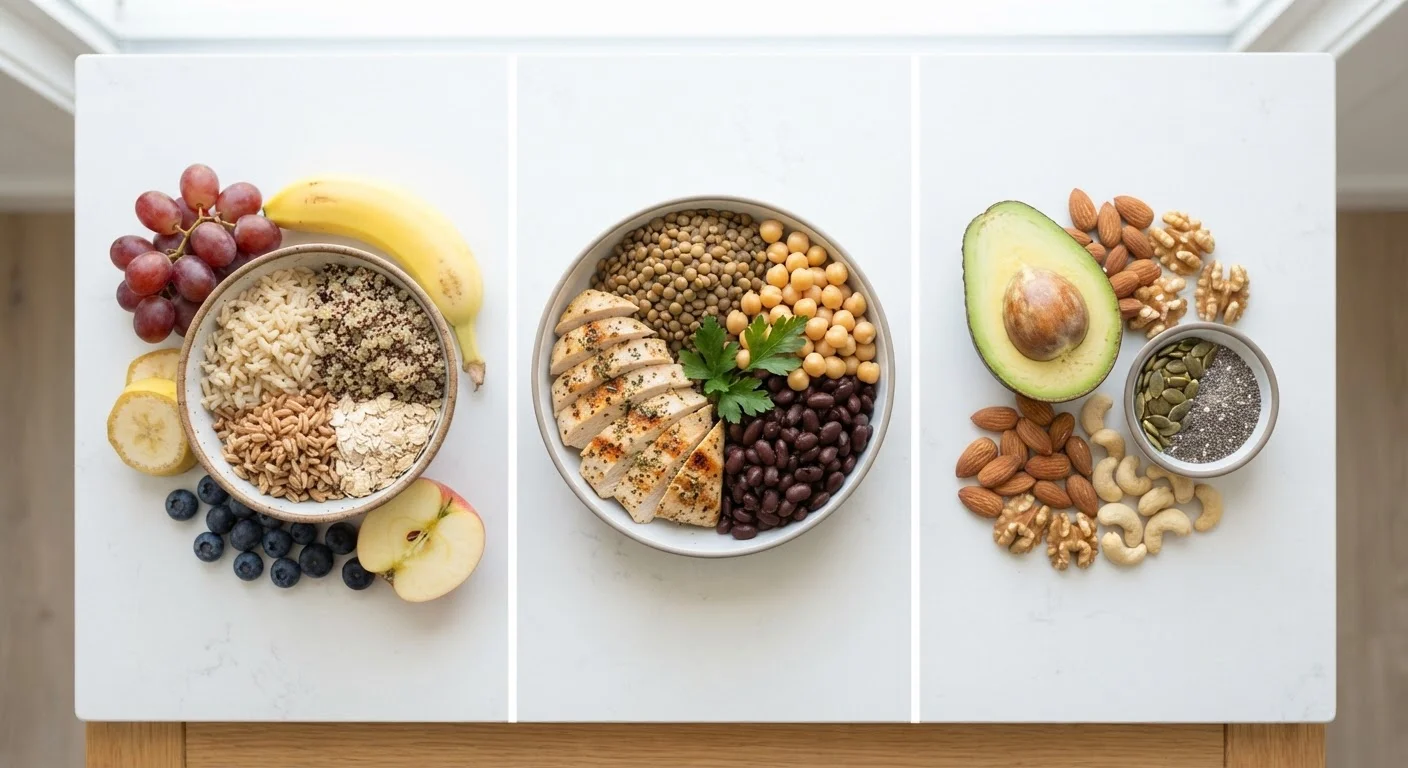

Why Nutrition Myths Are So Stubborn
Nutrition advice circulates faster than nutrition research. A study gets published, a headline oversimplifies it, and within weeks a new rule - eat this, never eat that - embeds itself in everyday conversation. The result: many people are making food choices based on ideas that were either always incorrect or were badly distorted on their way from the lab to social media.
Understanding what the evidence actually shows isn't about chasing the latest trend. It's about building a foundation you can rely on. If you've ever felt confused about what to eat, you're not alone - and you're probably not making the mistakes you think you are. See our guide to common beginner nutrition pitfalls for more context on this.
Below, we address the most persistent nutrition myths and replace them with evidence-grounded corrections.
Myth
Eating fat makes you fat. Fat-free and low-fat products are always the healthier choice.
Fact
Dietary fat is an essential macronutrient. Weight gain is driven by overall energy balance, not fat consumption alone - and many low-fat products compensate with added sugar.
The fat-phobia of the 1980s and 1990s was rooted in early epidemiological studies that linked dietary fat to heart disease. Those studies have since been refined and contested significantly. Current evidence, including large-scale reviews, shows that healthy unsaturated fats - found in foods like olive oil, nuts, and avocados - are associated with reduced cardiovascular risk. Meanwhile, many commercial low-fat foods replace fat with refined carbohydrates and added sugars to maintain palatability, which can undermine the health benefits people expect.
Fat also plays critical roles in absorbing fat-soluble vitamins (A, D, E, and K), supporting cell membrane integrity, and hormone production. Cutting fat dramatically can interfere with all of these processes.
Myth
Carbohydrates are the enemy. Cutting carbs is the most effective path to better health.
Fact
Carbohydrates are the body's preferred energy source. The quality and quantity of carbs matters far more than whether you eat them at all.
Low-carbohydrate diets have shown benefits for specific populations and conditions, but the blanket label of 'carbs as bad' ignores an enormous amount of nuance. Whole grains, legumes, fruits, and vegetables are all sources of carbohydrates - and they're also primary sources of fiber, vitamins, and minerals that most people don't get enough of. The role of micronutrients found in these foods is easy to underestimate.
The research consistently draws a distinction between refined carbohydrates (white bread, sugary drinks, pastries) and complex carbohydrates (oats, brown rice, lentils). Lumping them together as a single villain ignores one of the most important distinctions in nutritional science.
Myth
Eating smaller meals more frequently 'stokes' your metabolism and burns more calories.
Fact
Meal frequency has minimal effect on metabolic rate. Total daily calorie and nutrient intake is far more influential than how often you eat.
The idea that eating six small meals a day keeps your metabolism 'fired up' became popular fitness advice in the 1990s and early 2000s. Controlled studies since then have not supported this claim. Metabolic rate is determined primarily by body composition, activity level, age, and genetics - not by how many times a day you eat.
What meal frequency can affect is hunger management and energy levels, and those effects vary widely between individuals. Some people do better with three larger meals; others prefer smaller, more frequent ones. Neither is universally superior - the best pattern is the one you can sustain and that keeps your overall nutrition on track.
Myth
You need protein supplements to build muscle or meet your protein needs.
Fact
Most people eating a varied diet with adequate calories can meet protein needs through whole foods. Supplements are convenient but not essential for most individuals.
Protein supplements - powders, bars, ready-to-drink shakes - are heavily marketed, particularly to anyone interested in fitness. While they can be a practical tool for people with very high protein targets or limited appetites, they are not a nutritional requirement for the general population. Whole food sources like eggs, legumes, poultry, dairy, tofu, and fish provide protein alongside a broader range of nutrients that isolated supplements don't replicate.
Protein needs do increase with resistance training and certain life stages, but 'more is always better' is not a principle supported by current evidence. The body can only use a limited amount of protein for muscle synthesis in a given period; excess is metabolized for energy or excreted. Personalized protein needs depend on body weight, activity type, and health status - a registered dietitian can help determine what's appropriate for you.
Myth
Certain 'superfoods' can dramatically improve your health on their own.
Fact
No single food has outsized health-determining power. Overall dietary patterns - not individual ingredients - are what the evidence consistently links to health outcomes.
'Superfood' is a marketing term, not a scientific category. Foods like blueberries, kale, or chia seeds are genuinely nutritious, but the research linking them to health benefits is typically based on whole dietary patterns where they appear alongside many other healthy foods - not on isolated consumption of one ingredient.
Focusing on superfoods can create a distorted picture of nutrition where adding a handful of goji berries to an otherwise unbalanced diet feels like meaningful progress. The stronger evidence points to dietary patterns - like Mediterranean-style eating - that emphasize variety and whole foods broadly, rather than any single star ingredient. If you're getting a wide range of colorful vegetables, whole grains, legumes, and quality proteins consistently, you're doing more for your health than any superfood trend can offer.
Building Better Habits Around the Evidence
Correcting these myths matters because bad information leads to real consequences: unnecessary food restriction, guilt around eating, and - ironically - less nutritious overall diets. When people cut out entire food groups based on flawed logic, they often miss key nutrients their bodies depend on. For a grounded look at what each macronutrient actually does, the macronutrients explainer lays it out clearly.
~45-65%
Recommended share of daily calories from carbohydrates
According to the Dietary Guidelines for Americans, carbohydrates should make up roughly 45-65% of total daily calorie intake for most adults.
1 in 3
Adults who believe low-fat means low-calorie
Research on consumer nutrition literacy has consistently found widespread confusion between fat content and overall calorie density in packaged foods.
The practical takeaway from current nutrition science is straightforward: variety, balance, and consistency outperform any single dietary rule. Focus on predominantly whole foods, stay adequately hydrated, and approach eating with curiosity rather than fear. If you have specific health conditions or dietary concerns, a registered dietitian can provide guidance tailored to your situation - general articles like this one are educational tools, not personal prescriptions.
This article is for general informational and educational purposes only and does not constitute medical or dietary advice. Consult a qualified healthcare professional or registered dietitian before making significant changes to your diet.