Why Your Surroundings Are Running the Show
Most people assume that building better habits is a matter of motivation or discipline. In reality, much of your daily behaviour is triggered automatically by the environment around you - the objects you see, the spaces you move through, and how everything is arranged. Behavioural researchers describe this as choice architecture: the idea that the structure of your environment nudges you toward certain actions before you've even made a conscious decision.
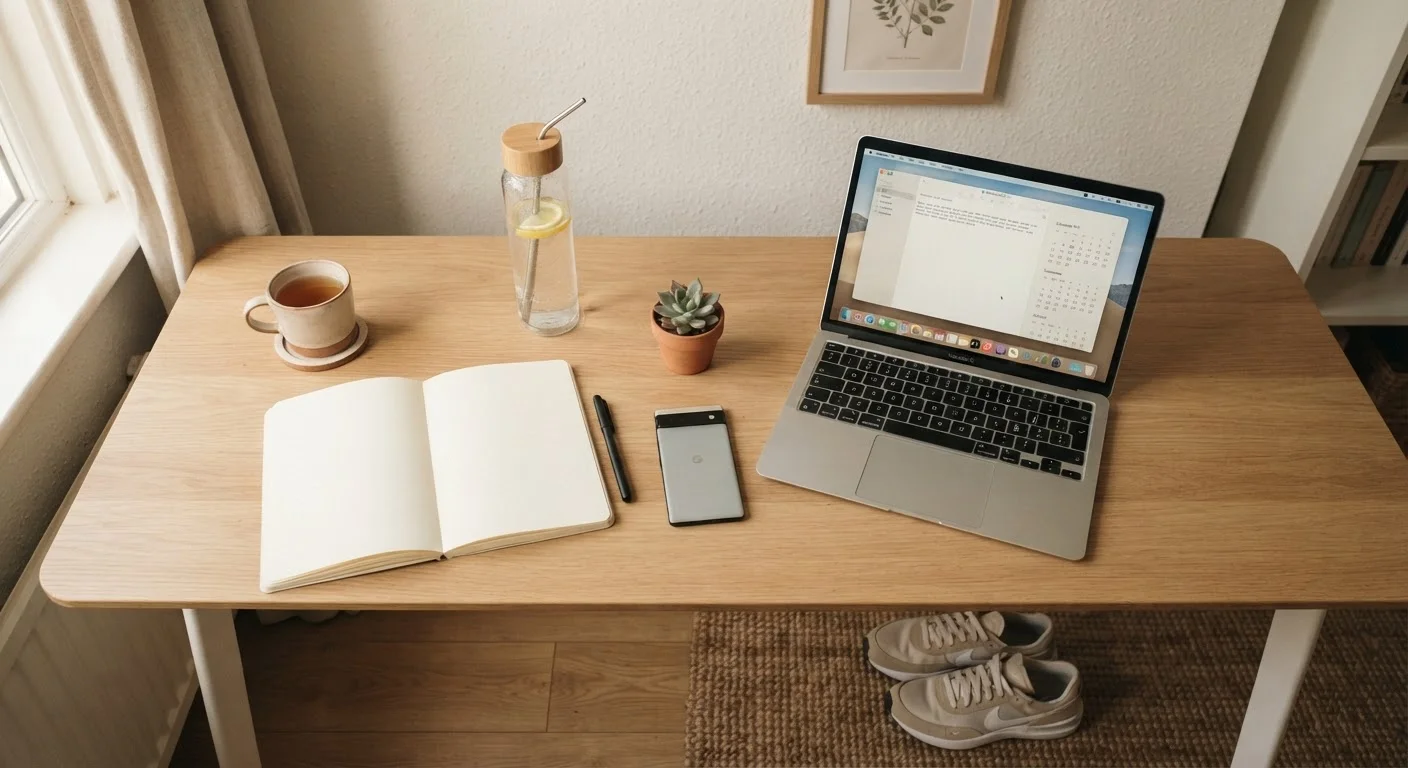
If your phone is on your desk, you'll probably check it. If your running shoes are visible by the door, you're more likely to lace them up. These aren't coincidences - they're cues. Understanding how cues work is the starting point for designing spaces that support the person you want to become. For a deeper grounding in the science, see our beginner's guide to habit formation.
Core Practices for Designing a Habit-Friendly Environment
The following practices are grounded in behavioural science and are actionable for anyone - no major renovation required. Apply them selectively to the one or two habits you're currently working on.
Make the cue for a desired habit visible and obvious.
Habits are triggered by cues - and cues you can see are far more powerful than ones you have to remember. When the prompt for a behaviour is already in your visual field, you don't need to rely on memory or motivation to get started.
Reduce the number of steps between you and the habit.
Every additional step between intention and action is a point of potential drop-off. Simplifying the start of a habit - what researchers call lowering 'activation energy' - makes it dramatically easier to begin on low-motivation days.
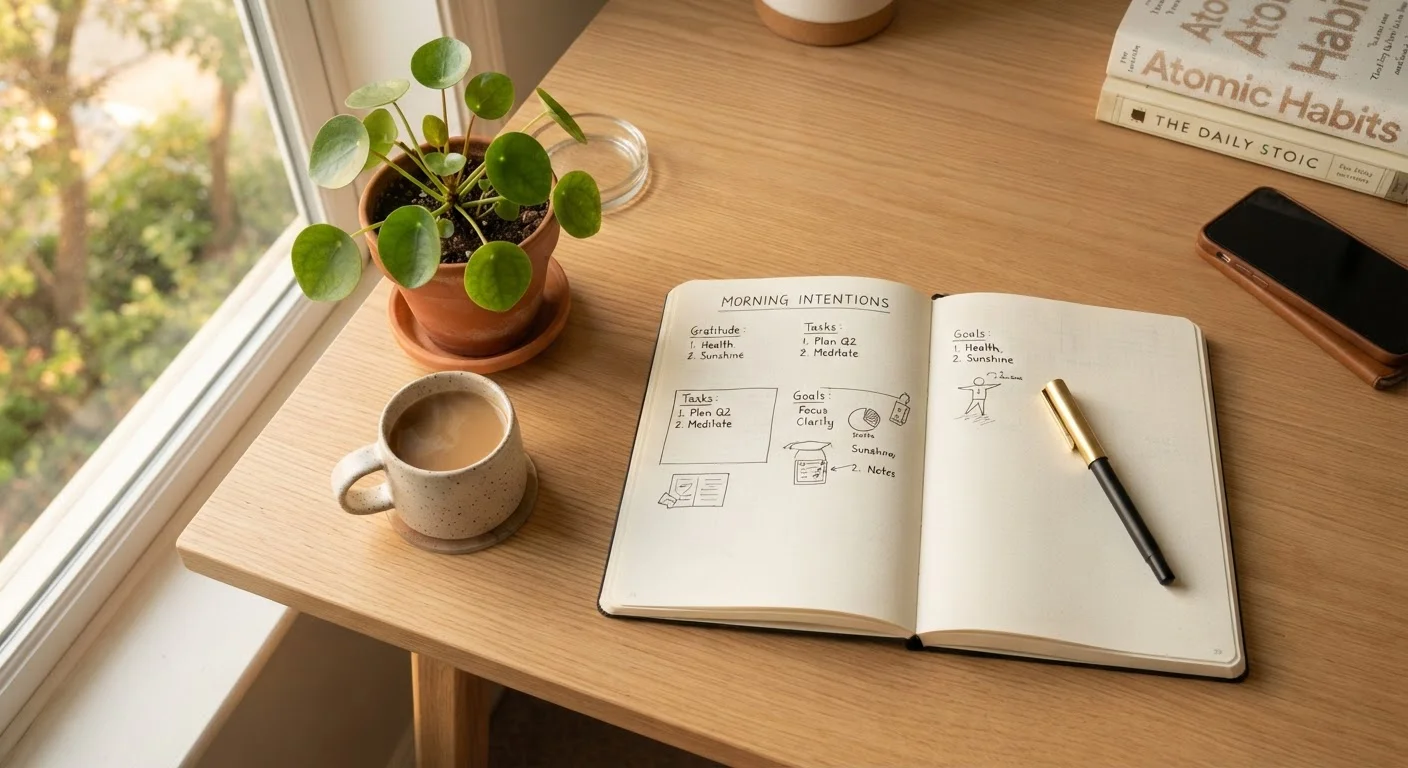
Design dedicated zones for specific activities.
Your brain forms associations between locations and behaviours over time. When you use one spot exclusively for a particular habit, that space itself becomes a cue - making it easier to settle into the right mental mode quickly.
Stack new habits onto existing environmental anchors.
Linking a new behaviour to a location or object already embedded in your routine removes the need to create an entirely new trigger. The existing anchor does the prompting for you.
Audit your space regularly and adjust what isn't working.
What works in one season or life phase may not work in another. Periodic check-ins help you catch when a cue has become invisible through familiarity or when a friction point has been accidentally removed.
Start Here: Quick Wins You Can Apply Today
You don't need to overhaul your home to start seeing results. These immediate, low-effort changes leverage the same environmental psychology principles with minimal time investment.
For a structured weekly review of your environment and habits, our weekly mindset and habits reset checklist offers a practical audit framework.
The Other Side: Adding Friction to Unwanted Habits
Environment design isn't only about making good habits easier - it's equally about making habits you want to reduce harder to start. This is sometimes called adding friction: deliberately placing obstacles between you and a behaviour you'd rather avoid.
Friction Works on Willpower, Too
Adding friction to unwanted habits isn't about punishment - it's about recognising that willpower is a limited resource that depletes throughout the day. When your environment does some of the resisting for you, you're less likely to override your intentions during tired or stressed moments. Think of friction as a structural safeguard, not a character judgment.
Common examples include logging out of distracting apps so re-entry takes effort, keeping snacks in a less accessible cupboard, or putting your TV remote in a drawer rather than on the coffee table. None of these changes eliminate the option - they simply raise the activation cost enough that you pause before acting. That pause is often all it takes.
The same spatial thinking applies to your home layout more broadly. Our guide to home organisation myths challenges some common assumptions about how spaces should be arranged.
Putting It Together: One Space at a Time
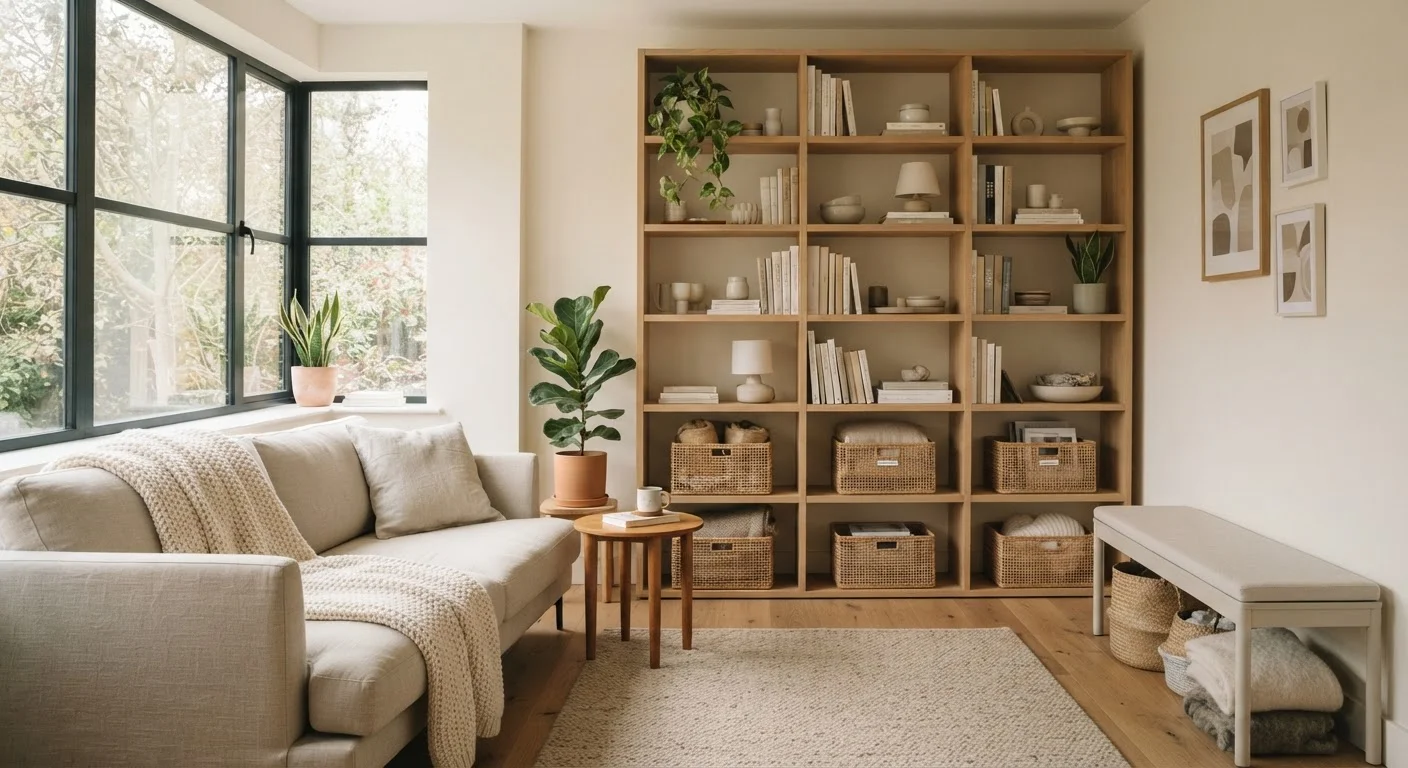
The most sustainable approach is to pick one space and redesign it around a single habit. Trying to overhaul your entire home at once tends to produce short-term tidying energy followed by reversion. Instead, ask: which one habit matters most right now, and what does my environment do to help or hinder it?
“Environment is the invisible hand that shapes human behaviour. People think their character determines their choices, but often it's the situation.”
— Richard Thaler, Nobel Prize-winning economist and co-author of 'Nudge'
Once that environment is working, move to the next. Over time, your spaces accumulate positive cues and reduced friction across multiple habits - without any single change feeling like a big lift. If you're also interested in how environment design intersects with your sense of self, identity-based habit formation offers a complementary lens worth exploring.