
What Each Approach Actually Means
The phrase short-term win refers to any milestone you can achieve within a relatively compressed timeframe - days, weeks, or a few months. Completing a certification module, landing a first client call, or finishing a draft proposal all qualify. These wins are concrete, measurable, and give you immediate feedback that effort is working.
A long-term vision, by contrast, is the broader destination you're navigating toward - a career direction, a skill level, or a life goal that typically unfolds over one to five years or more. It answers the question why any of this matters. Without a vision, short-term wins can point in ten different directions at once and deliver busyness without real progress.
Neither is superior. They operate on different timescales and serve different psychological needs. The problem most people face is treating them as alternatives rather than complements. If you're unsure how to frame your direction clearly in the first place, understanding why vague career goals stay vague is a useful starting point.
| Criterion | Short-Term Wins | Long-Term Vision |
|---|---|---|
| Timeframe | Days to a few months | One to five-plus years |
| Primary function | Builds momentum and confidence | Provides direction and purpose |
| Risk if overused alone | Busyness without real progress | Motivation fades; goal feels abstract |
| Measurement | Concrete, trackable tasks | Broader outcomes and life direction |
| Review frequency | Daily to weekly | Monthly to quarterly |
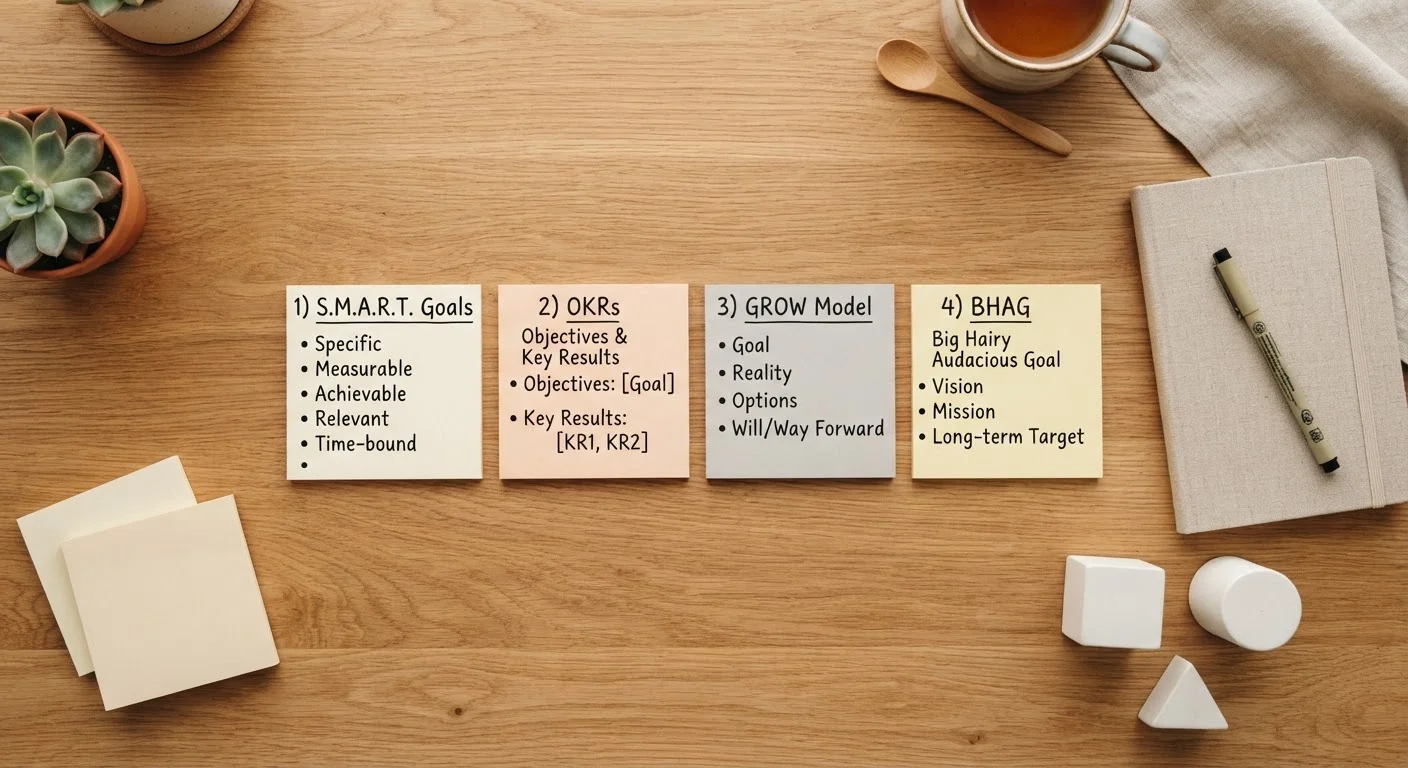
| Best planning tool | Task lists, sprints, weekly plans | Vision statements, roadmaps, OKRs |
The Tension Between Them - and Why It's Normal
Short-term wins can create a seductive trap: the dopamine hit of checking a box feels productive even when the task doesn't advance your bigger goal. Conversely, an ambitious long-term vision can feel so remote that motivation fades before any real traction builds. Research in motivational psychology consistently points to a concept called goal hierarchy - the idea that lower-level actions need to connect visibly to higher-level outcomes for sustained effort to occur.
This tension isn't a flaw in the system; it's a signal. When short-term wins feel hollow, it usually means the link to a longer vision is broken or undefined. When a long-term vision feels paralyzing, it usually means the short-term steps haven't been made concrete enough.
~63%
People who report giving up on long-term goals
Studies in self-regulation research suggest the majority of people abandon long-term goals primarily due to the absence of intermediate milestones to sustain effort.
2-3x
Likelihood of achieving goals with written, specific plans
Goal-setting research, including work associated with Dr. Gail Matthews at Dominican University, indicates that writing down specific goals and action steps meaningfully improves follow-through rates.
Recognizing which side of this tension you're on is the first practical step toward resolving it. For a structured look at frameworks that address both horizons simultaneously, comparing goal-setting frameworks side by side can help you choose a system that fits your current stage.
How to Link Short-Term Actions to Long-Term Direction
The most effective strategy is a practice sometimes called cascading goals - defining your long-term vision first, then working backward to identify what needs to be true in three months, one month, and this week for that vision to remain on track. This is different from simply making a to-do list; every item on the list can be traced back to a specific long-term aim.
Here's a simple version of that process:
- Name your long-term vision specifically. Not "I want a better career" but "I want to be leading UX research projects within three years."
- Identify two or three conditions that would need to be true six months from now for you to be on track.
- Break each condition into monthly tasks that are concrete enough to schedule. For a detailed walkthrough of this step, see turning a five-year career plan into monthly action items.
- Review weekly. Did this week's wins move you toward those six-month conditions? If not, adjust the task - not necessarily the vision.
This review habit is also where you'll catch early signs that your vision needs recalibrating. Circumstances shift, and a goal that made sense a year ago may need updating - without that meaning failure. Adjusting goals when ambition outpaces opportunity offers practical guidance on doing exactly that.
When Your Vision Needs to Evolve
A long-term vision isn't meant to be rigid. Life circumstances - job market shifts, personal priorities, new information - can legitimately change what a meaningful goal looks like. Updating your vision based on new evidence is a sign of adaptability, not failure. The key is distinguishing between a vision that needs genuine revision and one that's simply being abandoned because short-term discomfort feels easier to avoid.
Keeping Both in Focus Over Time
Maintaining dual focus isn't a one-time setup - it's an ongoing practice. A few habits tend to make the biggest difference:
- Visible anchoring: Keep your long-term vision somewhere you actually see it - a note app, a whiteboard, a recurring calendar entry. Out of sight genuinely does mean out of mind.
- Celebrate small completions deliberately. Acknowledge wins rather than immediately moving to the next task. This reinforces the psychological link between effort and progress.
- Use short learning cycles. If a new skill is part of your vision, microlearning in short, focused sessions can help you generate frequent wins without requiring large blocks of time.
- Schedule a monthly check-in. Ask: Are my short-term wins still pointing toward my long-term vision? Has my vision evolved? Do my tasks need to change?
The goal isn't perfection on either timescale - it's maintaining enough awareness of both that neither one quietly disappears. Young adults who master this balance tend to report feeling both more productive day-to-day and more confident about where they're headed overall.