
Where Does This Idea Come From?
You've probably heard that a mortgage or a student loan is "good debt" while credit card balances are "bad debt." The distinction is taught in personal finance classes, repeated in popular money books, and passed down at kitchen tables. But where does it actually come from - and is it reliable?
The core idea is straightforward: debt used to acquire something that grows in value or increases your earning power is considered good, while debt taken on for things that depreciate or provide no lasting financial return is considered bad. At a high level, this logic holds up. But when you apply it to real life, the edges get fuzzy fast.
The myth-and-fact pairs below walk through the most common misconceptions that trip people up when they try to use this framework.
Myth
Student loans are always good debt because education increases earning potential.
Fact
Student loans can support higher earnings, but the outcome depends heavily on the field of study, total borrowed, and job market conditions - none of which are guaranteed.
The logic behind calling student loans "good debt" is that a degree can raise lifetime earnings. Research from the Federal Reserve has consistently shown a wage premium for college graduates compared to those without degrees. However, that average masks enormous variation. Borrowing $80,000 for a program in a high-demand field is a very different financial decision than borrowing the same amount for a program with limited job prospects.
The debt-to-income ratio - how much you owe relative to what you expect to earn - is a far more reliable measure than the label. Understanding how student loans work, including income-driven repayment options and interest accrual, helps you evaluate them realistically rather than optimistically.
Myth
Credit card debt is always bad and should be avoided completely.
Fact
Carrying a high-interest credit card balance is costly, but using a credit card responsibly - and paying it in full each month - can build credit and offer consumer protections.
The "bad debt" label gets attached to credit cards because of their typically high annual percentage rates (APRs), which can exceed 20% or more. Carrying a revolving balance at those rates is genuinely expensive and can compound quickly. But credit cards themselves are tools, not traps.
Paying your statement balance in full each month means you pay zero interest while still building a positive payment history - one of the most significant factors in your FICO credit score. Credit cards also come with fraud protections under federal law (the Fair Credit Billing Act) that debit cards don't always match. How credit and debit cards each affect your financial life is worth understanding before assuming one is always better than the other.
Myth
A mortgage is inherently good debt because real estate always goes up in value.
Fact
Home values can and do decline, as the 2008 housing crisis demonstrated clearly. A mortgage is a large, long-term obligation that must fit your financial situation regardless of market expectations.
Home ownership does build equity over time for many people, and mortgage interest has historically been tax-deductible under certain conditions (consult a tax professional for your situation). But labeling a mortgage "good" because property values tend to rise over long periods ignores real risks: transaction costs, maintenance expenses, property taxes, and the possibility of buying in a market that corrects.
A mortgage becomes problematic when the monthly payment - including principal, interest, taxes, and insurance - stretches your budget so thin that any unexpected expense becomes a crisis. The debt itself isn't inherently good or bad; the terms, the price paid, and your financial cushion determine whether it works in your favor.
Myth
As long as an interest rate is low, the debt is safe to take on.
Fact
A low interest rate reduces cost but doesn't eliminate risk. Total loan size, repayment timeline, and your monthly cash flow all matter just as much.
Low-rate debt can still create financial stress if the total balance is very large or the repayment term is very long. For example, a large auto loan at a relatively low rate can tie up hundreds of dollars per month for five to seven years - limiting your ability to save, invest, or handle emergencies during that period.
Interest rate is one variable in a broader equation. Before taking on any debt, it's worth mapping out the full monthly payment and asking honestly whether that payment still feels manageable if your income dropped or an unexpected expense appeared. Low cost doesn't mean low consequence.
Myth
Paying off all debt as fast as possible is always the smartest financial move.
Fact
Aggressive debt paydown makes sense for high-interest debt, but low-interest debt may be less urgent than building an emergency fund or taking advantage of employer retirement matches.
The math here depends on rates. If you carry a credit card balance at 22% APR, every dollar you put toward that balance earns you a guaranteed 22% "return" by eliminating that interest. That's hard to beat. But if your only debt is a federal student loan at 5% interest and your employer offers a 401(k) match up to 4% of your salary, contributing enough to capture that match likely produces a better financial outcome than accelerating your loan payoff.
Personal finance involves trade-offs. Treating all debt elimination as the highest priority can lead to neglecting an emergency fund, which ironically makes you more likely to take on new high-interest debt when something goes wrong. A balanced approach - prioritizing high-rate balances while maintaining savings - is generally more resilient than a single-minded payoff strategy.
A More Useful Way to Evaluate Any Debt
Instead of slapping a label on a debt type, it helps to ask four practical questions before borrowing:
- What is the interest rate, and is it fixed or variable? A lower rate limits how much the loan costs you over time. A variable rate can rise unexpectedly.
- Does this borrowing serve a clear purpose that I couldn't fund another way? Debt taken on out of convenience or impulse carries more risk than debt taken on after exhausting other options.
- Can I comfortably make the monthly payment without skipping other financial priorities? If repayment would mean skipping contributions to an emergency fund, the debt may be doing more harm than good regardless of its label.
- What happens if circumstances change? Job loss, a medical event, or a market shift can turn manageable debt into a crisis. Stress-testing your plan matters.
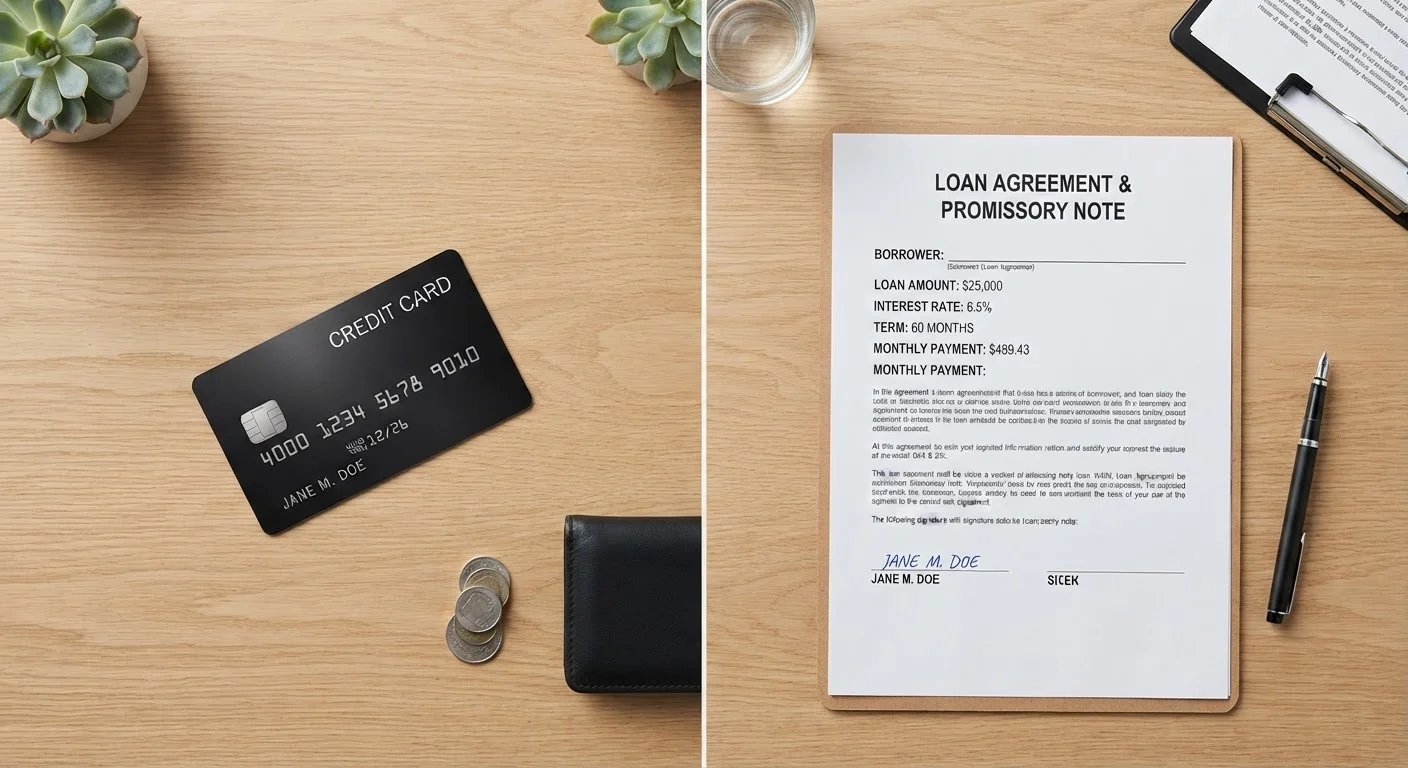
For a deeper look at how specific borrowing tools compare, see how personal loans and credit cards differ across rates, repayment terms, and typical use cases. And if you're already carrying balances and want to start paying them down, debt repayment strategies like the avalanche and snowball methods can help you build a structured plan.
Don't Let a Label Override Your Budget
It can be tempting to justify borrowing by telling yourself it's "good debt." But any loan that pushes your monthly obligations beyond what you can reliably pay creates financial fragility. Before taking on new debt, verify that the total monthly payment - added to your existing obligations - leaves room for savings and unexpected expenses. If it doesn't, the label on the debt is irrelevant.
This article is for general informational and educational purposes only and does not constitute personalized financial advice. For guidance specific to your situation, consider speaking with a licensed financial professional.