How Each Product Actually Works
Understanding the mechanics of each option removes a lot of the confusion around borrowing. Here's the core difference:
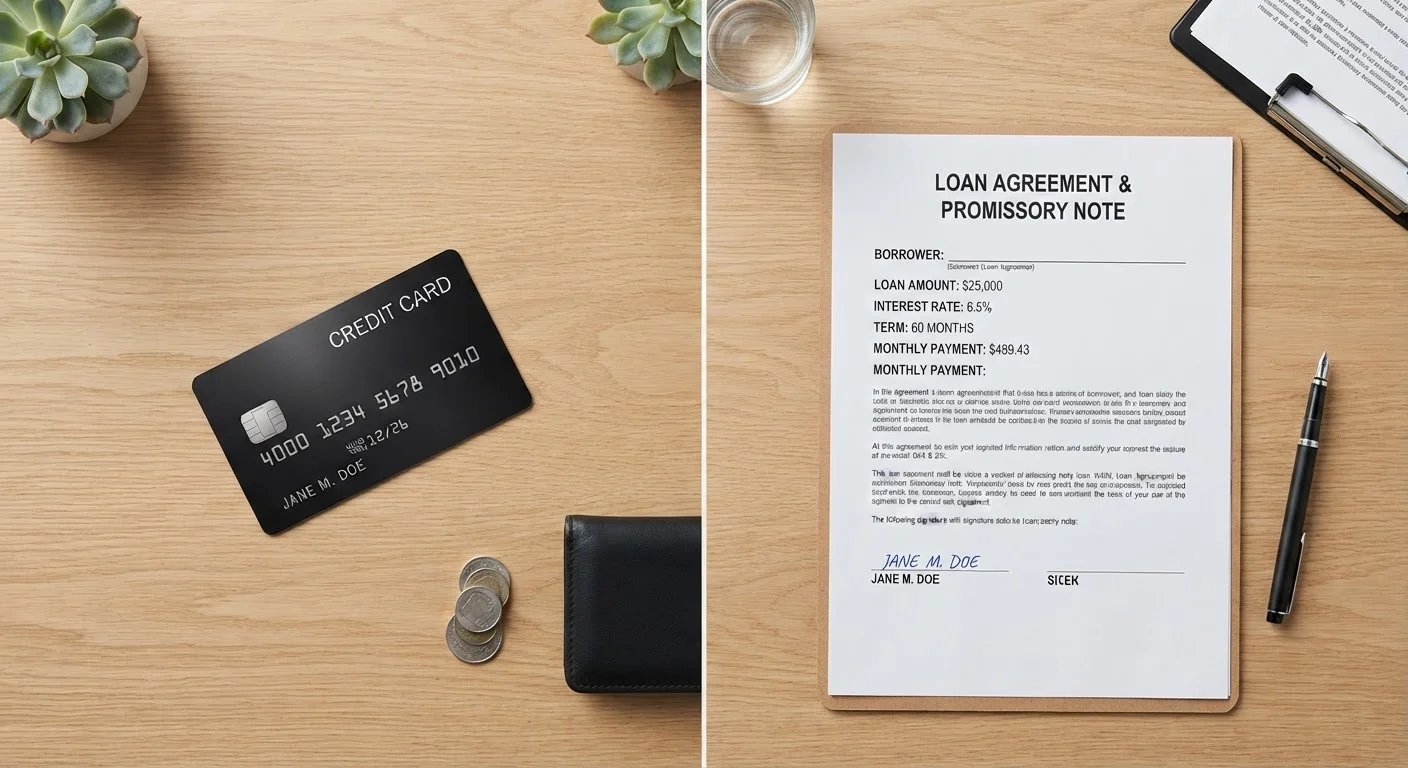
A personal loan is an installment loan - you apply for a specific dollar amount, receive it as a lump sum (often deposited directly into your bank account), and repay it in fixed monthly payments over an agreed term. Interest is calculated on the full loan amount from the start, and the rate is typically fixed, meaning your payment doesn't change month to month.
A credit card is a revolving line of credit. You're given a credit limit, and you can spend up to that limit, repay some or all of it, and borrow again. Interest only accrues on whatever balance you carry past your statement due date - so if you pay in full each month, you pay zero interest. If you carry a balance, interest compounds, often at a significantly higher rate than a personal loan.
| Criterion | Personal Loan | Credit Card |
|---|---|---|
| Structure | Installment - fixed lump sum | Revolving - flexible credit limit |
| Typical APR range | ~7%-36% (credit-dependent) | ~20%-30%+ (varies widely) |
| Interest-free option | No - interest accrues from day one | Yes - if paid in full monthly |
| Repayment term | Fixed (typically 2-7 years) | Flexible (minimum payment option) |
| Monthly payment | Fixed and predictable | Variable - depends on balance |
| Best borrowing amount | Larger amounts ($2,000+) | Smaller or variable amounts |
| Application process | Formal application, credit check | Application required; reusable after approval |
| Potential fees | Origination fee (1%-8%) | Annual fee, late fee, cash advance fee |
Both products show up on your credit report and can affect your FICO score. On-time payments help; missed payments hurt. See our guide to building credit from zero if you're just starting out.
Interest Rates and True Cost of Borrowing
Interest is where these two products diverge most sharply. According to Federal Reserve data, average credit card interest rates have frequently exceeded 20% APR in recent years. Personal loan rates vary widely based on your creditworthiness but often range from roughly 7% to 36% APR - meaning well-qualified borrowers can access rates meaningfully below the typical credit card rate.
20%+
Average credit card APR in recent years
Federal Reserve consumer credit data has tracked average credit card rates above 20% APR in recent reporting periods.
1%-8%
Typical personal loan origination fee range
Many personal loan lenders charge an upfront origination fee that is deducted from proceeds or added to the loan balance, raising the effective cost.
35%
Payment history share of FICO score
According to FICO, payment history is the single largest factor in your credit score - making on-time payments on either product critically important.
However, rate alone doesn't tell the whole story. With a credit card, if you pay your full statement balance by the due date every month, the effective interest rate is 0% - regardless of what the stated APR is. That's a genuine advantage for disciplined spenders who use a card as a payment tool rather than a borrowing tool.
With a personal loan, interest starts accruing from day one on the full balance, even if you don't need all the money immediately. Some personal loans also charge an origination fee - typically 1% to 8% of the loan amount - which effectively raises the true cost. Always check the APR (which includes fees) rather than just the stated interest rate when comparing offers.
If you're considering a personal loan to finance a vehicle purchase, our car finance explainer walks through how personal loans stack up against PCP and HP options.
Choosing Based on Your Borrowing Situation
Neither product is inherently superior - the right fit depends on three things: how much you need, how long you'll need it, and how predictable your repayment will be.
When a personal loan tends to make more sense
- You need a large, defined amount - generally $2,000 or more - for a specific purpose.
- You want a fixed payoff date and consistent monthly payments for easier budgeting.
- You're consolidating high-interest debt into one structured payment.
- You're funding a project with a known cost, like a home improvement.
When a credit card tends to make more sense
- You need flexibility - your spending is variable or unpredictable.
- You can reliably pay off the balance in full each month, avoiding interest entirely.
- The amount is relatively small and short-term.
- You want to build or maintain your credit history through regular, manageable use.
Before committing to either, it's worth running through a readiness check. Our loan readiness checklist covers the questions to ask yourself about income, existing debt, and repayment capacity before you apply.
A Note on Balance Transfer Cards
Some credit cards offer 0% introductory APR periods on balance transfers - typically 12 to 21 months - which can be a cost-effective way to pay down existing debt. However, these promotions usually end, and any remaining balance reverts to the standard rate. A personal loan may be more predictable for debt that can't realistically be paid off within the promotional window.
This article is for general informational and educational purposes only and does not constitute personalized financial advice. Consult a qualified financial professional before making borrowing decisions based on your individual circumstances.