The Real Reason Dogs Pull - It's Not What You Think
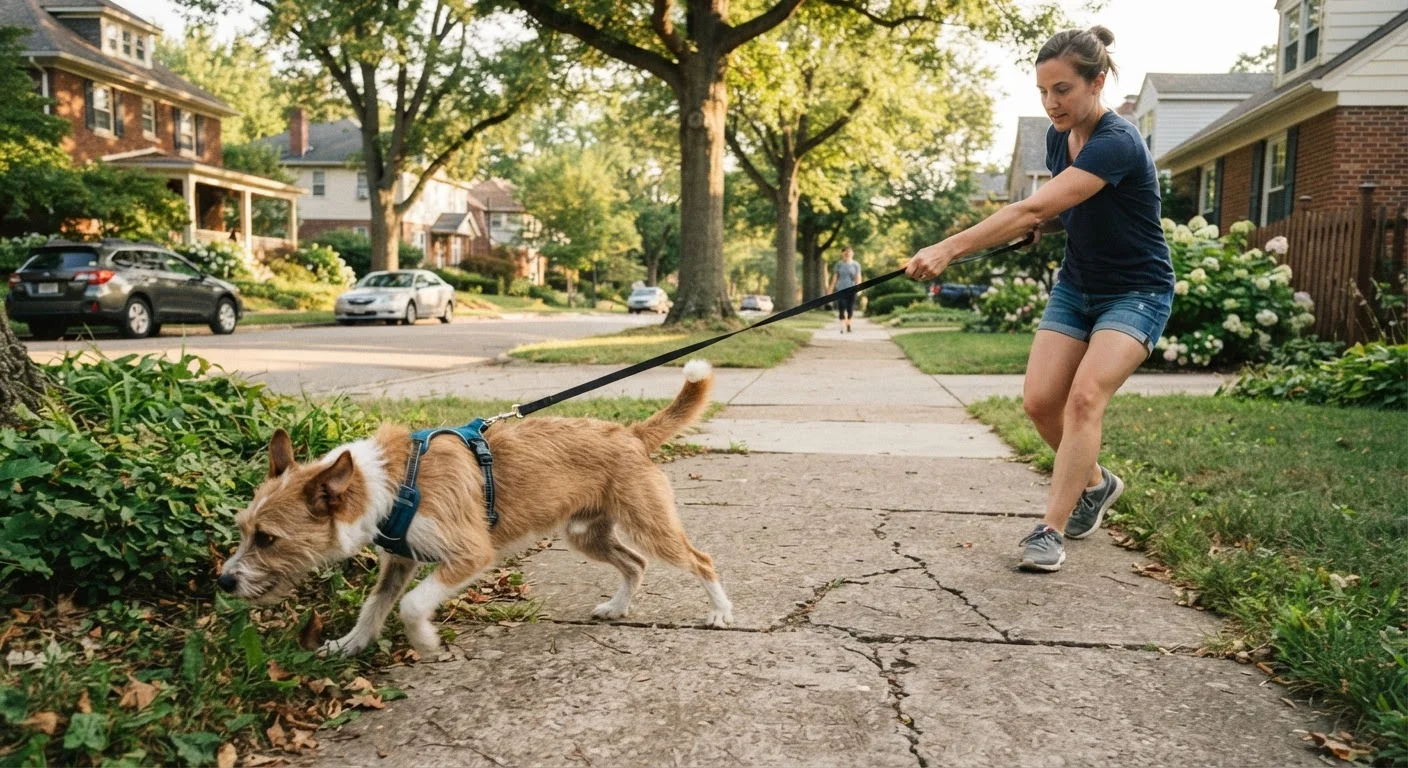
Most new dog owners assume their dog pulls because it's excited, untrained, or trying to be "the boss." The actual explanation is simpler and more useful: pulling works. When a dog surges forward and reaches the fire hydrant, the other dog, or the patch of grass that smells like a rabbit, the environment delivers an immediate reward. That reward - reaching the interesting thing - strengthens the pulling behavior every single time it happens.
This is the foundation of operant conditioning. Behaviors that produce good outcomes get repeated. To understand that process more deeply, see how reinforcement shapes animal behavior. Your dog isn't being defiant - it's doing exactly what its behavioral history has taught it to do.
#1
Most reported dog behavior problem by owners
Leash pulling is consistently cited as the top behavioral challenge in owner surveys conducted by veterinary and training organizations across the US.
2-3×
Faster than a human's average walking pace
Dogs' natural trotting speed significantly exceeds a typical human walking pace, which is a core biological reason loose-leash walking must be explicitly trained.
300M+
Scent receptors in a dog's nose
Compared to roughly 6 million in humans, dogs' extraordinary olfactory ability explains why environmental smells are so powerfully motivating on walks.
What's Happening in Your Dog's Brain on a Walk
Dogs experience the world primarily through scent. A single fire hydrant can carry information about dozens of other animals - species, sex, health status, and more. When your dog hits the end of the leash straining toward that hydrant, it's responding to what is, from its perspective, an extraordinarily rich and urgent signal.
Dogs also move at a natural pace that is two to three times faster than an average human's walking speed. Loose-leash walking requires them to deliberately slow down and match your rhythm - a behavior that doesn't occur in nature and has to be explicitly taught. The leash itself adds another layer: tension on the collar or harness can actually trigger a reflex called the opposition reflex, where the dog instinctively pushes against pressure rather than yielding to it. This means that when you pull back, the dog's body is literally wired to push forward.
Why Common "Fixes" Often Don't Fix Anything
Many owners respond to pulling by yanking the leash back, using prong collars, or repeatedly saying "no." These approaches can interrupt a pull in the moment, but they share a critical flaw: they don't tell the dog what to do instead. A dog that stops pulling because of a correction hasn't learned to walk on a loose leash - it's learned to pause pulling temporarily to avoid discomfort.
Research in animal behavior consistently shows that punishment-based methods carry real risks of increasing stress and anxiety without producing durable understanding. For a closer look at why, see why punishment often backfires in animal training. The most effective approach teaches the dog that a loose leash - not a tight one - is what makes good things happen.
Use the Environment as a Training Tool
Rather than always carrying treats, let access to sniffing spots serve as a reward. When your dog holds a loose leash for a few steps, say a release word like "go sniff" and let them investigate freely for a moment. This turns your dog's strongest natural drive into something that works for your training, not against it.
What Actually Helps: The Behavioral Logic Behind Loose-Leash Training
Effective loose-leash training flips the reinforcement equation. Instead of forward movement being the reward for pulling, forward movement becomes the reward for a slack leash. The moment the leash goes loose, you move. The moment it goes tight, you stop. Done consistently, this teaches dogs that pulling literally doesn't work - and calm walking does.
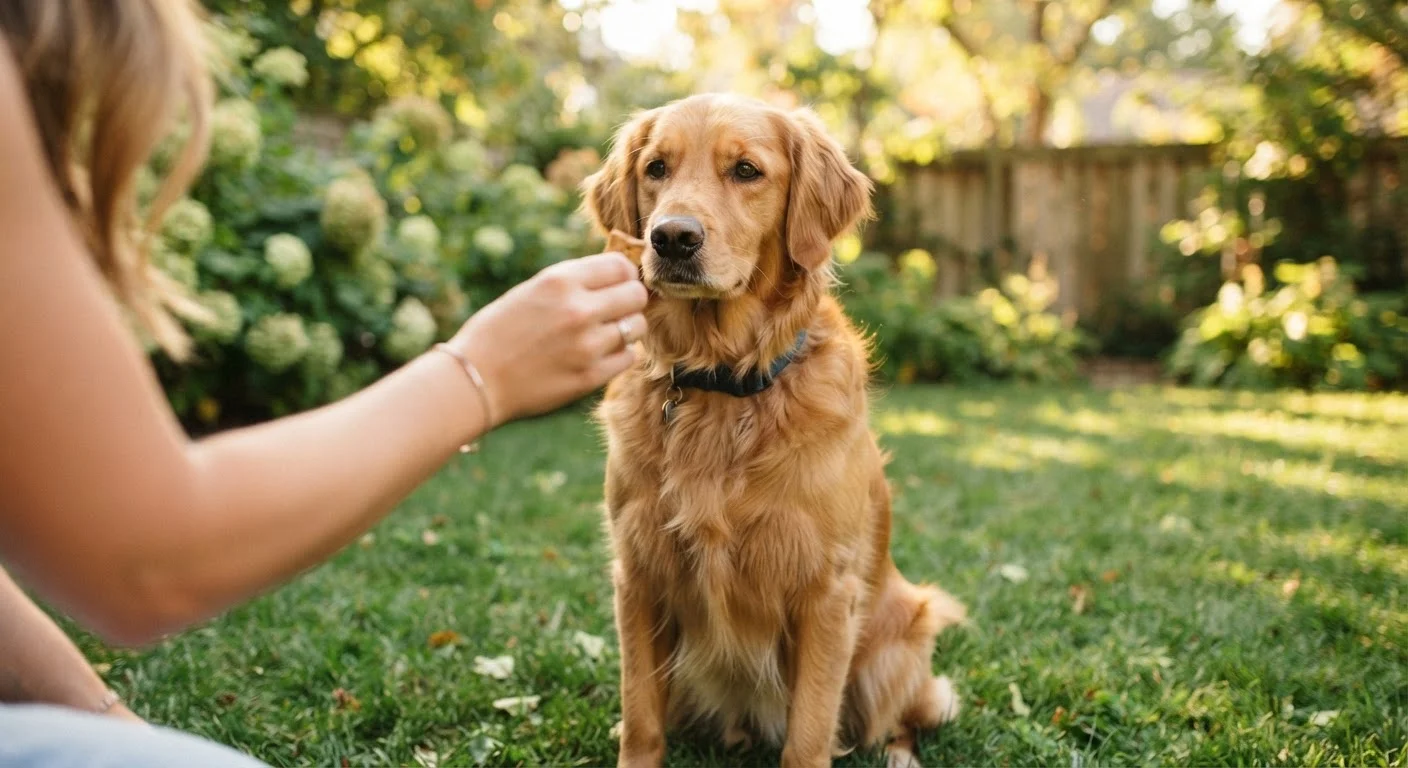
Sniffing can be used as a deliberate reward. When your dog walks politely for a few steps, cue them to "go sniff" and let them investigate. You're using their strongest natural motivation as a reinforcer rather than fighting against it. This aligns directly with what the research shows about positive reinforcement versus correction-based methods.
One important caution: results depend heavily on consistency. Inconsistent cues and poorly timed rewards are among the most common reasons dogs make slow progress - a pattern explored in detail in training habits that quietly undermine results. Even well-intentioned owners can accidentally reinforce the wrong behavior without realizing it.
This article is for general informational and educational purposes only. For personalized guidance on your dog's behavior, consult a certified professional dog trainer or veterinary behaviorist.