
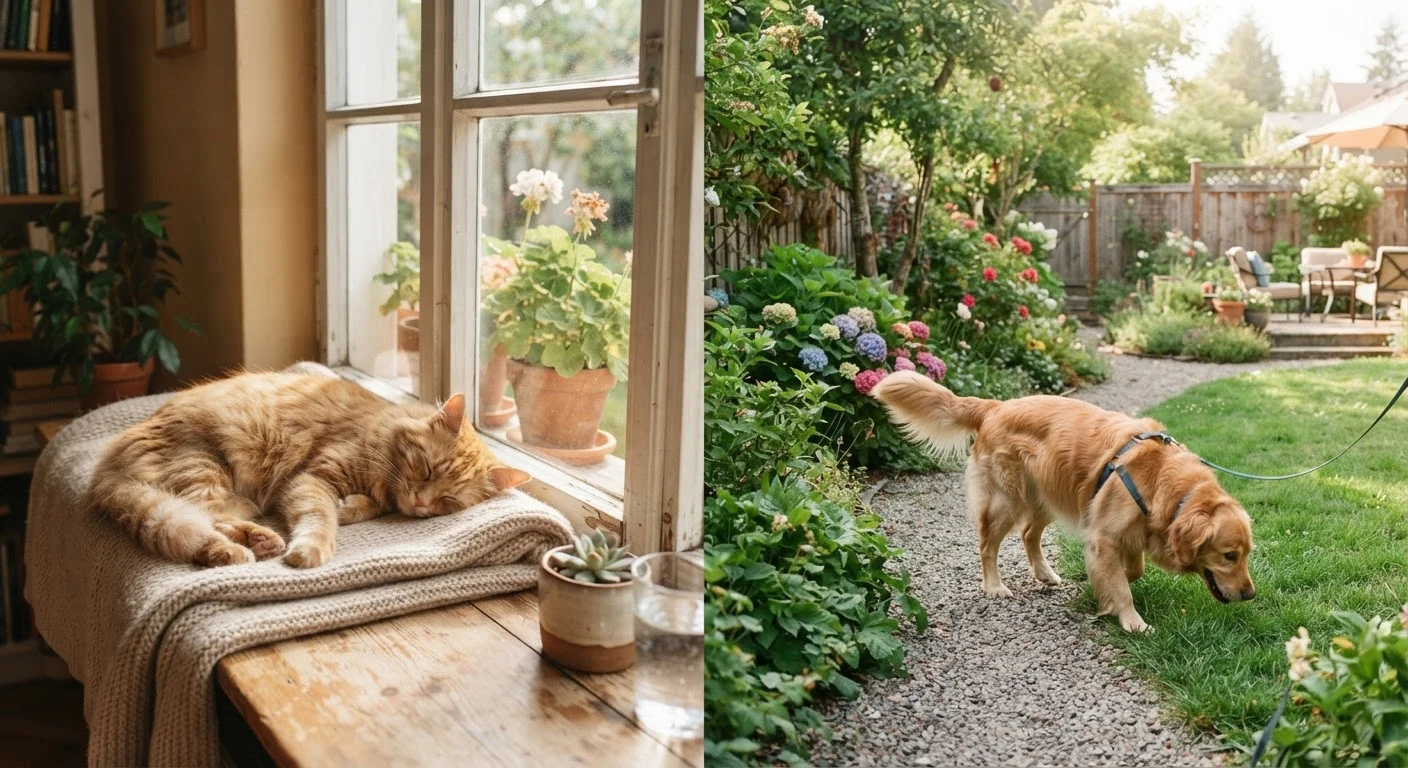
Why Where Your Pet Lives Matters More Than You Think
The indoor-versus-outdoor question isn't just about convenience - it shapes your pet's exposure to disease, their opportunities for exercise, their stress levels, and even their lifespan. For first-time owners, the decision often gets made by default: an apartment means the cat stays inside; a house with a yard means the dog roams. But a more deliberate approach - one grounded in your pet's species, age, and individual personality - tends to produce better outcomes.
This article focuses primarily on cats and dogs, the most common household pets in the US, though the principles apply broadly. For a detailed look at how environment affects physical health specifically, see how environment shapes long-term pet health.
Dramatically reduces exposure to physical hazards
Traffic, predators, and territorial animal encounters are among the leading causes of injury and death in outdoor pets. Indoor living removes these risks almost entirely.
Lower risk of infectious disease and parasites
Pets kept indoors have limited contact with wild animals and other pets, reducing exposure to rabies, feline leukemia, parvovirus, and common parasites like fleas and ticks.
Easier health monitoring for owners
Sharing a living space makes it simpler to notice changes in appetite, energy, or bathroom habits - often the first indicators that something is medically wrong.
Greater control over diet and routine
Indoor pets are less likely to scavenge, eat unknown substances, or be fed by neighbors, making nutritional management more straightforward.
Stronger human-animal bond through daily proximity
Regular, close contact tends to deepen trust and socialization, particularly for cats and dogs that thrive on consistent human interaction.
The Case for Keeping Pets Indoors
Indoor living removes a long list of physical hazards in one step. Cats kept exclusively indoors avoid traffic, predators, territorial fights, and many infectious diseases spread by contact with other animals. Dogs managed indoors with scheduled outdoor walks similarly sidestep roaming risks.
Beyond safety, indoor environments give owners direct visibility into a pet's behavior, appetite, and bathroom habits - early warning signs of illness are easier to catch when you share the same space. Indoor pets also tend to be less exposed to fleas, ticks, and intestinal parasites, which can reduce veterinary costs over time, though regular preventive care remains essential regardless.
The trade-off is stimulation. A confined environment can lead to boredom, anxiety, or destructive behavior if not actively managed. Puzzle feeders, climbing structures, scheduled play sessions, and window access to the outside world are practical tools for meeting an indoor pet's mental and physical needs. For species-specific activity requirements, exercise needs across common pet types offers a useful starting point.
Boredom and under-stimulation are genuine risks
Without deliberate enrichment, indoor pets - especially cats and high-energy dog breeds - can develop anxiety, destructive behaviors, or stress-related health issues.
Limited natural exercise opportunities
Indoor environments rarely provide enough space or variety for a pet to self-regulate their activity levels, placing the responsibility for daily exercise squarely on the owner.
Some species have strong outdoor instincts
Certain breeds and species have been developed over generations for outdoor work or roaming, and purely indoor confinement may be a poor fit for their temperament.
Reduced sensory exposure may affect behavior
Pets with limited exposure to varied environments, sounds, and smells can become more reactive or anxious when they do encounter the outside world.
The Case for Outdoor or Hybrid Access
Outdoor access - especially in a controlled form like a fenced yard, leash walks, or a cat enclosure (sometimes called a "catio") - provides sensory richness that indoor environments rarely replicate. Natural smells, sounds, changing light, and physical terrain engage a pet's instincts in ways that reduce stress and support healthy behavior patterns.
For dogs in particular, outdoor exercise plays a meaningful role in weight management, joint health, and social development. Dogs that regularly encounter varied environments and other animals tend to show fewer anxiety-related behaviors. Cats with safe, supervised outdoor time often display greater confidence and lower rates of stress-related conditions like over-grooming.
10-15 yrs
Typical indoor cat lifespan
The American Veterinary Medical Association notes indoor cats commonly live significantly longer than cats with unrestricted outdoor access, which averages closer to 2-5 years in some studies.
~1 in 3
Pets lost annually that are never recovered
The American Humane Association estimates that approximately one-third of lost pets are never reunited with their owners, a risk that increases substantially with unsupervised outdoor access.
The key word is managed. Unsupervised outdoor access - especially for cats - carries substantially higher risk. A middle path, such as leash-training a cat, building an enclosed outdoor run, or setting firm boundaries for a dog's yard time, can deliver the benefits of outdoor exposure while limiting the most serious dangers.
The 'Catio' as a Middle-Ground Option
A catio - an enclosed outdoor structure attached to a window or door - allows cats to experience fresh air, sunlight, and outdoor sights and sounds without the dangers of free roaming. Many can be built DIY-style or purchased as modular kits. They're worth considering for cat owners in areas with heavy traffic, predatory wildlife, or local ordinances restricting outdoor cats. Always ensure the structure is escape-proof and provides shade and shelter.
Making the Decision for Your Specific Pet
There's no single right answer, but there are useful questions to work through. What species and breed do you have? Some breeds have higher exercise and exploration drives than others. What does your local environment look like - dense urban area, quiet suburb, rural property? How much time can you realistically supervise outdoor access?
Your pet's age and health status also matter. A senior pet with mobility issues may be better served by a comfortable indoor setup with gentle daily outings. A young, high-energy dog may genuinely need more outdoor time than apartment living easily provides.
Good nutrition plays a role in any environment. Whether your pet is indoors or out, their diet should match their activity level and life stage - understanding wet vs. dry food differences is one practical piece of that puzzle. And if you're navigating broader first-year pet ownership decisions, common pet health assumptions that lead owners astray is worth reading before habits become entrenched.
This article provides general pet care information and is not a substitute for advice from a licensed veterinarian familiar with your specific animal.