What Actually Separates Wet and Dry Food
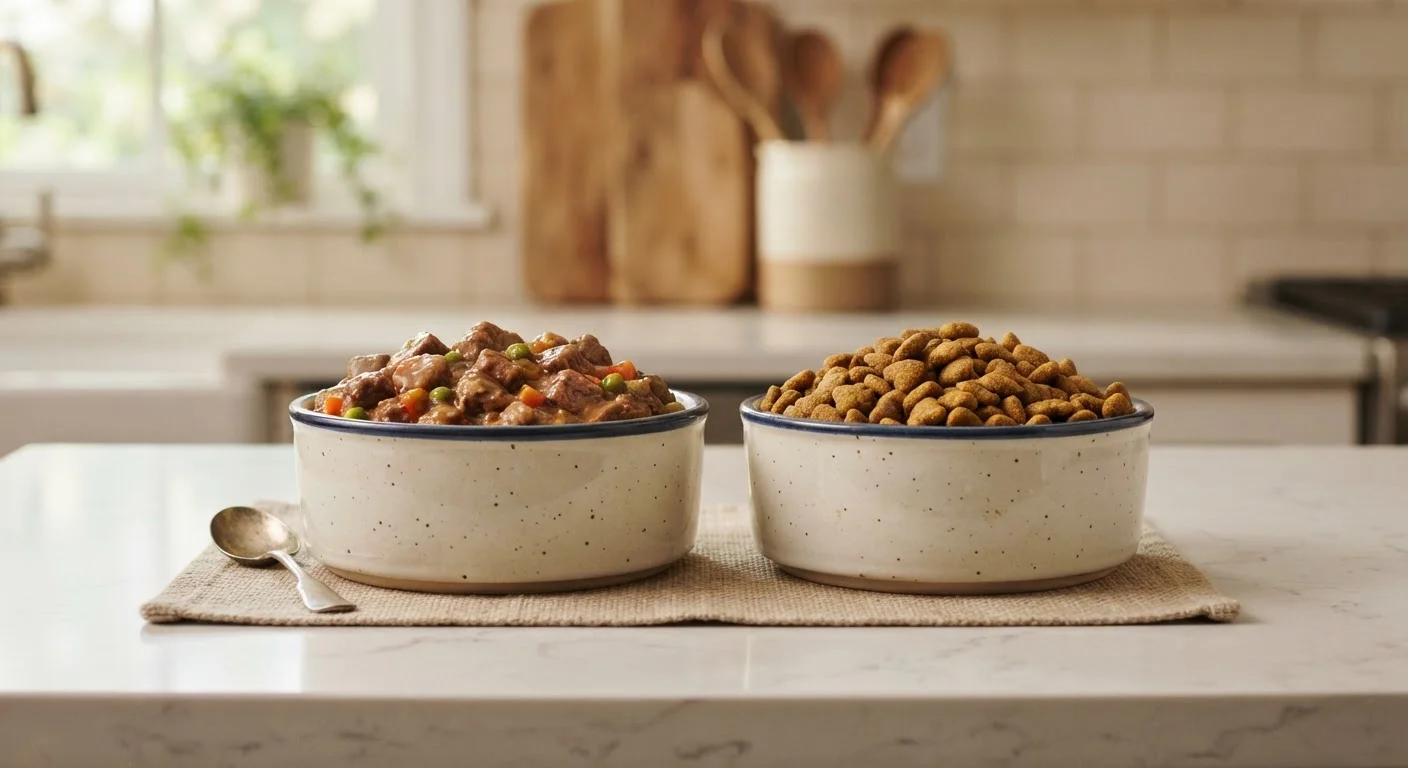
The most fundamental difference between wet and dry pet food is water content. Wet food - sold in cans or pouches - typically contains between 70% and 85% moisture. Dry kibble, by contrast, contains roughly 10% moisture. Everything else in each format - protein, fat, carbohydrates, vitamins, and minerals - is concentrated within that remaining dry matter.
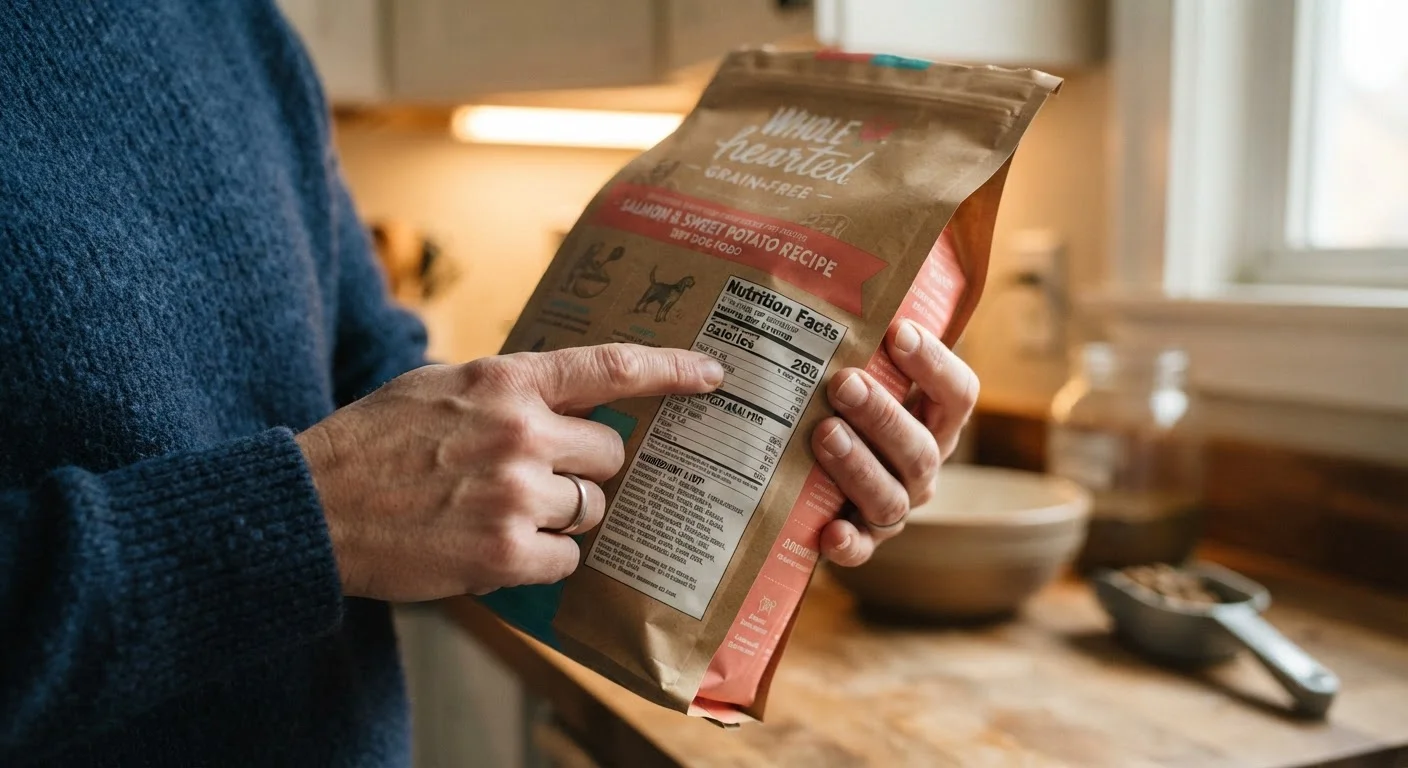
This matters more than it might seem. Because wet food is mostly water, you need to feed a larger volume to deliver the same caloric content as kibble. When comparing the two side by side on a label, always check the guaranteed analysis panel on a dry-matter basis rather than as-fed percentages. Our guide Pet Nutrition Labels Decoded walks through exactly how to do that calculation.
Beyond moisture, the two formats also differ in texture, aroma, ingredient processing, and how they behave once opened. Wet food must be refrigerated after opening and used within one to two days. Kibble stays shelf-stable for weeks once a bag is open, provided it's stored in an airtight container away from heat and humidity.
| Criterion | Wet Food | Dry Food (Kibble) |
|---|---|---|
| Moisture Content | 70-85% | ~10% |
| Cost per Serving | Higher | Lower |
| Shelf Life After Opening | 1-2 days (refrigerated) | Weeks (sealed container) |
| Palatability | Generally high | Moderate; varies by pet |
| Dental Cleaning Effect | Minimal | Some mechanical benefit |
| Ease of Portion Control | Moderate | Easy to measure |
| Works with Auto-Feeders | No | Yes |
| Best for Picky Eaters | Yes | Less reliably |
Hydration, Dental Health, and Palatability
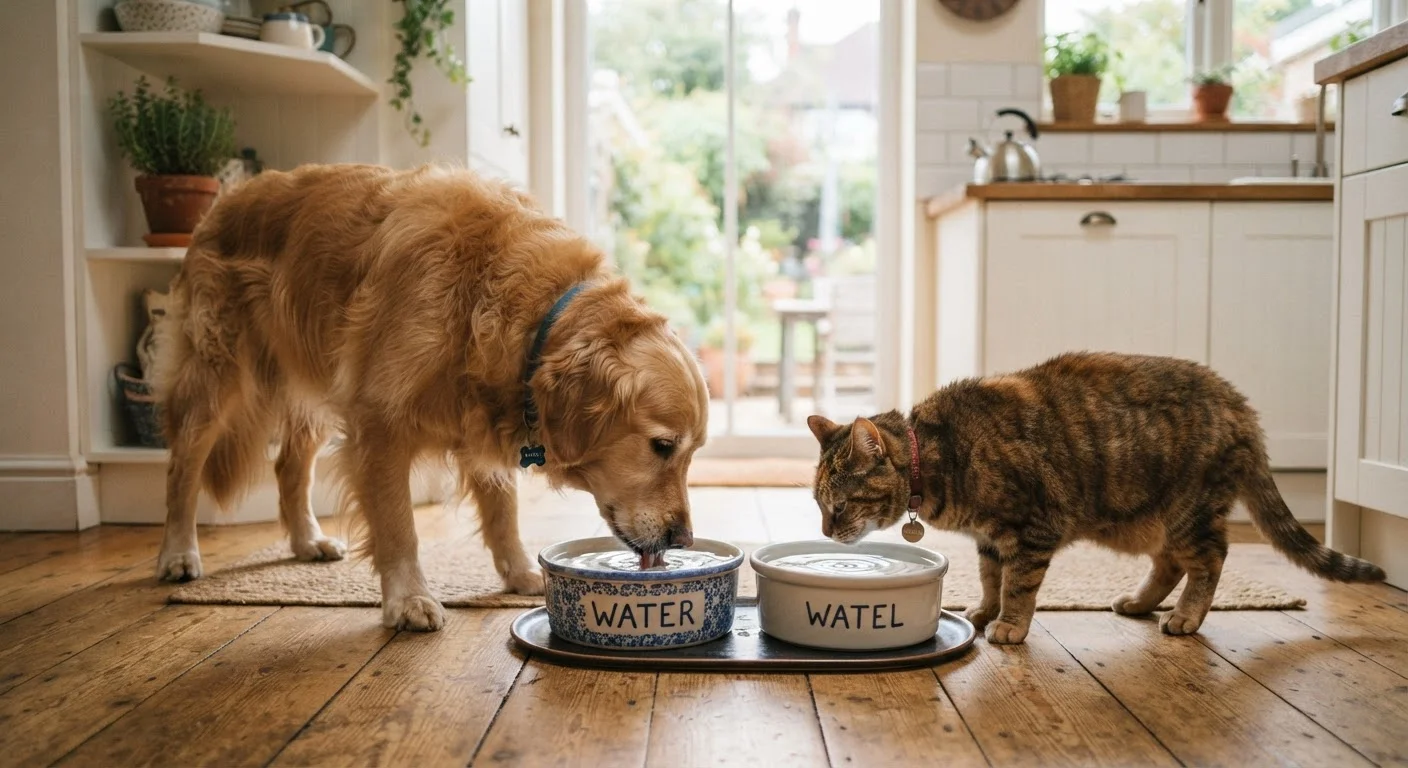
Hydration is one of the clearest arguments for wet food, particularly for cats. Cats evolved as desert animals and have a naturally low thirst drive - they don't compensate well for dry diets by drinking more water. Chronic mild dehydration has been linked by veterinary researchers to urinary tract issues in cats. Wet food doesn't replace a fresh water source, but it does add meaningful daily fluid intake. For more on recognizing adequate hydration, see Is Your Pet Drinking Enough Water?.
Dental health is where kibble often gets credit. The mechanical action of chewing hard kibble can help reduce plaque and tartar buildup on some pets' teeth. However, this benefit is frequently overstated - many pets swallow kibble without much chewing, and no food format replaces regular tooth brushing or professional dental cleanings recommended by a veterinarian.
Palatability tends to favor wet food. Its stronger aroma and softer texture appeal to most cats and many dogs, which makes it useful for picky eaters or animals recovering from illness. If your pet is losing interest in food, a temporary switch to wet food - or adding a small amount of wet food on top of kibble - can help re-engage appetite. Always consult your vet if a pet's appetite changes significantly.
70-85%
Moisture in typical wet pet food
Compared to roughly 10% in dry kibble, this difference has measurable implications for a pet's daily fluid intake.
2-4x
Higher cost of wet vs. dry per calorie
General veterinary nutrition guidance notes that wet food costs significantly more per calorie than equivalent dry formulas.
~60%
US cat owners who feed dry food only
Industry surveys suggest the majority of US cat owners rely primarily on dry kibble, despite cats' low natural thirst drive.
Cost, Storage, and Everyday Practicality
For most pet owners, cost and convenience are real factors - not afterthoughts. On a per-calorie basis, wet food typically costs two to four times more than an equivalent kibble diet. For a small cat, this may be manageable; for a large dog eating substantial quantities daily, it adds up quickly.
Storage differences are also significant. A large bag of kibble, sealed correctly, can last several weeks. Opened cans or pouches must be refrigerated and consumed quickly, which requires more planning. If you travel frequently or use an automatic feeder, kibble is considerably simpler to manage.
That said, many veterinarians and animal nutritionists suggest a mixed feeding approach - wet food once a day and kibble at other meals - as a practical middle ground. This provides hydration benefits and palatability without the full cost commitment of an all-wet diet. The right balance depends on your pet's specific health needs, which is worth discussing with your vet at your next checkup. Diet choices also connect to your pet's broader lifestyle - whether they live indoors, how active they are, and their individual health profile. For context on how environment shapes pet wellness, Indoor vs. Outdoor Pets offers helpful framing.
This article provides general pet care information and is not a substitute for personalized veterinary advice. Always consult a licensed veterinarian for guidance specific to your pet's health and dietary needs.