
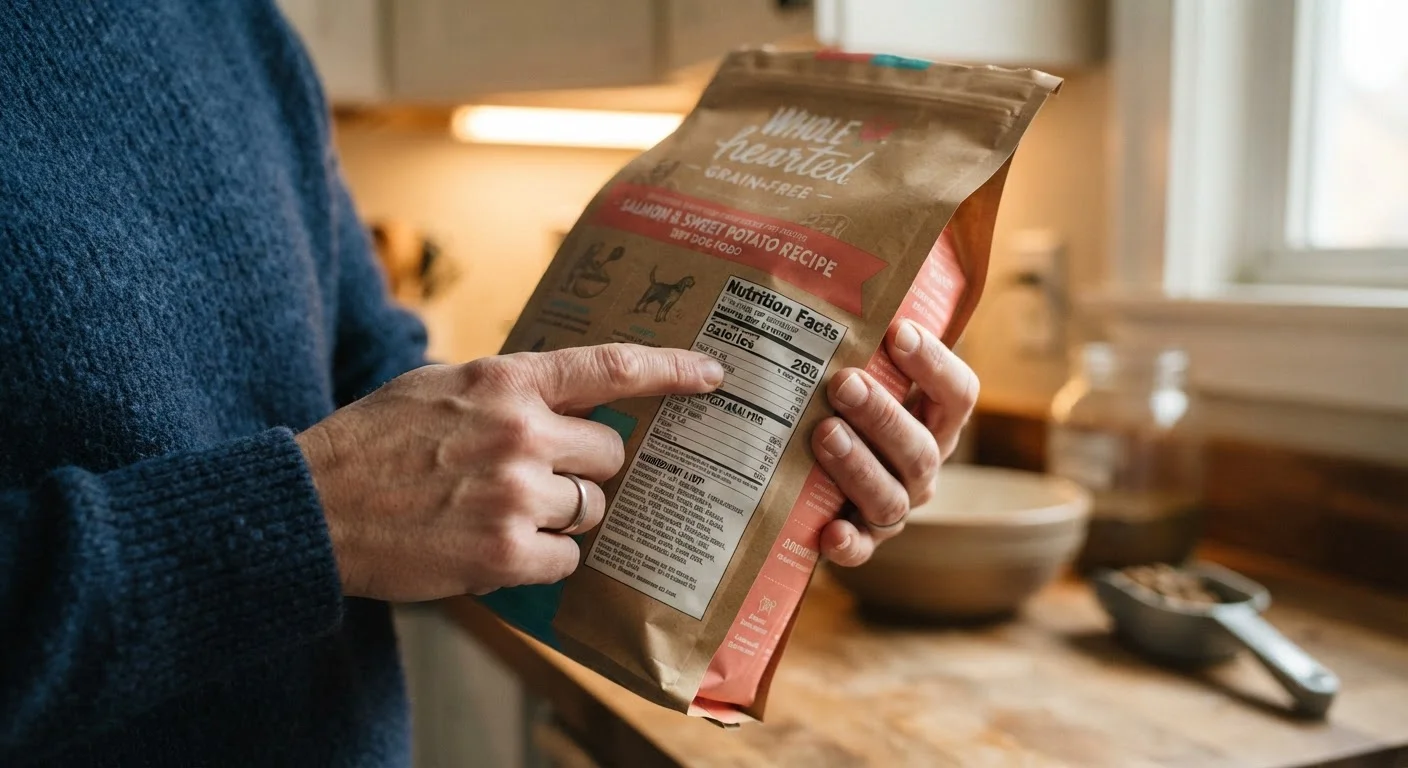
The Ingredient List: What the Order Actually Tells You
Ingredients on pet food labels are listed in descending order by weight before processing. This matters because many whole meats - chicken, beef, salmon - contain significant moisture. Once cooked and dried, their contribution to the finished product may be smaller than the label order implies. A food listing "chicken" first and "chicken meal" fifth may actually contain more chicken-derived protein from the meal, since meal is a concentrated dry form.
What should you look for? Aim for a named animal protein (e.g., "deboned turkey" rather than just "meat") among the first few ingredients. Be aware that similar ingredients can appear separately - "corn," "corn gluten meal," and "corn flour" are all corn, and when added together, corn may outweigh the named protein. This isn't automatically harmful, but it's worth noticing.
For a broader look at how ingredient quality affects pets day-to-day, the signs your pet is thriving article covers what healthy digestion and coat condition can look like in practice.
Start With the Back of the Bag
Marketing language on the front of pet food packaging - words like "natural," "premium," or "wholesome" - carries little regulatory weight. The ingredient list, guaranteed analysis, and AAFCO statement on the back or side panel are where the meaningful information lives. Make it a habit to flip the bag before making decisions.
The Guaranteed Analysis: Interpreting the Numbers
The guaranteed analysis panel shows four required values: minimum crude protein, minimum crude fat, maximum crude fiber, and maximum crude moisture. These are legal thresholds, not precise measurements - "minimum 26% crude protein" means at least that amount is present, but the actual figure could be higher.
One common point of confusion is comparing wet and dry foods directly. Because wet food can be 75-80% moisture, its guaranteed analysis values look far lower than dry food on a percentage basis. To make a fair comparison, you need to convert both to a "dry matter basis" by removing moisture from the equation. Your veterinarian or a veterinary nutritionist can walk you through this calculation if you're weighing options.
Crude protein measures nitrogen content chemically, not digestibility. A food can show high crude protein while providing less usable nutrition if the protein sources are poorly digestible. This is why the ingredient source matters alongside the number. See our weight management guide for more on why single numbers rarely tell the full story.
Dry Matter Basis Comparison
To compare the protein content of a wet and a dry food fairly, divide the guaranteed analysis protein percentage by the percentage of dry matter (100 minus moisture percentage), then multiply by 100. This removes moisture from the equation and gives you a like-for-like figure. A veterinarian or veterinary nutritionist can help you apply this if you're evaluating diets for a pet with specific health needs.
The AAFCO Statement and Feeding Guidelines
The AAFCO nutritional adequacy statement is one of the most important lines on any pet food label, yet it often goes unread. It will say something like: " is formulated to meet the nutritional levels established by the AAFCO Dog Food Nutrient Profiles for maintenance." This tells you two things: the life stage the food targets and whether it was formulated to a profile or validated through a feeding trial.
Foods labeled for "all life stages" meet the higher nutrient thresholds required for growth and reproduction - they're appropriate across age groups. Foods labeled "for intermittent or supplemental feeding only" are not nutritionally complete on their own and should not be a pet's primary diet.
Feeding guidelines appear as a chart or range, typically organized by body weight. Treat these as a starting point. Pets vary in metabolism, activity level, and health status. Monitor your pet's body condition - ribs that are easy to feel but not visibly prominent is a common general indicator of healthy weight - and adjust portions gradually. For new owners still learning the fundamentals, a grounded starting point for pet health covers these basics in context.
This article is for general informational and educational purposes only. Always consult a licensed veterinarian or veterinary nutritionist before making significant changes to your pet's diet or if you have concerns about your pet's health.