Why the Scale Only Tells Part of the Story
When you step on a bathroom scale with your cat in your arms, you get a number - but that number has real limits. Two dogs of identical weight can look and feel entirely different depending on how much of that mass is muscle versus fat, how large their frame is, and whether they carry excess weight in ways that stress their joints or organs.
This is why veterinarians don't rely on weight alone. The approach most commonly used in clinical practice is the Body Condition Score (BCS) - a structured assessment that combines what a vet sees and feels to build a more accurate picture. Think of it as the pet equivalent of measuring body composition rather than simply body weight.
For new pet owners especially, understanding this distinction helps you move beyond anxiety about a single number and start recognizing the meaningful signs of your pet's overall physical health. For a broader look at how wellness checks work, see our guide on what a wellness exam covers.
How Veterinarians Assess Body Condition
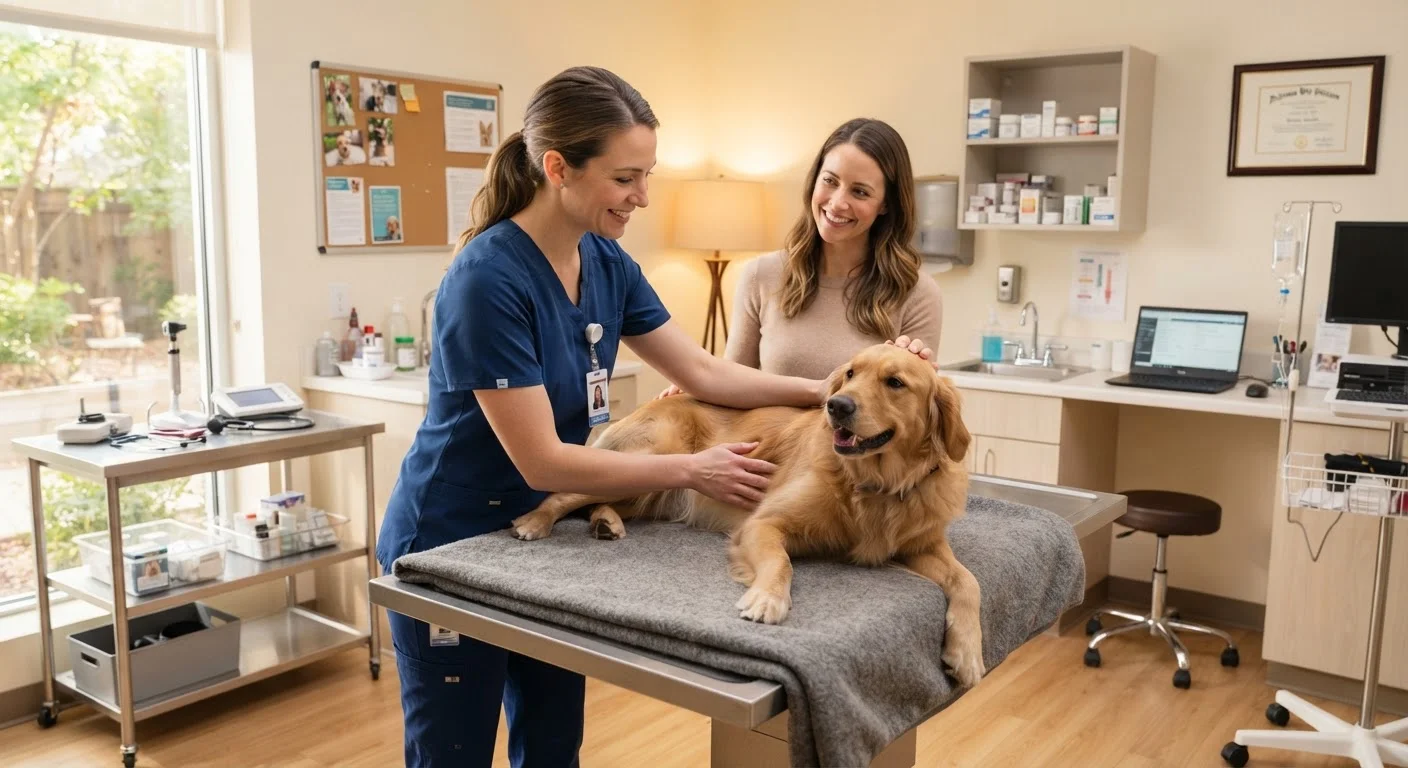
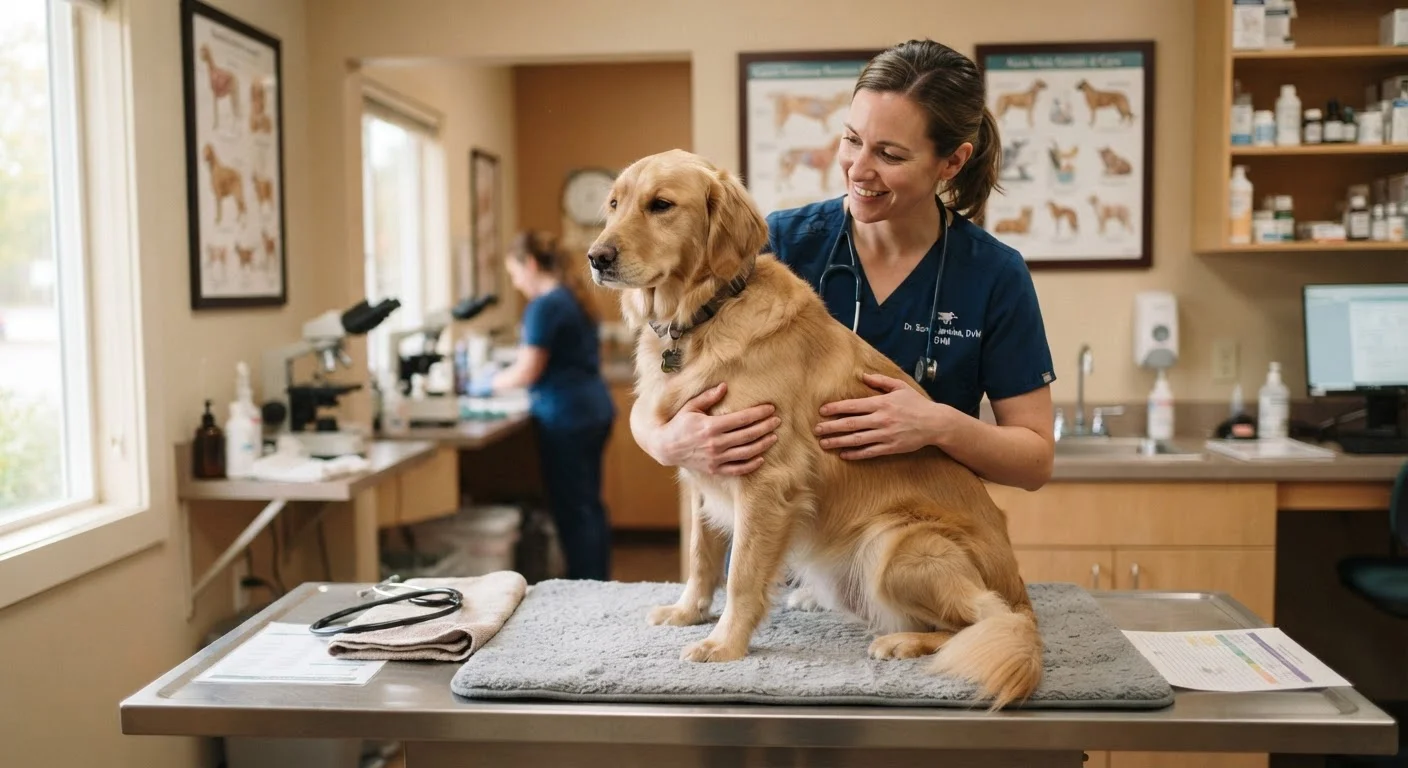
During a physical exam, your vet will systematically palpate (feel) specific areas of your pet's body while also observing its overall silhouette. Key checkpoints include:
- Ribs: Easily felt but not visually prominent signals appropriate fat coverage. Ribs you can't feel at all suggest excess fat; ribs you can see from across the room suggest too little.
- Waist: Viewed from above, most healthy dogs and cats show a visible narrowing behind the ribcage. A pet with no visible waist may be carrying excess weight.
- Abdomen: Viewed from the side, the belly should tuck upward slightly from the ribcage toward the hind legs - not hang low or appear distended.
- Spine and hips: Bony prominences should be palpable but not sharply visible or jutting.
These observations map onto the BCS scale. A score in the middle range (roughly 4-5 on a 9-point scale) is generally considered ideal for most dogs and cats, though your vet will interpret it in the context of your specific animal's breed and life stage.
59%
Dogs classified as overweight or obese
According to the Association for Pet Obesity Prevention's clinical survey data, roughly 59% of dogs seen in U.S. veterinary practices were assessed as overweight or obese.
61%
Cats classified as overweight or obese
The same survey data indicated that approximately 61% of cats assessed in U.S. vet clinics were overweight or obese, making it the most common preventable health condition in companion cats.
9-point
Standard BCS scale used by most U.S. vets
The 9-point Body Condition Score scale, developed and validated for clinical use, is the most widely adopted tool for assessing fat coverage in dogs and cats in North American veterinary practice.
What Else Contributes to the Full Picture
Body condition is one layer. Muscle condition is another. Veterinary practitioners increasingly use a Muscle Condition Score (MCS) alongside BCS, because a pet can have adequate fat coverage while losing significant muscle mass - a pattern common in older animals and those with certain chronic conditions.
Beyond scoring systems, other observable signs help round out the health picture:
- Energy and activity levels: Unexplained lethargy or reluctance to move can point to discomfort, not just low fitness. Our article on exercise needs across common pet types can help you benchmark what's normal for your species.
- Coat and skin quality: Dull, brittle, or patchy fur is often tied to nutritional gaps or underlying health issues. Learn more in what your pet's coat is actually telling you.
- Mobility and posture: Stiffness when rising, reluctance to jump, or changes in gait can all signal that weight or musculoskeletal health warrants a conversation with your vet.
Do a Simple Rib Check at Home
Place both hands on your pet's sides with your thumbs on the spine and fingers spread over the ribcage. Apply gentle, even pressure. You should feel individual ribs without pressing hard - like feeling knuckles through a thin layer of fabric. If you feel nothing but soft tissue, or if ribs are sharply prominent, mention it at your next vet visit. This is a check, not a diagnosis.
Factors That Complicate 'Ideal' Weight
There is no universal ideal weight even within a single species. Several variables shift what healthy looks like for an individual pet:
- Breed and frame size
- A Labrador Retriever and a Chihuahua are both dogs, but their ideal weight ranges differ dramatically - and even within a breed, individual frame size matters.
- Age
- Senior pets often lose muscle mass even when caloric intake seems stable, making muscle condition monitoring especially important as pets age.
- Reproductive status
- Spayed and neutered animals tend to have lower metabolic rates, which affects how much food they need to maintain appropriate condition.
- Health status
- Certain conditions - including thyroid disorders, fluid retention, and organ disease - can cause weight changes that have nothing to do with diet or activity.
Understanding what your pet's food packaging recommends is a reasonable starting point, but those guidelines are general. Our guide to reading pet nutrition labels explains how to interpret those figures without overrelying on them.
This article is for general informational purposes only and is not a substitute for professional veterinary advice. Always consult a licensed veterinarian for guidance specific to your pet's health and nutritional needs.