Why Water Matters More Than You Might Think
Water isn't just a basic comfort for your pet - it's fundamental to virtually every bodily function. Proper fluid balance supports kidney filtration, digestion, joint lubrication, circulation, and the ability to regulate body temperature. When pets don't get enough, even everyday functions can start to suffer before any obvious symptoms appear.
As part of your monthly pet health habits, checking your pet's water intake is one of the easiest baselines to track. You don't need special equipment - just consistent observation. Knowing what's normal for your pet makes it far easier to notice when something has shifted.
~1 oz/lb
Daily water guideline for dogs
A commonly cited veterinary rule of thumb is approximately 1 ounce of water per pound of body weight per day for dogs, adjusted for diet and activity.
70-80%
Water content in wet pet food
Canned or wet pet foods are typically 70-80% moisture, making them a meaningful contributor to daily fluid intake for cats and dogs.
60-70%
Proportion of a pet's body that is water
Like humans, dogs and cats are composed largely of water - making adequate hydration essential to nearly all physiological processes.
What Good Hydration Actually Looks Like
A well-hydrated pet has moist, pink gums (not pale, white, or tacky), clear and normally colored urine, and normal skin elasticity. For dogs, a quick informal check involves gently lifting the skin at the back of the neck - in a hydrated animal, it should return to its original position quickly. This is a rough indicator, not a diagnostic tool; your vet can perform a more thorough assessment.
Energy level and behavior are also useful signals. A hydrated pet is alert, engaged, and moves comfortably. For a more complete picture of what a thriving pet looks like day to day, see our article on signs of a healthy pet that first-time owners often overlook.
Signals That Hydration May Be Off
Subtle changes are often the first clue. A pet drinking noticeably less than usual, producing darker urine, or seeming unusually low-energy may be moving toward dehydration. On the flip side, a pet suddenly drinking significantly more than normal - what veterinarians call polydipsia - can also indicate a health change that deserves professional attention.
Physical signs worth noting include dry or sticky gums, eyes that appear sunken, reduced urination, and a general reluctance to move or play. These aren't diagnosis points - they're prompts to consult your vet. Some of these overlap with other discomfort signals; our guide on signs your pet may be in pain or discomfort covers that broader territory.
Make a Simple Water Intake Baseline
For one week, fill your pet's bowl to the same level each morning and note roughly how much is gone by evening. This informal baseline makes it much easier to spot meaningful changes - drinking far less or far more than usual - before they become serious concerns. Share these observations with your vet at your next visit.
Practical Steps to Support Daily Hydration
The most reliable thing you can do is provide fresh, clean water at all times - refilled at least once daily and in a bowl that's easy for your pet to access. Beyond that:
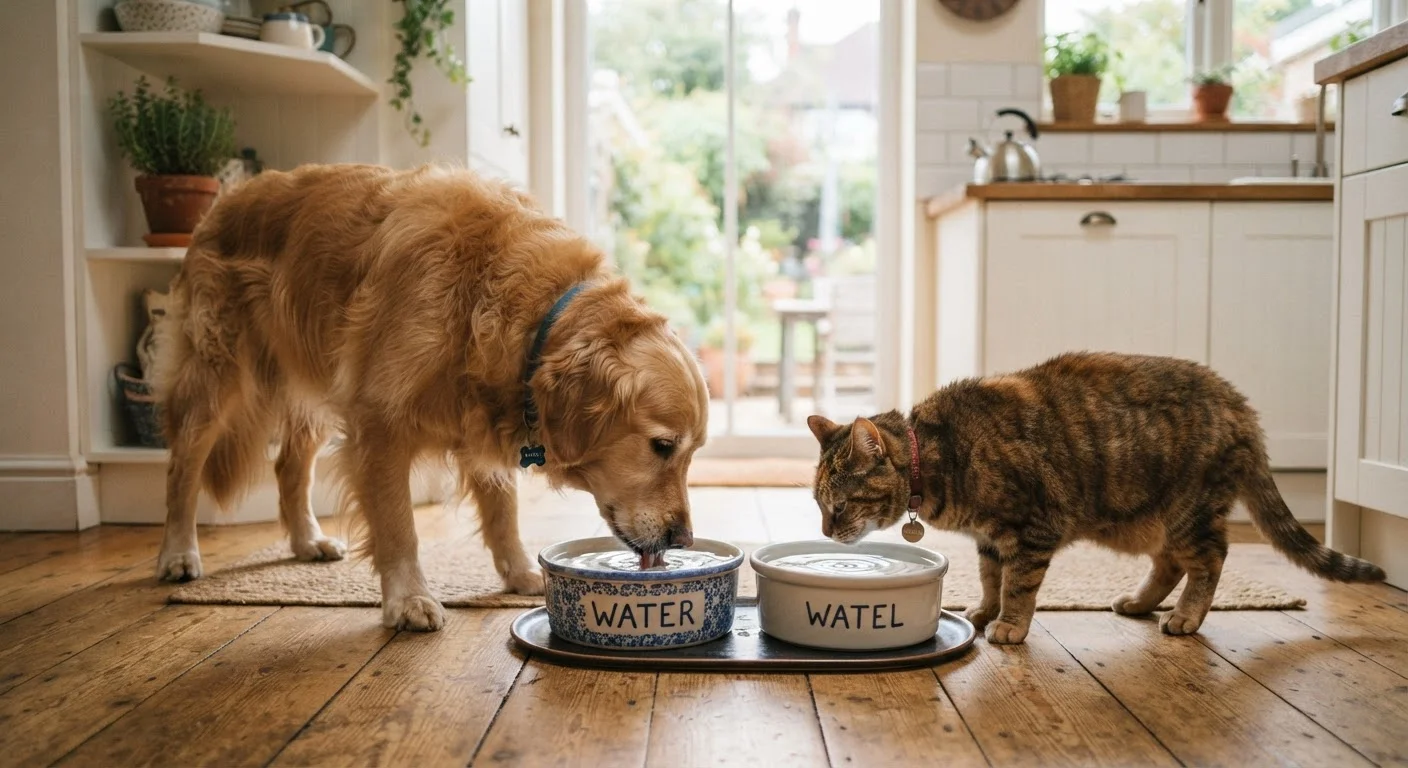
- Location matters. Many cats, in particular, dislike water bowls placed next to food or litter boxes. Try separating them.
- Water fountains can encourage cats and some dogs to drink more by simulating running water, which animals instinctively find more appealing.
- Diet plays a role. Wet food contributes significantly to fluid intake. If your pet is on dry food exclusively, water access is even more critical.
- Weather and activity. Pets need more water in hot weather or after vigorous exercise - the same way people do.
For a broader look at how diet and hydration interact - a concept that applies across species - the article on hydration and food explores the relationship in helpful detail. The same principles around moisture-rich food apply to what you put in your pet's bowl.
This article is for general informational purposes only and does not constitute veterinary advice. If you have concerns about your pet's health or hydration, please consult a licensed veterinarian.