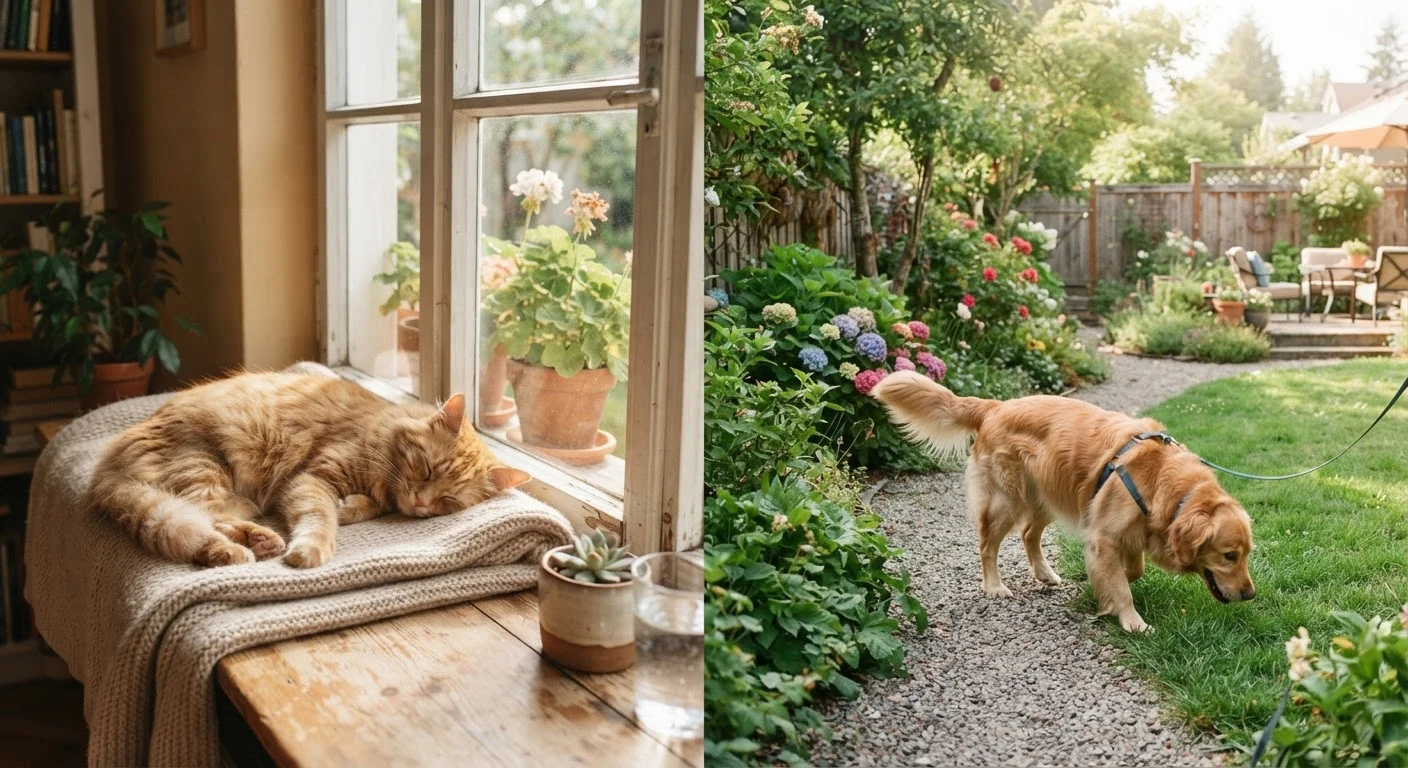

Why Environment Matters for Pet Health
Where your pet spends most of its time has a direct effect on what health risks it encounters, how much physical and mental stimulation it receives, and how easy it is for you to monitor its wellbeing. This isn't a lifestyle preference question alone - it carries real medical weight.
Both settings create specific health patterns. Understanding those patterns helps you make a more deliberate choice and spot problems earlier. For a broader starting point on reading your pet's overall health, see our introduction to pet health for new owners.
2-5x
Longer median lifespan for indoor vs. outdoor cats
Veterinary and animal welfare organizations generally cite indoor cats living significantly longer on average, largely due to reduced injury and disease exposure.
~50%
US pets estimated to be overweight or obese
The Association for Pet Obesity Prevention has reported that roughly half of dogs and cats in the US are overweight, a condition closely linked to sedentary indoor lifestyles.
The Case for Keeping Pets Indoors
Indoor living removes a significant category of dangers from your pet's daily experience. There's no traffic, no predator encounters, and far less exposure to infectious diseases spread through contact with unknown animals.
Lower exposure to parasites and infectious disease
Indoor pets rarely encounter fleas, ticks, or diseases spread by strays. This reduces the frequency and cost of certain preventive treatments, though it doesn't eliminate the need entirely.
Protection from traffic and predator encounters
Road accidents and predator attacks are among the leading causes of injury and death in outdoor cats and small dogs. Keeping pets inside eliminates these risks entirely.
Easier health monitoring for owners
When a pet lives indoors, changes in appetite, litter box habits, or energy levels are easier to notice quickly - supporting faster responses to potential health concerns.
Reduced toxin and environmental hazard exposure
Outdoor environments may contain pesticides, fertilizers, and toxic plants. Indoor pets face fewer of these hazards, though household toxins still require vigilance.
That said, a controlled environment doesn't automatically mean a healthy one. Sedentary indoor pets - particularly cats - are at elevated risk for obesity, which veterinary consensus links to diabetes, joint disease, and reduced lifespan. Behavioral problems like excessive vocalization, destructive scratching, or anxiety can also emerge when pets lack adequate mental stimulation. These are signs worth taking seriously, not dismissing as personality quirks.
The Case for Outdoor or Mixed-Access Living
Outdoor access gives pets opportunities that indoor environments struggle to replicate: varied terrain, natural scent stimulation, social exposure, and exercise that mirrors instinctive behavior. For some breeds and temperaments, this enrichment is difficult to substitute indoors.
Higher parasite and disease exposure risk
Ticks, fleas, and intestinal parasites are significantly more common in outdoor pets. Contact with wildlife or stray animals also raises the risk of infectious diseases, some of which are vaccine-preventable.
Greater risk of injury from external hazards
Traffic, predators, and territorial conflicts with other animals are genuine dangers for outdoor pets, particularly free-roaming cats and small or medium-sized dogs.
Toxin exposure from outdoor environments
Pesticides, herbicides, certain mulches, and toxic plants pose ingestion risks that are difficult to control outside a managed indoor space.
Harder for owners to monitor daily health changes
Pets with significant outdoor time are harder to observe consistently, which can delay the detection of subtle changes in behavior, appetite, or physical condition.
The risks, however, are concrete. Parasites - fleas, ticks, intestinal worms - are far more prevalent for outdoor pets. Toxin exposure from pesticides, fertilizers, and certain plants is a real concern. Stray animal contact raises infectious disease risk, including conditions preventable by vaccine but only if vaccination is kept current. The lifestyle trade-offs between indoor and outdoor living go beyond health alone, but health consequences are among the most significant.
Mixed-Access Can Be a Middle Ground
Many owners find that supervised outdoor time - a leash walk, a secured catio, or a fenced yard - captures enrichment benefits while limiting uncontrolled hazard exposure. This approach works differently for cats versus dogs, and breed temperament matters. Discuss your specific pet's needs with a veterinarian before changing their routine significantly.
Health Signs to Watch Regardless of Setting
Whether your pet lives entirely indoors, entirely outdoors, or has access to both, certain signs warrant attention. Changes in appetite, energy level, coat condition, bathroom habits, or posture often indicate something worth investigating - not necessarily something alarming, but something to bring to a vet rather than wait out.
Indoor pets that seem restless, overgroomed, or have gained noticeable weight deserve a closer look. Outdoor pets that are lethargic after returning inside, show skin irritation, or have changes in stool consistency may have encountered something in their environment. Our monthly pet health habit framework offers a practical structure for tracking these signals over time.
It's also worth avoiding common assumptions - like believing that outdoor pets are automatically hardier or that indoor pets don't need parasite prevention. The pet health assumptions that lead owners astray are often rooted in exactly that kind of well-intentioned but incomplete thinking.
This article is for general informational purposes only and is not a substitute for professional veterinary advice. Always consult a licensed veterinarian regarding your pet's specific health needs.