
Why First-Time Buyers Keep Making the Same Finance Mistakes
Buying a car for the first time is exciting - and that excitement is exactly what finance providers and dealerships count on. When emotions are running high, it's easy to sign documents without fully understanding what you're agreeing to. The mistakes below aren't signs of carelessness; they're predictable traps built into how car finance is presented. Knowing what to watch for changes everything.
Fixating on the monthly payment instead of the total cost of borrowing.
Why it happens: Dealers and lenders know a low monthly figure feels manageable, so it's usually the number they lead with. A longer loan term reduces the monthly payment but dramatically increases what you pay overall.
Ignoring APR and focusing only on the advertised interest rate.
Why it happens: The headline rate sounds simple, but it doesn't include fees and other charges. The Annual Percentage Rate (APR) bundles these costs into a single comparable figure, yet it's often buried in the small print.
Skipping a full ownership budget before committing to a finance term.
Why it happens: First-time buyers often budget for the car payment but forget that insurance, fuel, parking, and servicing stack on top. This leaves many owners financially stretched within the first few months.
Applying for finance without checking your credit report first.
Why it happens: Many buyers assume their credit is fine until a lender runs a check - sometimes triggering a hard inquiry that itself affects the score. Errors on credit files are more common than most people expect.
Accepting dealership financing without exploring alternatives first.
Why it happens: Dealer finance is convenient and feels like part of the purchase process, so many buyers don't think to compare it against credit unions, banks, or online lenders.
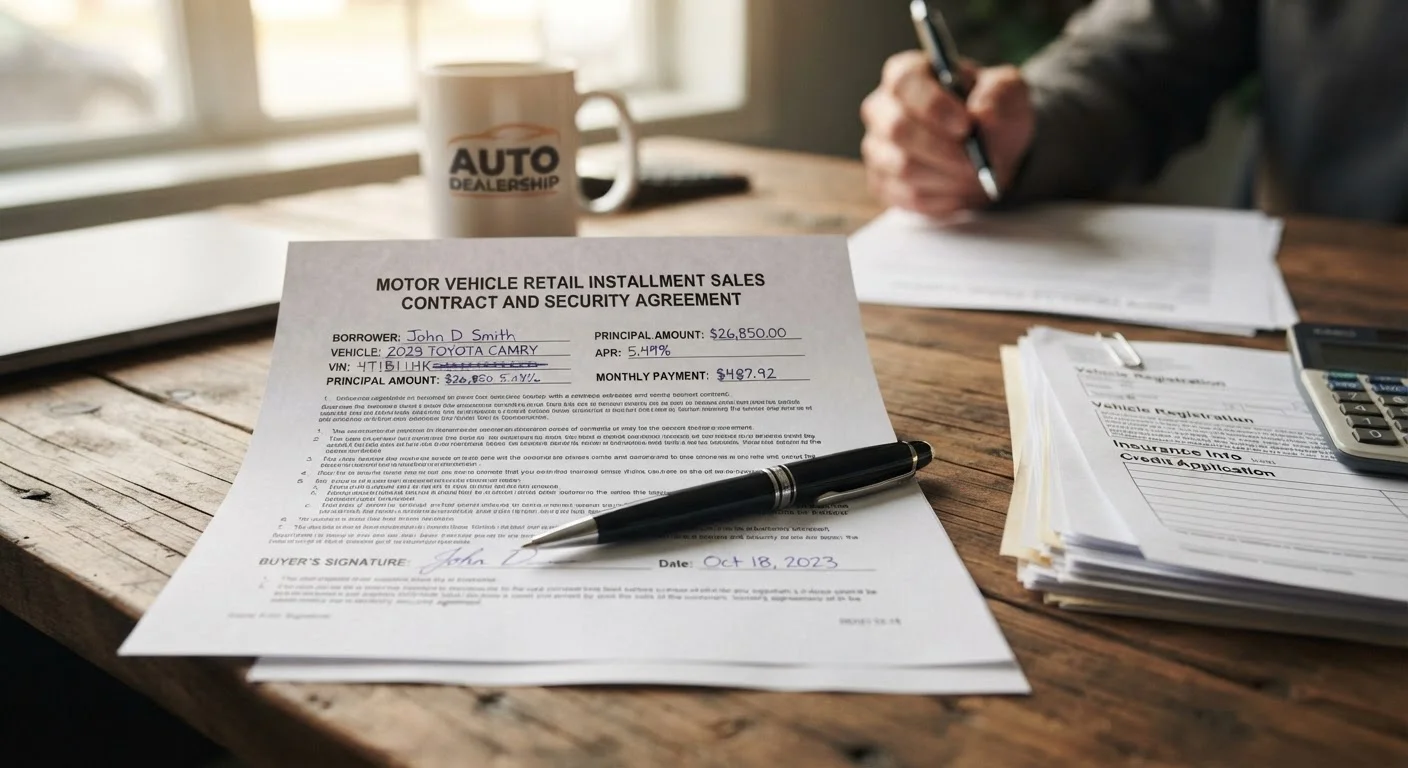
Overlooking hidden fees and charges buried in the finance agreement.
Why it happens: Contracts are lengthy and written in dense financial language. Buyers often skim, trusting that a salesperson would flag anything significant - which isn't always the case.
How to Protect Yourself Before You Sign
Avoiding these missteps comes down to one habit: slow down before any money changes hands. Give yourself time to compare APRs across multiple lenders, build a full monthly budget that includes every ownership cost, and read the contract - all of it - before you sign.
Dealer Add-Ons Can Inflate Your Total Cost
Paint protection, extended warranties, and GAP insurance are frequently offered at the point of sale, bundled into the finance agreement. While some products have genuine value, pricing is often higher than equivalent cover available elsewhere. Always research add-ons independently before agreeing to include them in your loan - once they're in the contract, you're paying interest on them too.
It also helps to understand that car finance follows many of the same principles as other forms of borrowing. The same careful approach that applies to managing credit card debt or a personal loan applies here. If the numbers in the agreement make you uncomfortable, that discomfort is worth listening to.
Finance Is a Legal, Binding Commitment
A car finance agreement is a legally enforceable contract. Missing payments can damage your credit score, trigger penalty charges, and ultimately result in the vehicle being repossessed. Before signing anything, make sure you fully understand every term - including early repayment fees and what happens if your circumstances change. If anything is unclear, ask for clarification in writing.
Finance is a tool - a useful one when used correctly. Taking the time to understand the terms means you stay in control of the decision rather than being guided by whoever is sitting across the table from you.