
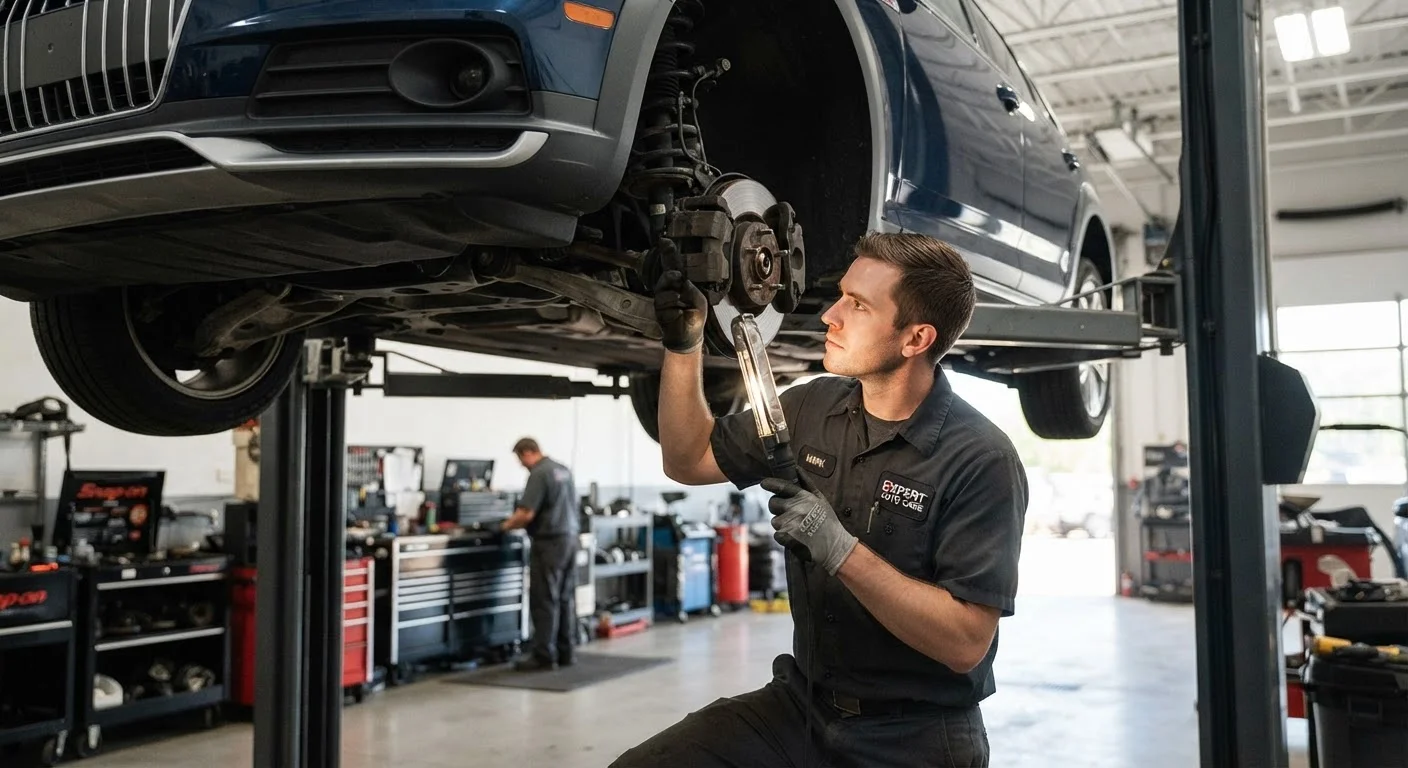
What Each Service Actually Does
These two services sound related because they both involve your tyres - but they address completely different problems.
Tyre rotation is the process of moving each tyre from one wheel position to another in a set pattern. For example, front tyres may move to the rear, and rear tyres cross to the front. The goal is to equalize wear: front tyres on front-wheel-drive vehicles handle steering and acceleration simultaneously, causing them to wear faster than rear tyres. Rotating them regularly means no single tyre wears out significantly ahead of the others.
Wheel alignment - sometimes called a four-wheel alignment - is a calibration of the angles at which your tyres make contact with the road. Technicians measure and adjust three key angles: camber (the tilt of the tyre inward or outward when viewed from the front), toe (whether tyres point inward or outward when viewed from above), and caster (the angle of the steering axis). When these angles drift outside manufacturer specifications, your car may pull to one side, wear tyres unevenly on one edge, or handle less predictably.
In short: rotation redistributes wear; alignment corrects the geometry that causes wear in the first place. See our guide to common tyre myths for more misconceptions that can affect your safety and spending.
| Criterion | Tyre Rotation | Wheel Alignment |
|---|---|---|
| What it does | Moves tyres between positions | Adjusts wheel angles to spec |
| Typical frequency | Every 5,000-7,500 miles | Annually or after impact |
| Typical cost (US) | $20-$50 | $75-$150 |
| Time required | ~30 minutes | ~60 minutes |
| Key symptom if overdue | Faster wear on front tyres | Car pulls left or right |
| Can you DIY? | Sometimes, with equipment | No - requires specialist tools |
| Affects handling? | Indirectly, over time | Yes, directly and immediately |
When You Need Each - and How to Tell the Difference
One of the most common mistakes first-time car owners make is assuming one service covers the other. They do not.
Signs you need a tyre rotation:
- You've driven 5,000-7,500 miles since the last rotation (check your owner's manual for the exact interval).
- You notice that front tyres feel noisier or show visibly more wear than the rears.
- You're getting an oil change and rotation is included or overdue.
Signs you need a wheel alignment:
- Your steering wheel sits off-center when driving straight.
- The car drifts or pulls to one side without steering input.
- One or both tyres show excessive wear on the inner or outer edge only.
- You've recently driven over a large pothole, hit a curb hard, or been in a minor accident.
It's worth noting that misalignment can accelerate uneven tyre wear - so if alignment is off and you only rotate the tyres, you're shuffling an ongoing problem rather than fixing it. For decisions about what's safe to handle yourself versus what warrants a professional, this breakdown of DIY versus mechanic tasks is a useful starting point.
Do You Need Both at the Same Visit?
Not necessarily. If you're due for a rotation but your car tracks straight and shows no edge wear, you likely don't need an alignment. Conversely, if your car is pulling after hitting a pothole, get the alignment checked before rotating - otherwise you're rotating tyres that are already wearing in a skewed pattern. Ask your technician to evaluate each service on its own merits rather than assuming both are always paired.
Cost, Frequency, and What to Expect
Understanding the practical side helps you plan without overspending.
45%
Vehicles with at least one misaligned tyre
Industry estimates suggest a significant portion of vehicles on US roads have alignment outside manufacturer tolerances at any given time.
~$150
Cost of a single replacement tyre
Premature tyre wear from skipped rotation or misalignment can cost far more than either maintenance service combined.
5,000-7,500 mi
Recommended tyre rotation interval
This range reflects common manufacturer guidance; always verify the specific interval in your vehicle's owner's manual.
Tyre rotation typically costs between $20 and $50 at most service shops, and many dealers include it free with oil changes. It's a quick service - usually completed in 30 minutes or less. Most manufacturers recommend rotating tyres every 5,000 to 7,500 miles, though some vehicles with different front and rear tyre sizes may require different rotation patterns or may not support rotation at all. Check your owner's manual first.
Wheel alignment generally costs between $75 and $150 for a standard four-wheel alignment. The service takes roughly an hour. Most manufacturers recommend having alignment checked once a year or whenever you notice the symptoms described above. Alignment does not typically need adjusting as frequently as rotation - but when it does, skipping it costs more in premature tyre replacement than the service itself.
Some shops will offer both services in a combined visit, which can save time. That's a reasonable approach if both are genuinely due - but don't let a bundled upsell push you into an alignment you don't need.
This article provides general educational information about vehicle maintenance and is not a substitute for advice from a qualified mechanic familiar with your specific vehicle.