
Why Zero Athletic Background Is Actually Fine
Most beginner exercise content is quietly written for people who were once athletic and just fell out of the habit. If you've never had a routine - never played a sport, never been to a gym - the advice rarely quite fits.
The good news: starting from zero is genuinely easier in one important way. You have no bad habits to unlearn. Your body will respond to even modest movement with measurable improvements in energy, sleep quality, and mood. Research consistently shows that previously sedentary individuals often experience the most significant relative gains in the early weeks of an exercise program.
What holds most beginners back isn't ability - it's the belief that exercise is something other people do. That belief doesn't survive contact with a realistic, low-pressure plan. This guide is that plan.
This article provides general health and wellness information only. It is not a substitute for personalised advice from a qualified healthcare or fitness professional. If you have any existing health conditions, consult your doctor before starting a new exercise program.
The Foundation: What Movement Patterns Should You Know?
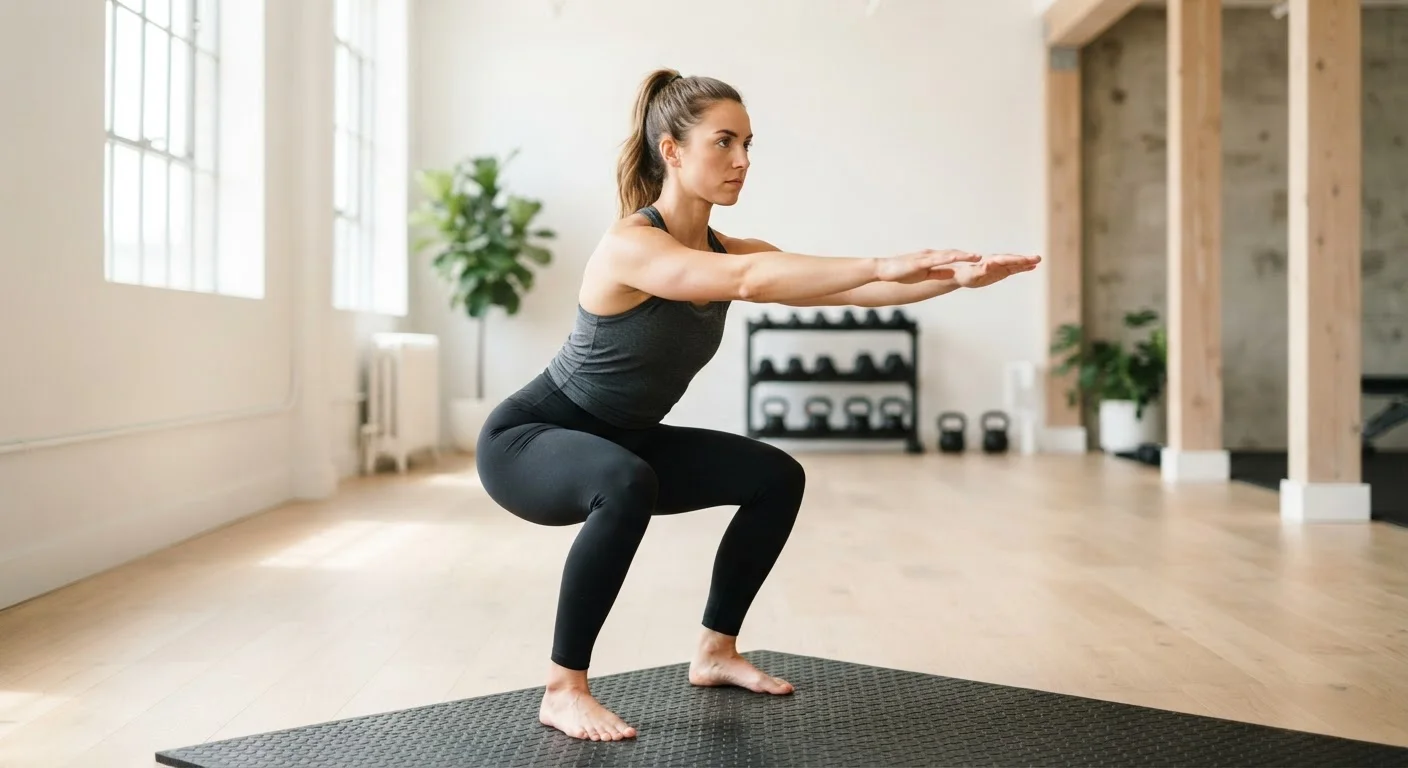
Before picking exercises, it helps to understand the small number of movement patterns that underpin almost everything. These are the building blocks: squat (lowering and rising from a bent-knee position), hinge (bending at the hips with a neutral spine), push (pressing away from your body), pull (drawing weight toward your body), and carry (moving while holding a load).
Every exercise you'll encounter is a variation of one or more of these patterns. A bodyweight squat, a wall sit, and a step-up are all squat-pattern movements. A push-up and a wall push are both push-pattern movements. Understanding this instantly makes a confusing exercise landscape much simpler.
Delayed-onset muscle soreness (DOMS)
A dull ache or stiffness in muscles that typically appears 24-48 hours after unfamiliar exercise. It's a normal response to new physical stress and usually fades within a few days.
Repetitions (reps)
The number of times you perform a single movement in a row - for example, doing ten squats in a row counts as ten reps.
Sets
A group of repetitions performed without stopping. Doing ten squats, resting, then doing ten more equals two sets of ten reps.
Progressive overload
The gradual increase of exercise demands over time - such as adding more reps or a longer walk - so that your body continues to adapt and improve.
Recovery
The period between exercise sessions when your muscles repair and adapt. Adequate rest is what turns exercise stress into fitness gains.
For a deeper explanation of how these patterns connect, see our guide to foundational movement patterns - it's a useful companion to this article.
Building Your First Weekly Schedule
A practical beginner schedule involves three movement days with at least one rest or light-activity day between each session. Here's a simple framework to get started:
- Day 1 (e.g. Monday): Full-body movement - 5-minute walk, bodyweight squats (2 sets of 8), wall push-ups (2 sets of 8), and a 10-minute brisk walk to finish.
- Day 2 (Wednesday): Repeat Day 1, or try a variation - lunges instead of squats, floor bridges instead of wall push-ups.
- Day 3 (Friday or Saturday): Slightly longer walk (15-20 minutes) plus a few bodyweight movements you've been practicing.
On non-session days, aim for casual activity: a short walk, stretching, or light household movement. This keeps the habit present without taxing your recovery.
Keep Your First Sessions Shorter Than You Think
Beginners often overestimate how long sessions need to be to be effective. A focused 20-minute session done consistently beats a 60-minute session done once. Shorter sessions also reduce the mental barrier to starting, which is often the hardest part.
Always start each session with a brief warm-up. Our guide to warming up properly explains exactly what to do and why it matters - especially for beginners whose muscles and joints aren't yet conditioned to exercise stress.
How to Progress Without Getting Hurt
The most common beginner mistake is doing too much too soon. Enthusiasm is a good thing, but your tendons, joints, and connective tissue adapt more slowly than your cardiovascular system. You may feel capable of doing more before your body is structurally ready for it.
A widely used principle is the 10% rule: don't increase your weekly volume or intensity by more than roughly 10% from one week to the next. In practice, this might mean adding one extra repetition per set in week three, or extending your walk by five minutes in week four.
Signs you're progressing too fast include persistent joint pain (not muscle soreness), disrupted sleep, or dreading sessions. Any sharp, stabbing, or joint-level pain should prompt you to rest and consult a healthcare professional before continuing.
Making the Habit Stick
A schedule that looks great on paper fails if it doesn't fit your actual life. The most reliable predictor of long-term consistency isn't motivation - it's friction. The fewer barriers between you and your workout, the more likely you are to do it.
Practical friction-reducers include: scheduling sessions at the same time each day, keeping workout clothes visible and ready, choosing movement you mildly enjoy rather than movement you think you should do, and starting with sessions short enough that skipping them feels sillier than doing them.
Habit research also supports the value of tracking - even a simple checkmark on a calendar creates a visual streak worth protecting. For more on the evidence behind building lasting movement habits, see what research says about building consistency. And if you're thinking about pairing your movement habit with a broader morning structure, building a morning routine that doesn't collapse by week two offers a compatible, practical framework.
Above all, expect imperfect weeks. Missing one session doesn't break a habit - giving up after missing one session does. The goal in the first month is simply to show up more often than not.