Why Movement Patterns Matter More Than Individual Exercises
Walk into any gym or open a fitness app and you'll be met with hundreds of exercises, each with its own name and technique cues. That volume can be overwhelming - but here's a reassuring truth: nearly every exercise is simply a variation of one of five or six core movement patterns.
Understanding those patterns gives you a mental map of fitness. Instead of memorizing dozens of isolated movements, you learn to recognize the underlying structure. A Romanian deadlift and a kettlebell swing look different, but both train the same hip-hinge pattern. A push-up and a dumbbell chest press differ in equipment, but both build pushing strength. Recognizing this makes exercise selection simpler and helps you build a balanced routine.
Movement pattern literacy also reduces injury risk. When you understand why a movement is performed a certain way - which muscles it loads, which joints it stresses - you can self-correct more easily and spot problematic habits early. For a deeper look at common beginner missteps, see common ways new exercisers get derailed.
| Core movement patterns | 5-6 (squat, hinge, push, pull, carry, and sometimes rotation) |
| Primary focus of squat pattern | Quadriceps, glutes, and core |
| Primary focus of hinge pattern | Glutes, hamstrings, and lower back (posterior chain) |
| Push subdivisions | Horizontal (chest-level) and vertical (overhead) |
| Most commonly neglected pattern | Pull - especially rows and upper-back work |
| Carry pattern benefit | Builds grip strength, core stability, and whole-body endurance simultaneously |
The Five Foundational Movement Patterns
Fitness coaches and exercise scientists broadly organize human movement into these categories:
1. Squat
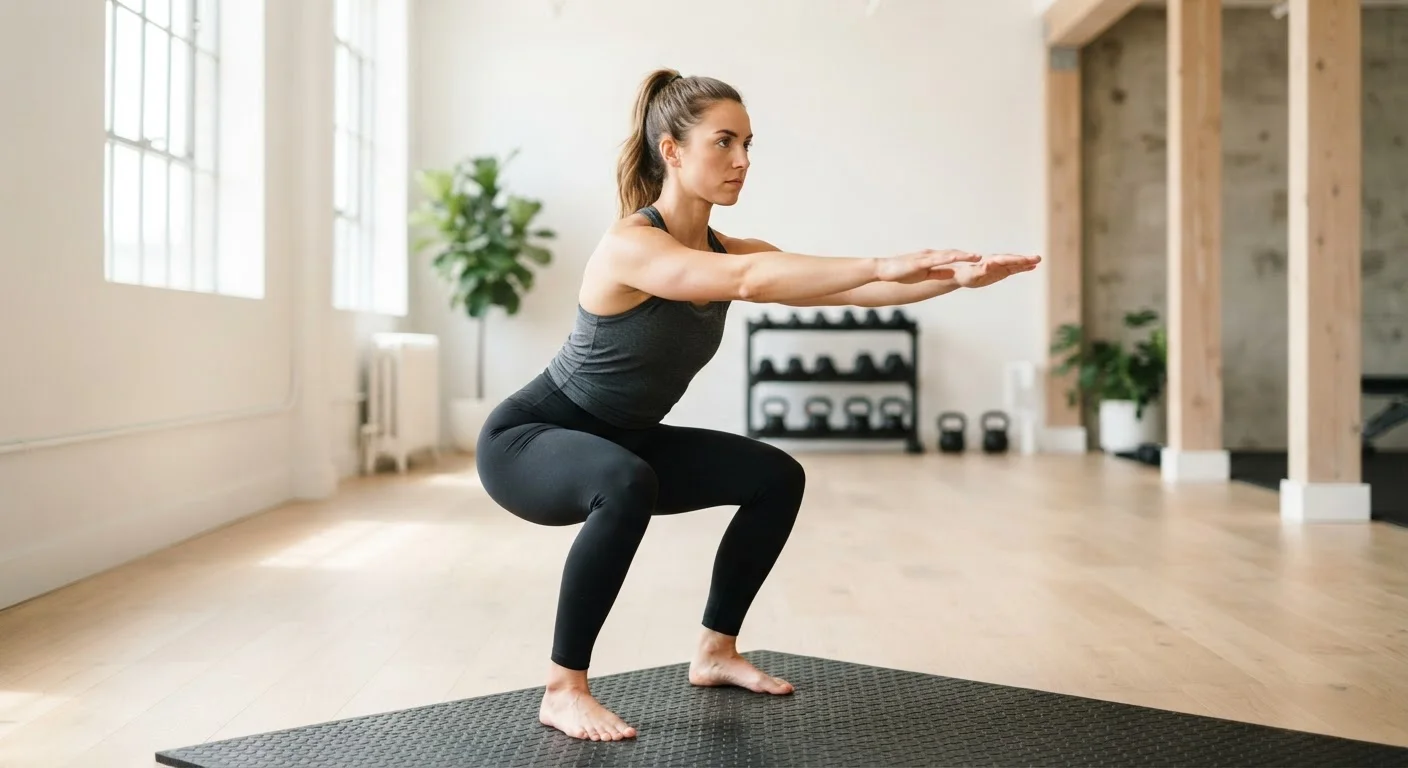
The squat pattern involves bending at the hips and knees simultaneously while keeping the torso relatively upright. It trains the quadriceps, glutes, and core, and mirrors real-life actions like sitting down and standing up. Examples include the goblet squat, bodyweight squat, and leg press.
2. Hip Hinge
A hinge loads the posterior chain - glutes and hamstrings - by pushing the hips backward while maintaining a neutral spine. Deadlifts, kettlebell swings, and good-morning exercises all follow this template. It's one of the most functional patterns for everyday life and athletic performance.
3. Push
Pushing movements propel a load away from the body. They subdivide into horizontal push (push-ups, chest press) and vertical push (overhead press). Both develop shoulder, chest, and tricep strength.
4. Pull
The counterpart to pushing, pulling movements draw a load toward the body. Rows are a horizontal pull; pull-ups and lat pulldowns are vertical pulls. These movements train the back, biceps, and rear shoulders - muscle groups often underdeveloped in beginners.
5. Carry
Carrying - walking with load in one or both hands - builds grip strength, core stability, and full-body endurance simultaneously. Farmer's carries and suitcase carries are underused but highly practical exercises that translate directly to everyday tasks.
Some frameworks also include rotation and anti-rotation as a sixth pattern, covering movements like woodchops and Pallof presses that train the core to resist or produce twisting force.
Movement Pattern
A category of physical movement that groups exercises by the joints and muscles they primarily use. Recognizing movement patterns helps exercisers build balanced, efficient routines.
Posterior Chain
The group of muscles running along the back of the body, including the glutes, hamstrings, and lower back. These muscles are central to hip hinge movements and are important for posture and athletic performance.
Hip Hinge
A movement in which the hips push backward while the spine stays neutral, loading the glutes and hamstrings. Deadlifts and kettlebell swings are classic examples.
Anti-Rotation
A core training concept in which muscles resist twisting forces rather than produce them. Exercises like the Pallof press train the core to stabilize the spine against rotational load.
Neutral Spine
The natural S-shaped alignment of the spine that distributes load safely across the vertebrae. Maintaining a neutral spine during exercise is a key form cue for reducing injury risk.
How to Build a Balanced Routine Around These Patterns
A well-designed beginner program doesn't need to be complicated. Including at least one exercise per pattern each week creates a balanced stimulus across all major muscle groups - and avoids the common trap of overtraining the muscles you can see in a mirror while neglecting the ones you can't.
A simple weekly structure might include:
- One squat variation
- One hinge variation
- One horizontal push and one horizontal pull
- One vertical push or pull
- One carry or core stability movement
From there, you can adjust volume, load, and exercise selection as you build confidence and strength. Understanding that squats, hinges, pushes, and pulls all serve distinct purposes helps you recognize gaps in your current routine rather than just adding random exercises.
Movement patterns also connect meaningfully to broader fitness goals. Whether you're focusing on strength training or building cardiovascular endurance, these patterns form the base. See how strength training and cardio differ in what they do for your body to understand where each fits in a complete approach.
Building consistency around these fundamentals matters as much as the patterns themselves. Research on movement habits suggests that simplicity and routine repetition are key drivers of long-term adherence - and a pattern-based approach gives you exactly that structure.
For a comprehensive starting point that ties all of these concepts together, the Beginner's Complete Guide to Fitness and Movement offers an organized overview for young adults building their first routine.
This article is for general informational and educational purposes only, and is not a substitute for professional medical or fitness advice. If you have any health concerns, injuries, or medical conditions, consult a qualified healthcare provider or certified fitness professional before beginning any exercise program.