
Why Movement Matters More Than 'Working Out'
The word workout carries a lot of baggage - images of intense gym sessions, complicated programming, and a culture of extremes. But the foundation of physical health is much simpler: regular movement. The human body is built to move, and evidence consistently links physical activity to improved mood, better sleep, reduced risk of chronic disease, and sharper cognitive function.
For young adults starting out, reframing exercise as intentional movement rather than punishment or performance removes a major psychological barrier. Walking briskly, cycling to a friend's place, dancing in your kitchen - these all count. The goal at the start is to make movement a normal, recurring part of your week, not an extraordinary event.
Public health guidelines from bodies such as the U.S. Department of Health and Human Services suggest adults aim for at least 150 minutes of moderate-intensity aerobic activity per week alongside muscle-strengthening activities on two or more days. These targets are guidelines, not rigid rules - any amount of movement is better than none, and progress is gradual.
Start Smaller Than You Think You Should
Most beginners overestimate what they can sustain in week one and underestimate the value of showing up consistently for months. If in doubt, start with two sessions per week rather than five. Building the habit reliably matters far more than training volume at the beginning.
The Core Movement Patterns Explained
Almost every exercise you'll ever encounter is a variation of a handful of fundamental movement patterns. Understanding these patterns makes it far easier to learn new exercises and build balanced strength. The key patterns are:
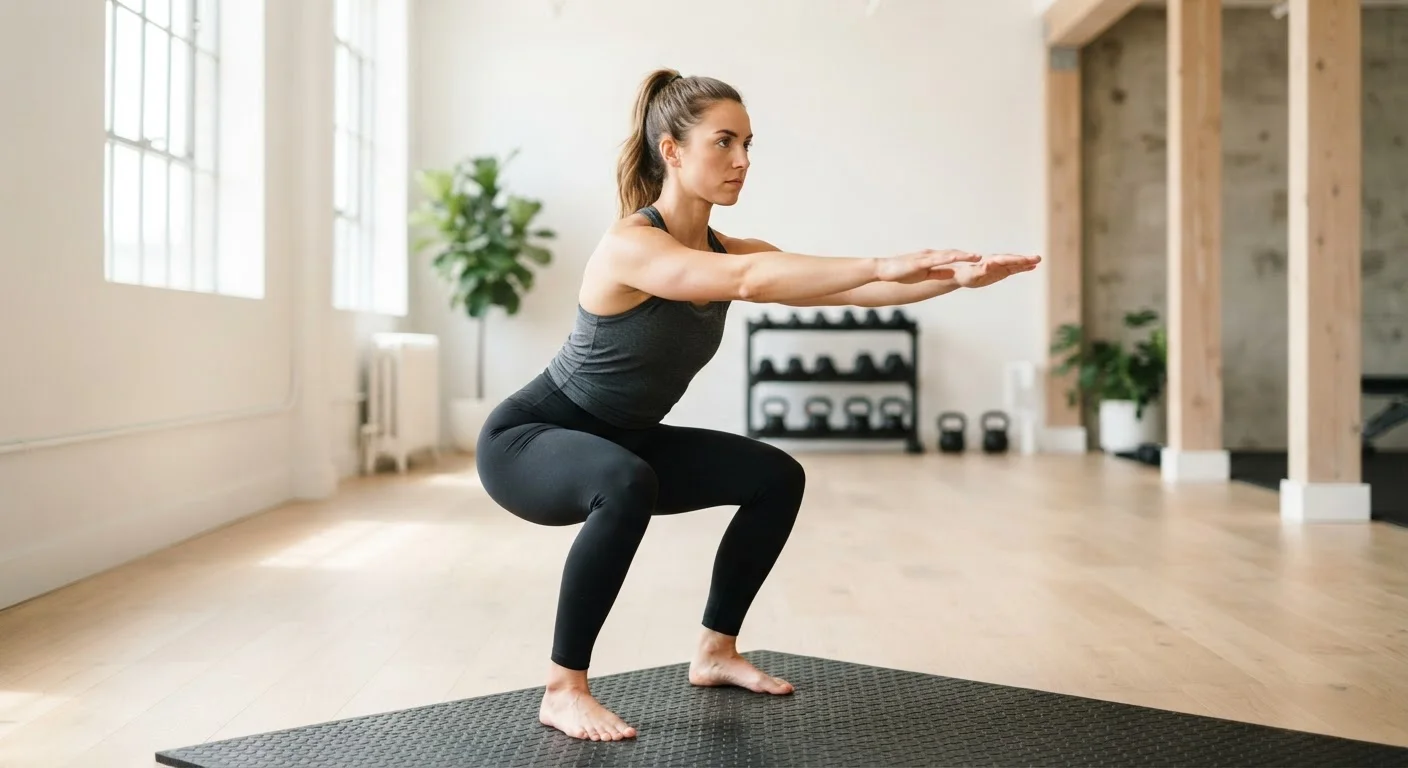
- Squat - bending at the knees and hips, like sitting into a chair (e.g., bodyweight squat, goblet squat)
- Hinge - bending primarily at the hips while keeping the spine neutral (e.g., deadlift, Romanian deadlift)
- Push - pressing away from your body horizontally or vertically (e.g., push-up, overhead press)
- Pull - drawing weight toward your body (e.g., row, pull-up)
- Carry - moving while supporting load, building stability (e.g., farmer's carry)
- Rotate/Brace - controlling or producing rotational force through the core
Training all of these patterns across your week ensures no major muscle group is neglected. For a deeper look at how these patterns interconnect, see our guide to foundational movement patterns.
150 min
Weekly moderate activity recommended for adults
Per U.S. Department of Health and Human Services Physical Activity Guidelines for Americans.
2x
Minimum muscle-strengthening days per week advised
The same federal guidelines recommend resistance training on at least two days per week for all adults.
~30 min
Session length sufficient for beginner strength gains
Research suggests focused 30-45 minute sessions are effective for beginners and reduce dropout risk.
How to Build a Beginner Routine
A sustainable beginner routine is simple by design. Complexity is the enemy of consistency when you're just starting. A two-to-three day-per-week full-body program is ideal for most beginners - it provides enough stimulus to trigger adaptation without overwhelming recovery capacity.
A Simple Weekly Structure
- Day 1: Full-body session - squat pattern, push pattern, pull pattern, core brace
- Day 2: Rest or light movement (walk, gentle stretch)
- Day 3: Full-body session - hinge pattern, push variation, pull variation, carry
- Day 4-5: Rest or recreational activity
- Day 6: Optional third session or active recovery
Each session should last 30-45 minutes, including a brief warm-up (5 minutes of light cardio and dynamic stretching) and a cool-down (5 minutes of static stretching). Start with bodyweight or light loads and focus entirely on form before adding resistance. Poor form under load is the primary driver of beginner injuries.
Film yourself doing a new exercise from the side. You'll catch form errors - like a caved knee on a squat - that you simply cannot feel when you're learning.
Proprioception (your sense of your own body position) is underdeveloped in beginners, making self-video feedback one of the most efficient coaching tools available without a trainer.
When building your first program, choose exercises you actually don't mind doing. Enjoyment is one of the strongest predictors of long-term adherence.
Meta-analyses on exercise adherence consistently identify intrinsic motivation and enjoyment as more durable drivers of continued participation than extrinsic goals like appearance.
Cardio, Strength, and Flexibility: Do You Need All Three?
Yes - but not in equal measure at the start, and not in separate, siloed sessions. Here's what each component contributes:
- Cardiovascular fitness
- Supports heart and lung health, improves endurance, and enhances mood through endorphin release. Brisk walking, jogging, cycling, and swimming are accessible entry points.
- Muscular strength and endurance
- Protects joints, supports metabolic health, and makes everyday tasks easier. Resistance training - using bodyweight, free weights, or resistance bands - builds this capacity.
- Flexibility and mobility
- Reduces injury risk and improves movement quality. Stretching after sessions and incorporating activities like yoga or foam rolling supports long-term joint health.
For beginners, integrating all three doesn't require three separate workout types. A well-structured strength session that includes a dynamic warm-up and a mobility cool-down covers all bases efficiently. As your baseline improves, you can diversify.
Recovery, Rest, and Why They're Not Optional
Exercise creates microscopic stress on muscles and tissues. Adaptation - the process of getting stronger, fitter, and more capable - happens during recovery, not during the workout itself. Skipping rest days doesn't accelerate progress; it typically stalls it and raises injury risk.
Key recovery practices include:
- Sleep: Research consistently identifies 7-9 hours of sleep per night as a critical window for tissue repair, hormonal regulation, and performance gains.
- Protein intake: Consuming adequate dietary protein supports muscle repair. See our guide to building a balanced plate for practical nutrition guidance.
- Active recovery: Light movement on rest days - walking, gentle yoga - promotes blood flow without adding training stress.
- Hydration: Even mild dehydration impairs performance and recovery. Water is the default recommendation.
Overtraining Is a Real Risk for Beginners
Starting with too much volume too soon - six days a week, very high intensity - is one of the most common reasons beginners plateau or quit within the first month. Signs of inadequate recovery include persistent soreness lasting more than 72 hours, declining performance, disrupted sleep, and mood changes. If these appear, scale back and prioritize rest. When in doubt, consult a qualified health or fitness professional.
Nutrition's Role in Your Fitness Foundation
Exercise and nutrition are deeply connected - neither works optimally in isolation. You don't need a strict diet plan to support a beginner fitness routine, but a few foundational habits make a meaningful difference:
- Eat enough overall - under-fueling impairs energy, mood, and recovery
- Include protein at most meals (eggs, legumes, lean meats, dairy, tofu)
- Prioritize whole foods most of the time without rigidly eliminating anything
- Eat something light 60-90 minutes before exercise if training intensity is moderate to high
Avoid the common trap of tying food intake too tightly to workouts - overly restrictive thinking around "earning" food through exercise can develop into unhealthy patterns. For more context on common nutrition mistakes beginners make, read where beginners go wrong with eating healthy.
This article is for general informational and educational purposes only and is not a substitute for personalized medical or nutritional advice. Consult a qualified healthcare professional before beginning a new exercise program, particularly if you have any existing health conditions.
Staying Consistent When Motivation Fades
Motivation is unreliable. It spikes when you start something new and reliably drops off within weeks. Sustainable fitness is built on habits and systems, not willpower. Research on behavior change suggests that environmental design - making the desired behavior easier - is more effective than relying on discipline alone.
Practical strategies that work:
- Schedule sessions like appointments - put them in your calendar with a specific time and treat them as non-negotiable
- Lower the activation barrier - lay out your workout clothes the night before, keep equipment visible
- Anchor movement to existing habits - a 20-minute walk after lunch requires no gym, no equipment, and no planning
- Track completion, not performance - checking a box on a habit tracker builds identity over time
- Accept imperfect sessions - a shorter, easier workout on a tired day is far more valuable than skipping entirely
For complementary wellbeing support, pairing movement with stress-management practices can strengthen your overall routine. Our beginner's guide to mindfulness is a useful starting point. A solid movement foundation, combined with good nutrition and mental wellness habits, creates a genuinely resilient lifestyle - built one reasonable, repeatable choice at a time.