
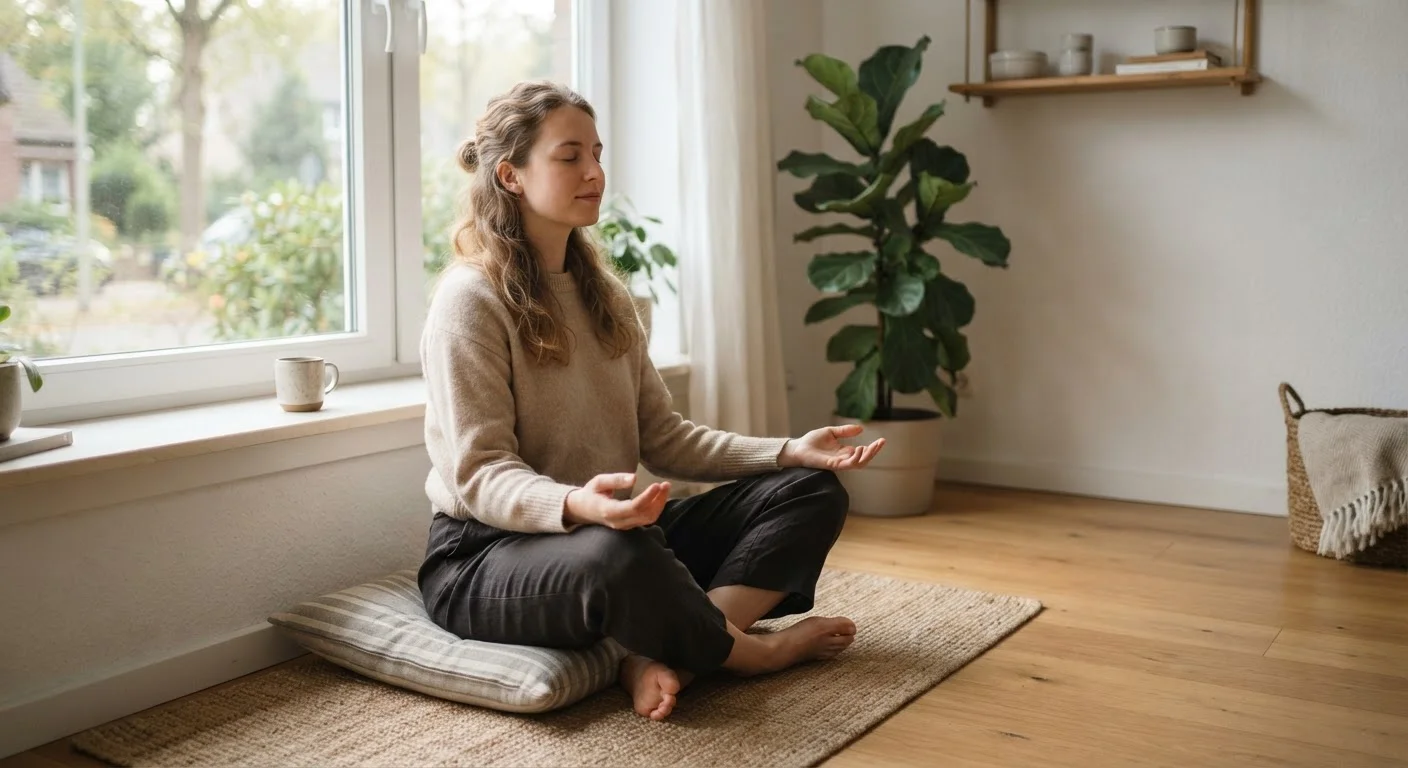
What Mindfulness Actually Is (and Isn't)
Mindfulness is often surrounded by imagery of serene retreats and expensive apps - but at its core, it is simply the practice of paying deliberate, non-judgmental attention to what is happening right now. You are not trying to clear your mind, achieve a trance, or feel blissful. You are practicing the skill of noticing.
Mindfulness
The practice of deliberately paying attention to your present-moment experience - thoughts, feelings, and sensations - without judging them as good or bad.
Emotional regulation
The ability to notice and manage your emotional responses rather than reacting to them automatically. Mindfulness practice is thought to strengthen this capacity over time.
MBSR
Mindfulness-Based Stress Reduction - a structured, secular program developed in clinical settings that teaches mindfulness techniques to help manage stress, pain, and illness.
Body scan
A mindfulness exercise in which you slowly and deliberately direct attention through different parts of the body, noticing physical sensations without trying to change them.
Habit anchoring
Linking a new behavior to an existing daily routine so the established habit acts as a reliable trigger for the new one.
The concept draws from ancient contemplative traditions but has been adapted into secular, clinically studied formats - most notably Mindfulness-Based Stress Reduction (MBSR), developed by researcher Jon Kabat-Zinn in the late 1970s. Today, mindfulness is studied in clinical psychology, neuroscience, and behavioral medicine.
What mindfulness is not: a religious requirement, a personality type, or a quick fix. You do not need to be calm, spiritual, or experienced. Anyone can start - including you, right now.
Why It Matters for Stress and Mental Well-Being
Stress is, to varying degrees, part of most young adults' lives - whether from financial pressure, career uncertainty, or the constant noise of digital life. Mindfulness offers a research-supported tool for managing that stress rather than being overwhelmed by it.
Studies published in peer-reviewed journals, including a widely cited meta-analysis in JAMA Internal Medicine, have found that mindfulness meditation programs can modestly but meaningfully reduce symptoms of anxiety, depression, and stress in general adult populations. The mechanism appears to involve changes in how the brain processes emotional responses - building what researchers call emotional regulation: the ability to notice a feeling without automatically reacting to it.
Importantly, these benefits accrue gradually. Mindfulness is not an emergency intervention - it is a skill built through repetition. Think of it less like taking a painkiller and more like gradually strengthening a muscle.
Start smaller than feels worthwhile
Many beginners set an ambitious goal - 20 minutes a day - and quit within a week when life gets in the way. Research on behavior change suggests starting absurdly small: two to five minutes daily is enough to build a real habit. You can always extend the session once the routine is established.
Your First Mindfulness Practice: Three Simple Approaches
There is no single correct way to begin. The following three approaches are accessible to complete beginners and require no equipment or prior experience. Try each for a few days and notice which feels most natural to you.
1. Mindful Breathing
Sit or lie down in a comfortable position. Close your eyes or soften your gaze. Bring your full attention to the physical sensation of breathing - the rise and fall of your chest, the air entering and leaving your nostrils. When your mind wanders (it will), gently redirect attention back to your breath without criticism. Start with five minutes.
2. Body Scan
Lie on your back. Slowly move your attention through different regions of the body, from your feet upward, simply noticing any sensations - warmth, tension, tingling - without trying to change them. This is particularly useful before sleep.
3. Mindful Daily Activity
Choose one routine activity - brushing your teeth, drinking your morning coffee, walking to the bus - and commit to doing it with full attention. Notice the textures, sounds, temperatures, and movements involved. No formal sitting required.
If you are also working on building healthier physical habits, the beginner movement guide offers a similarly grounded starting framework.
Making It Stick: Building a Sustainable Habit
The most common reason beginners abandon mindfulness is inconsistency - not lack of motivation. The solution is to anchor your practice to something you already do every day. Place it immediately before or after an existing habit: right after waking, before lunch, or while waiting for your morning coffee to brew.
Research on habit formation consistently shows that small, consistent behaviors build more durable patterns than ambitious but irregular ones. Our guide to habit formation walks through the underlying science in detail and offers frameworks you can apply directly to a mindfulness routine.
A few practical pointers to help the practice take root:
- Keep sessions short at first. Five consistent minutes beats thirty sporadic ones.
- Track your streak loosely. A simple checkmark on a calendar can reinforce the behavior without adding pressure.
- Drop perfectionism. A session where your mind wandered constantly is still a valid session. The noticing is the practice.
- Be patient with yourself. Skill-building in any domain takes time; this one is no different.
If you find mindfulness practice meaningfully helpful for stress, consider speaking with a mental health professional about structured programs - such as MBSR - that offer guided, evidence-based curricula. Mindfulness is a powerful general tool, but it works best as part of a broader approach to well-being.
This article is for general informational and educational purposes only and is not a substitute for professional medical or mental health advice. If you are experiencing significant distress or a mental health condition, please consult a qualified healthcare professional.