Why Your Bedroom Environment Matters
Most people focus on routines when they try to improve sleep - going to bed earlier, cutting caffeine, limiting screens. Those things help, but the physical environment you sleep in shapes your rest just as much. Your brain is constantly reading environmental cues, and a bedroom that signals "alert" keeps you awake longer than you'd expect.
If you're setting up a new place for the first time, the good news is that you have a clean slate. You can build sleep-supporting habits into the room from day one, rather than undoing years of bad setup. And most of what helps doesn't require spending much. For a broader look at how environment shapes behavior, see our piece on designing your environment to make good habits effortless.
Evidence-Informed Bedroom Practices
The following practices reflect principles drawn from sleep research and environmental psychology. They're practical starting points - not medical prescriptions - and are generally applicable whether you're renting a studio or furnishing a spare room.
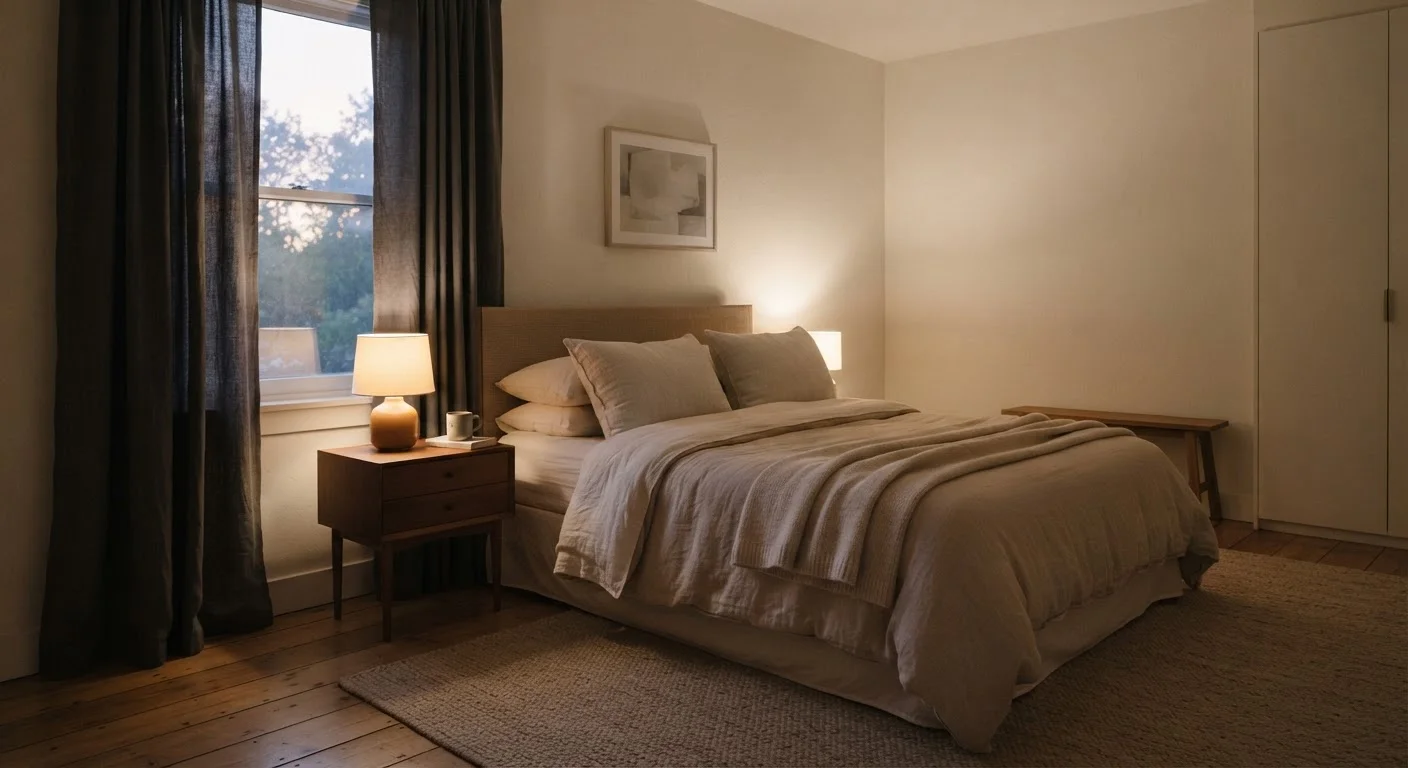
Block outside light with opaque window coverings
Light - including streetlights and early morning sun - suppresses melatonin production and signals wakefulness to the brain. Even dim ambient light during sleep can affect sleep depth and duration. Blackout curtains or lined shades are among the most cost-effective environmental fixes available.
Keep the room cool - aim for the mid-60s Fahrenheit
Core body temperature naturally drops as part of the sleep process. A room that's too warm interferes with this drop and is associated with more nighttime waking. Research generally points to a range of roughly 65-68°F as conducive to quality sleep for most adults.
Reserve the bed for sleep only - no work, scrolling, or TV
When you regularly use your bed for stimulating activities, your brain stops strongly associating it with sleep. This is the core idea behind "stimulus control," a technique used in cognitive behavioral therapy for insomnia. The association between bed and alertness competes with the cue for drowsiness.
Reduce visual clutter before bed
A disorganized bedroom keeps your brain processing the environment rather than disengaging from it. Environmental psychology research suggests that cluttered spaces are associated with elevated stress and difficulty relaxing. This doesn't require a minimalist aesthetic - just clear surfaces near the sleeping area.
Manage noise with sound masking if your environment is loud
Intermittent or unpredictable noise (traffic, neighbors, hallways) disrupts sleep architecture more than steady background noise does. Consistent sound - from a fan, a white noise machine, or an app - can mask disruptive spikes without overstimulating the brain.
Dim or eliminate artificial lighting in the hour before bed
Bright overhead lighting in the evening delays melatonin onset and shifts your body's sense of when nighttime begins. Switching to low, warm-toned lighting after dinner helps align your internal clock with your intended bedtime.
Quick Wins You Can Implement Today
You don't need to overhaul your entire bedroom at once. A few targeted changes can produce noticeable results within days. Start with whatever is easiest given your current setup.
If you want to go further, pairing these physical changes with a consistent evening routine can amplify results. Our guide on building a wind-down routine that actually quiets your mind covers that side of the equation.
Putting It All Together
A sleep-supportive bedroom doesn't need to look like a spa. It just needs to minimize the things that keep your nervous system alert - excess light, irregular temperature, noise, and visual clutter - while keeping the space clearly associated with rest.
~35%
US adults regularly getting less than 7 hours of sleep
According to the CDC, roughly one in three American adults report sleeping fewer than 7 hours per night on average.
65-68°F
Recommended sleep temperature range
Sleep researchers at institutions including the National Sleep Foundation frequently cite this temperature range as optimal for most adults.
As part of your broader home setup, the bedroom is worth prioritizing early. Our room-by-room home setup guide for first-time renters explains why getting this room functional first pays off. And if stress or mental noise is part of what's keeping you up, small environment changes that support a calmer headspace offers complementary adjustments worth trying.
This article is for general informational purposes only and is not medical or sleep therapy advice. If you experience persistent sleep problems, consult a qualified healthcare professional.