Why Your Space Affects Your State of Mind
Most of us intuitively know that a messy room feels stressful, or that a bright sunny space lifts the mood. What's less obvious is the scope of that influence. Environmental psychology - the study of how physical settings shape human behaviour and emotion - has accumulated a body of evidence suggesting that lighting, sound, order, and even air quality can measurably affect the nervous system's stress response.
This doesn't mean your surroundings are destiny. But it does mean they're one of the most underused levers available for supporting mental well-being. Unlike many wellness interventions, many environment adjustments are free, reversible, and immediate. The changes below are grounded in research - though research in this area is still evolving, and individual responses will vary. Think of them as experiments worth running in your own space.
For a deeper look at how spatial design can make desired behaviours feel automatic, see our guide to designing your environment for effortless habits.
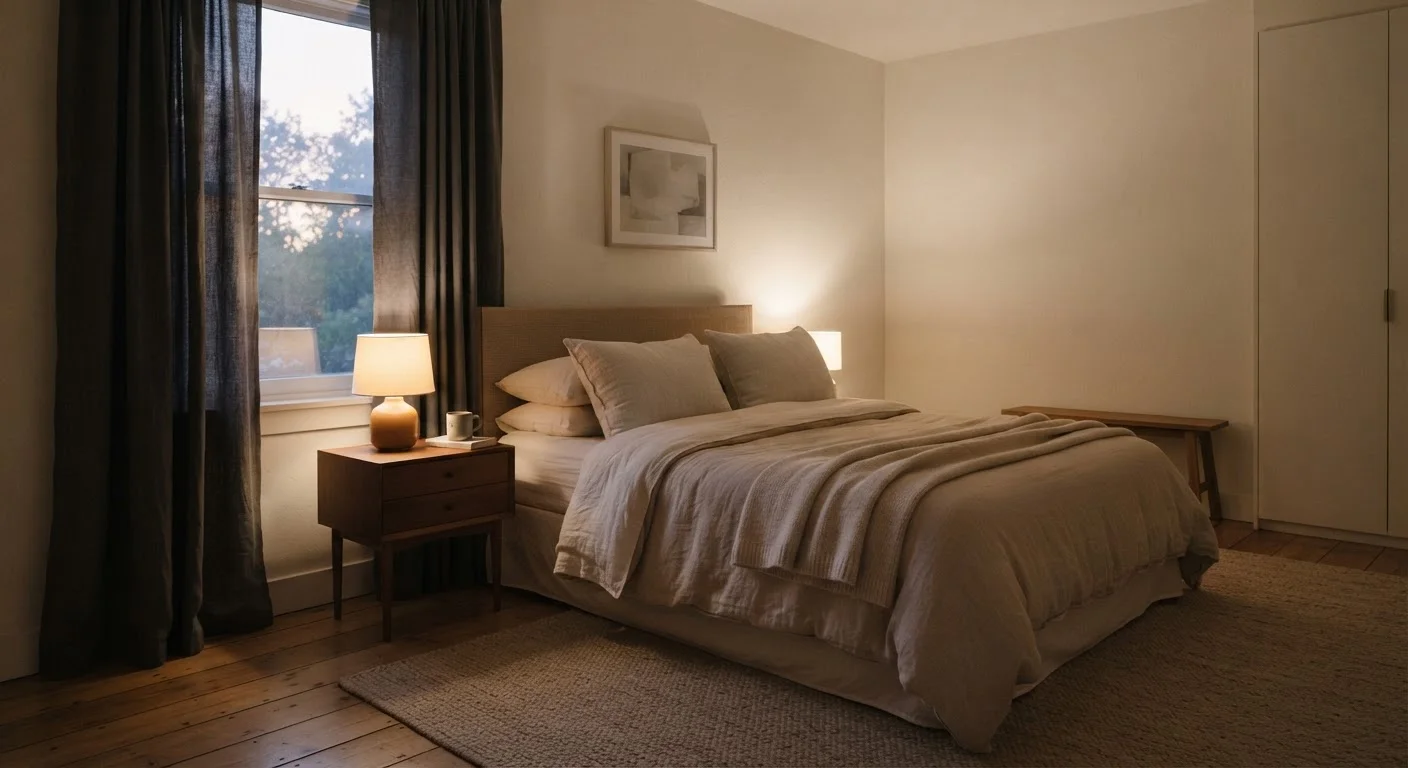
Shift toward warmer, dimmer light in the evening
Artificial lighting is one of the most powerful environmental signals your brain receives. Research in circadian biology consistently shows that blue-spectrum light - common in LED overhead lights and screens - suppresses melatonin production and keeps the nervous system in an alert state. Cooler, brighter light is appropriate for daytime focus; it becomes counterproductive once you want to wind down.
A practical adjustment: switch lamps to warm-toned bulbs (look for a colour temperature around 2700K on the packaging), and dim overhead lights in the hours before bed. Many people find this alone meaningfully reduces that wired-but-tired feeling at the end of the day. For more on how light interacts with sleep quality, see bedroom setup habits that actually improve sleep.
Warm, dim light in the evening signals your nervous system that it's safe to slow down.
Reduce visual clutter in at least one key area
Clutter isn't just an aesthetic preference - it competes for attentional resources. A 2011 study published in the Journal of Neuroscience found that multiple objects in the visual field compete for neural representation, making it harder to focus and increasing cognitive load over time. A cluttered environment can subtly sustain a low-level stress response without you ever pinpointing the cause.
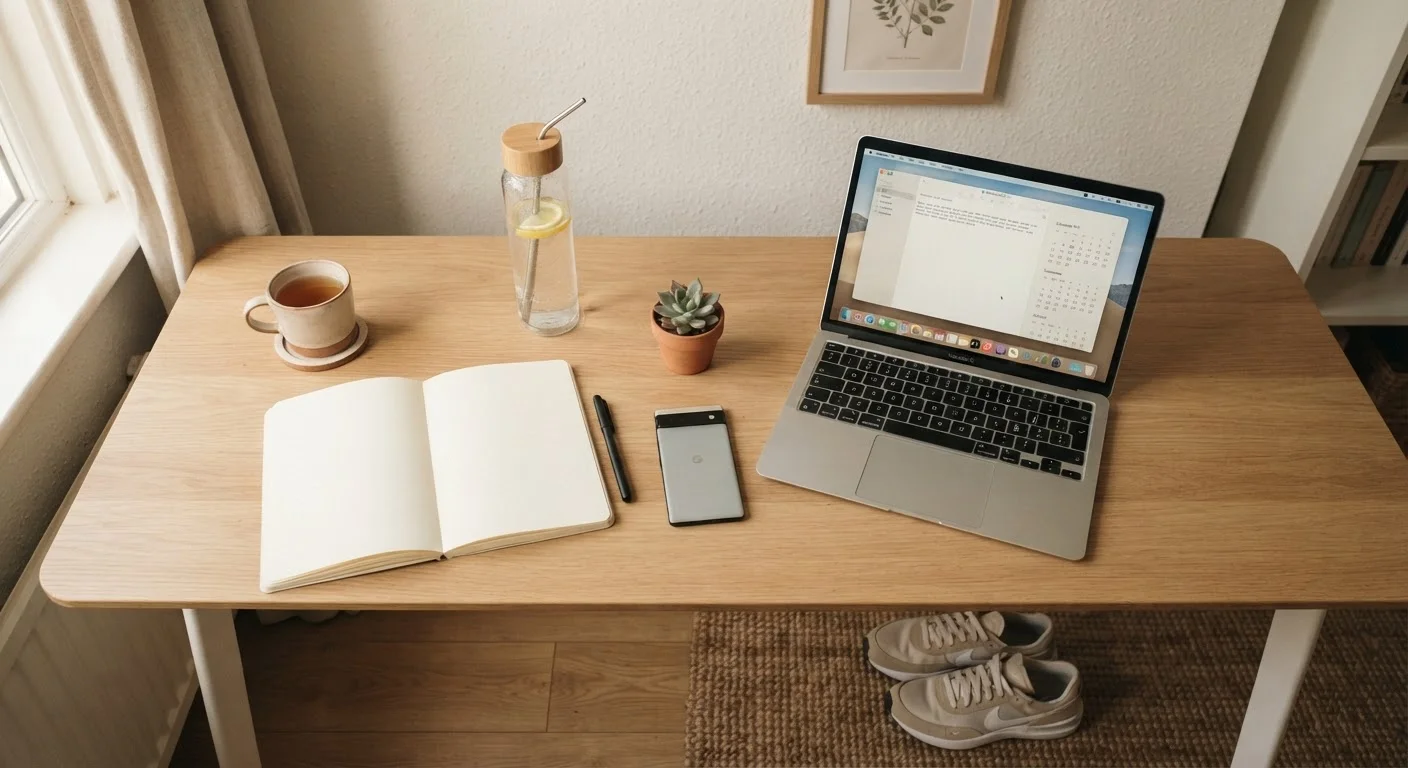
You don't need to become a minimalist. Instead, identify one surface or zone - a desk, a bedside table, a kitchen counter - and commit to keeping it clear. A single tidy anchor point in a room can meaningfully reduce the sense of overwhelm even when other areas remain imperfect.
One consistently clear surface can reduce cognitive load across an entire room.
Introduce a natural element - even a small one
Contact with nature - sometimes studied under the term ART or in the context of biophilic design - is broadly associated with reduced physiological stress markers in the research literature. You don't need a garden. Studies suggest even brief visual exposure to plants, natural textures, or outdoor views can have a measurable calming effect.
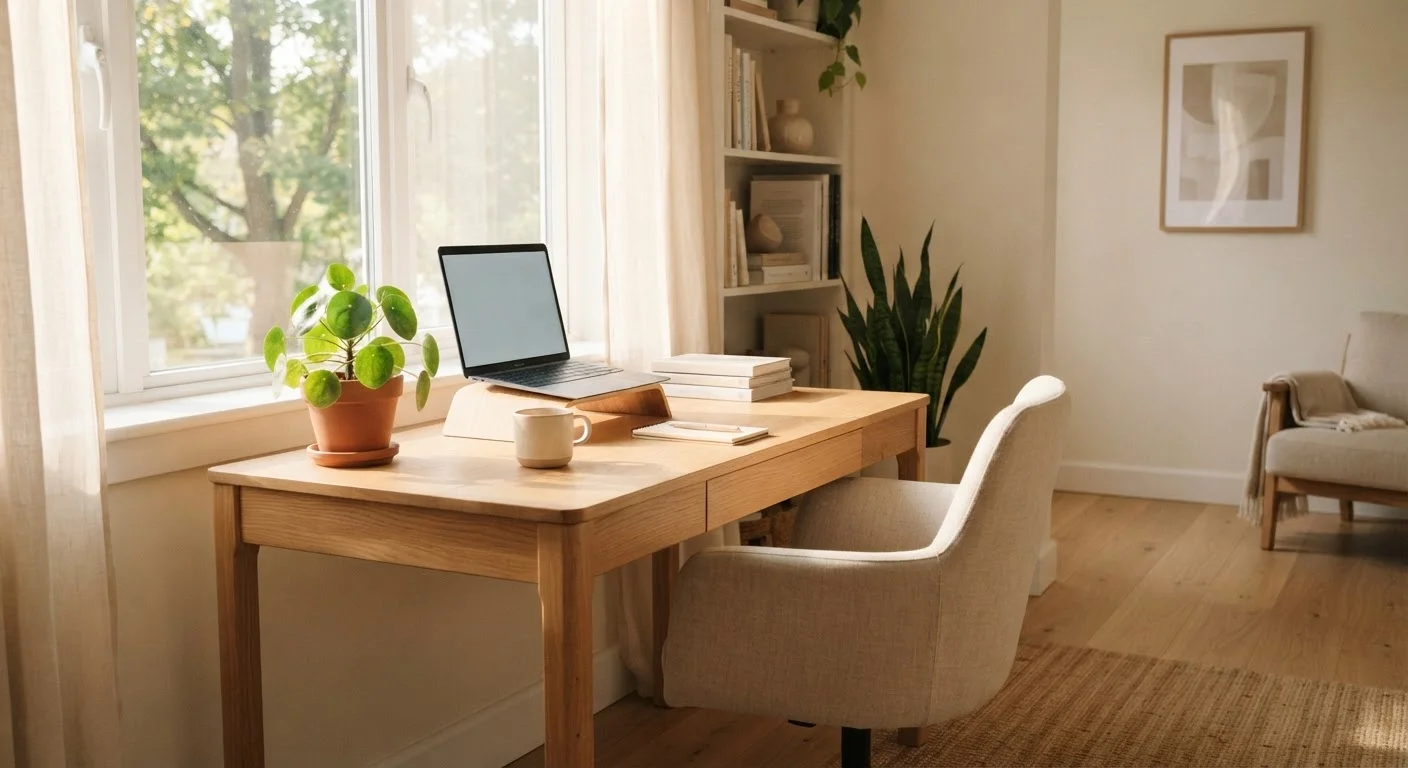
A low-maintenance houseplant near your work area, a window you actually open, or a nature soundscape playing softly in the background are all small implementations of this principle. The evidence is strongest for real plants and outdoor access, but even nature imagery has shown modest effects in some studies - so work with what your space allows.
Even a single plant near your desk is a low-effort way to apply biophilic design principles.
Manage ambient sound deliberately
Uncontrolled noise is a well-documented stressor. Research on noise pollution in urban environments has linked chronic background noise to elevated cortisol (the body's primary stress hormone) and disrupted sleep. But the inverse - intentional, consistent ambient sound - can be calming and focus-supporting.
Options worth trying include a white noise machine or app for masking unpredictable environmental noise, low-tempo instrumental music during focused work, and silence during rest periods. The key word is intentional: defaulting to loud, fast-paced media as background noise may have the opposite effect to what you intend. Experiment with what your nervous system actually responds to rather than what you assume it prefers.
Choosing your ambient sound deliberately is more calming than letting noise happen by default.
Create a spatial boundary between work and rest
When the same chair, desk, or even room serves as the location for both high-stress tasks and relaxation, the brain struggles to shift between the two modes. This is especially relevant for people who work from home. Context-dependent memory - the psychological principle that environments become associated with the mental states experienced in them - means your bedroom can start to feel like a place of alertness rather than rest if work routinely happens there.
Where possible, keep sleep and work in separate spaces. If that's not feasible, use visual or physical cues to mark the end of the work period: putting a laptop in a drawer, changing clothes, or rearranging the desk. Even symbolic transitions help the brain shift gears. This look at habits that quietly erode emotional resilience explores how boundary erosion affects mental well-being more broadly.
Your brain learns from your environment - blurred work-rest boundaries keep stress hormones elevated.
Pay attention to scent
Scent is processed by the olfactory system, which has direct connections to the brain's limbic system - the region involved in emotion and memory. This makes smell one of the fastest sensory pathways to emotional state. While the research on specific aromas (such as lavender) is mixed in quality and scale, some studies suggest that certain scents are associated with reduced self-reported anxiety.
More than any specific scent, the principle worth applying is removing unpleasant or stress-associated smells from your environment - stale air, accumulated food waste - and, where it appeals to you, introducing a calming, consistent scent that becomes a signal for rest or focus. This might be a simple reed diffuser, fresh air from an open window, or the smell of a morning beverage associated with your calm morning routine.
Scent reaches the brain's emotional centres faster than almost any other sensory input.
Putting It Together Without Overhauling Everything
You don't need to renovate or redecorate to benefit from these principles. Pick one or two changes that feel achievable this week, observe how they affect your day, and build from there. The goal isn't a magazine-perfect home - it's a space that supports you rather than subtly draining you.
Start With One Change, Not Six
It's tempting to overhaul your space all at once, but behaviour change research suggests that smaller, specific adjustments are more likely to stick. Choose the one item from this list that feels most immediately doable - perhaps clearing a single surface or swapping a lightbulb - and let it settle into routine before adding another. Small gains compound.
Environment changes work best alongside behavioural habits. If you're working on winding down before bed, our article on building a wind-down routine that quiets your mind pairs naturally with the lighting and sound adjustments listed above. And if stress feels persistent rather than situational, that's worth discussing with a qualified healthcare professional rather than attempting to design your way out of it.
This article is for general informational and educational purposes only and is not a substitute for professional mental health advice, diagnosis, or treatment. If you are experiencing significant stress, anxiety, or any mental health concerns, please consult a qualified healthcare professional.