What the Choice Actually Comes Down To
Walk into any home décor article and open shelving sounds effortlessly chic. Walk into most lived-in apartments and you'll find a different story: a drifting coffee mug collection, cooking oils lined up unevenly, and dust settling on everything. Closed cabinets aren't glamorous, but they do a quiet, reliable job.
The real question isn't which style looks better in photos - it's which one fits the way you actually live. That means considering three things: how organized your habits are day-to-day, how much time you'll spend maintaining the space, and how much visual weight the room can handle. If you're setting up a first home, those factors deserve honest answers before you start drilling holes or buying flat-pack cabinets.
See our guide to common organisation myths for a reality check on popular storage assumptions that often mislead first-time residents.
The Case for Open Shelving
Makes small rooms feel more open and airy
Open shelves don't block sightlines the way solid cabinet doors do, which can help a cramped kitchen or living area feel less enclosed.
Typically cheaper and easier to install
Floating shelves cost significantly less than full cabinetry and are a common renter-friendly option when wall-mounting is permitted by the lease.
Everything is visible and quickly accessible
No searching through cabinets - items you use daily are in plain sight, which can genuinely speed up routines in the kitchen or bathroom.
Encourages keeping only what you actually use
Visible storage creates natural pressure to own less and stay organized, which can be a helpful habit-building tool in a first home.
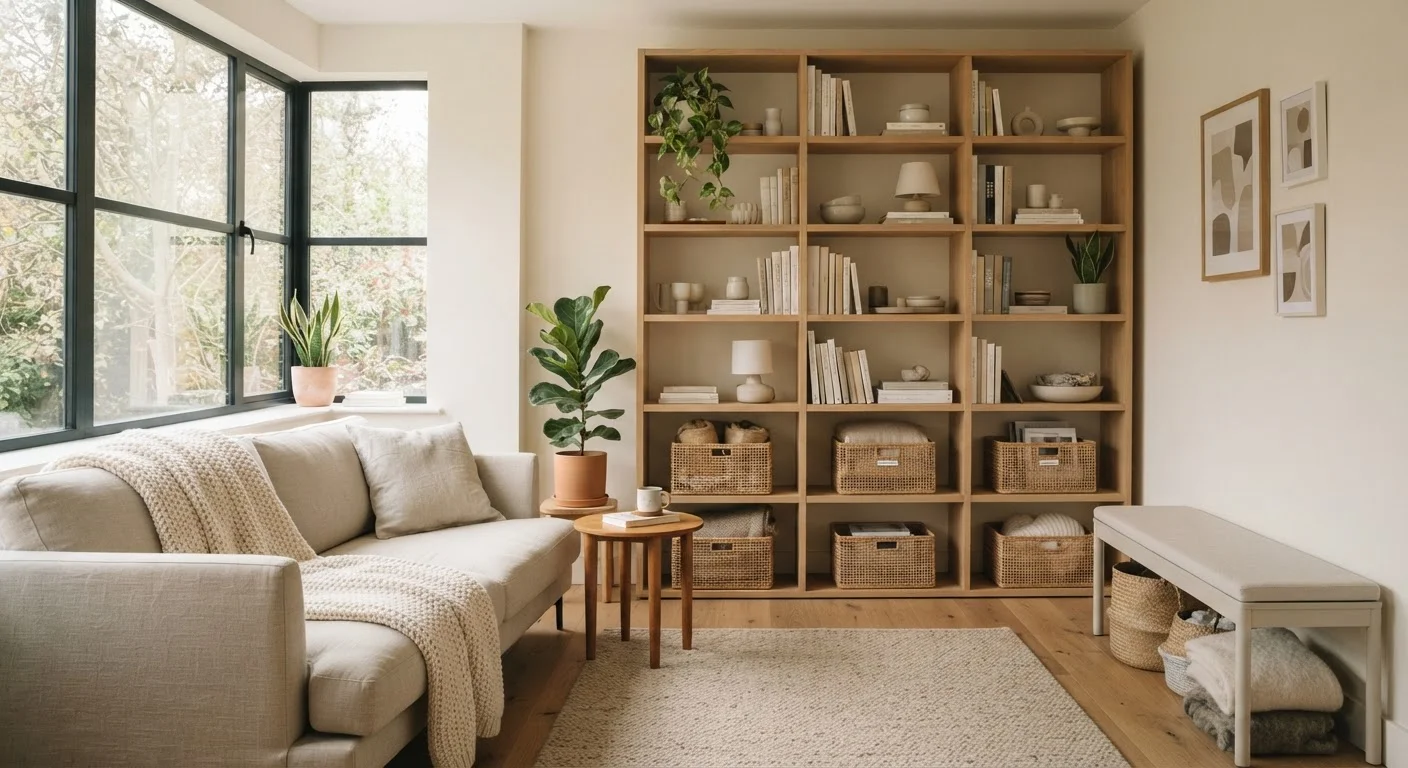
Open shelves earn their place in certain homes. In small rooms, they can feel lighter than full cabinetry - your eye travels through them rather than stopping at a solid door. They're often cheaper to install, and many renters prefer floating shelves because they're less of a commitment than a full cabinet run. Access is genuinely faster: grab a mug, put it back, done.
They also encourage intentionality. When everything is visible, you tend to keep less. That built-in pressure to declutter can be a real advantage if you're prone to accumulating things you don't use.
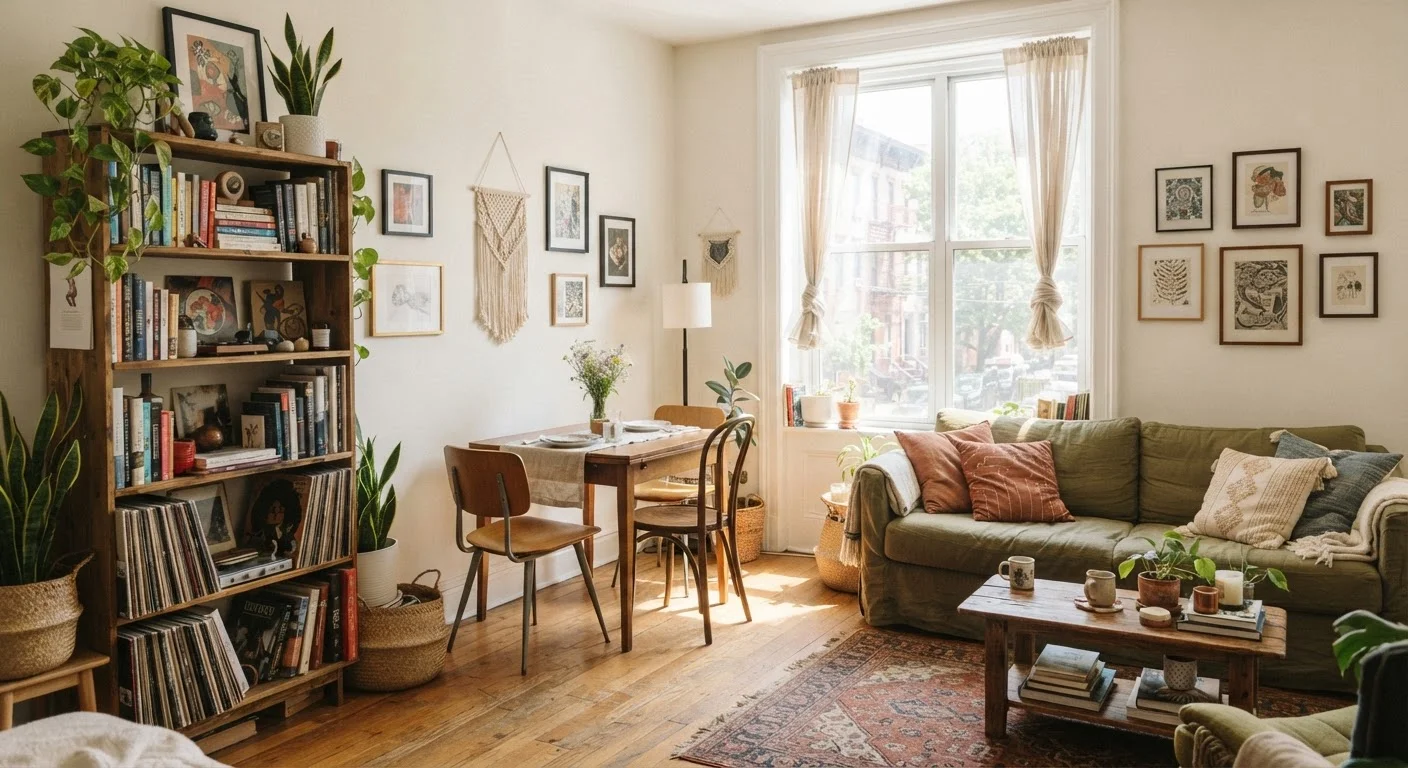
That said, open shelving has a hard dependency: it only works if what's on display looks deliberate. A shelf of mismatched takeout containers or tangled power strips reads as mess, not style. And dust is a constant - items on open shelves in a kitchen, for instance, need wiping down regularly.
The Case for Closed Storage
Dust accumulates on displayed items quickly
Items on open shelves - especially in kitchens - need regular wiping. In a busy household, that upkeep often falls behind.
Looks messy unless consistently maintained
Open shelving only works visually when items are curated and tidy; everyday clutter on display reads as disorganized rather than styled.
Offers no protection from grease, humidity, or light
Pantry items, linens, and sensitive materials are better protected inside closed storage, where they're shielded from kitchen vapors and UV exposure.
Can be harder to use in shared living situations
When multiple people share a space with differing tidiness habits, open shelving in common areas often leads to visual conflict and friction.
Closed cabinets, drawers, and wardrobes do one thing extremely well: they contain chaos without requiring you to curate it. Doors close, problem solved. For anyone sharing a space with housemates who have different tidiness standards - a very common scenario in first rentals - closed storage is a practical equalizer.
It also protects your belongings. Items stored behind doors stay cleaner longer and are shielded from kitchen grease, bathroom humidity, or general airborne dust. For pantry goods, linens, and anything you don't want faded by light, enclosed storage is the more functional choice.
The downside is visual weight. A wall of upper cabinets in a narrow kitchen can feel oppressive. In small rooms, too much closed storage can also make the space harder to navigate and can obscure natural light. Cost is another factor - full cabinetry typically costs more than open shelving, both to purchase and install.
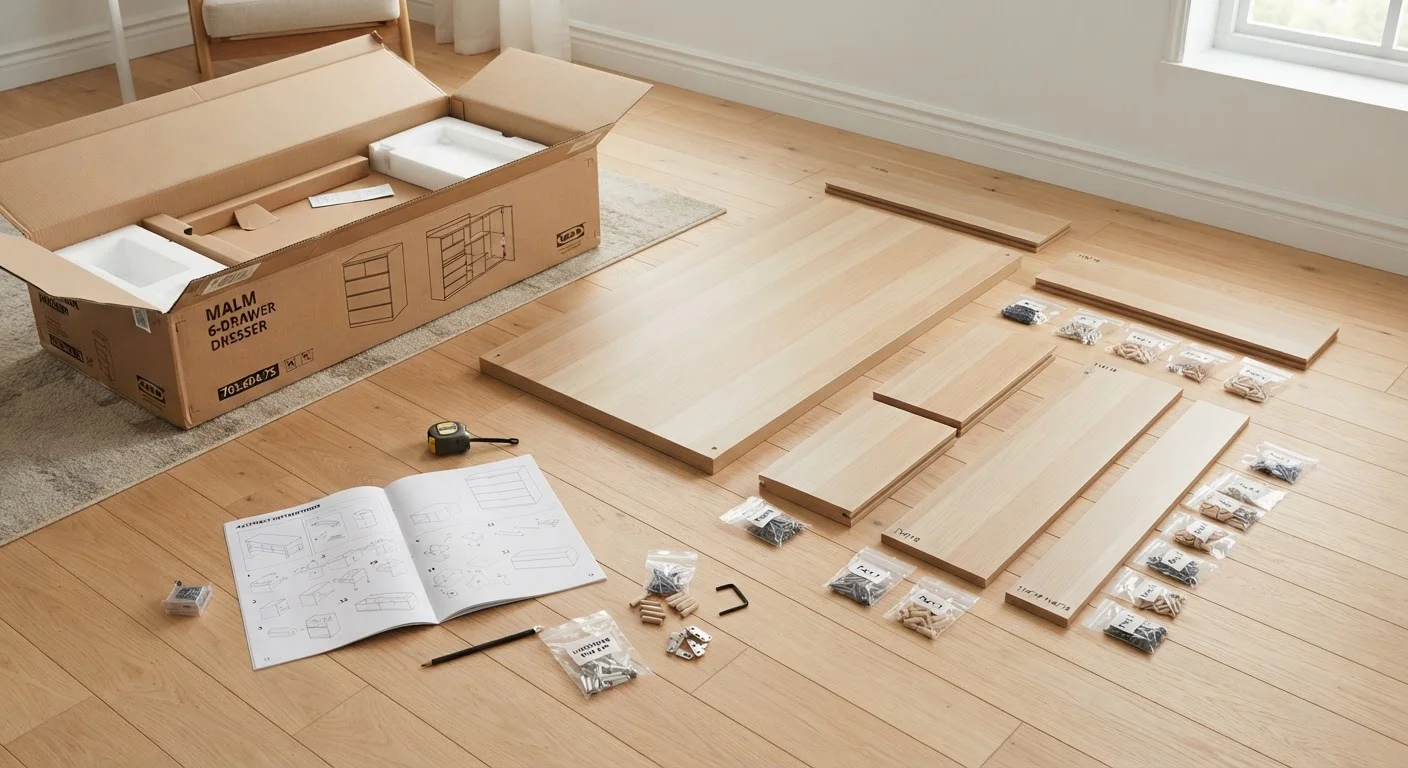
If you're furnishing on a tight budget, what to know before buying flat-pack furniture is worth reading before committing to a storage unit.
How to Decide for Your Space
Check Your Lease Before You Mount Anything
Many rental agreements restrict wall modifications, including the installation of floating shelves or cabinet hardware. Before drilling into walls or studs, review your lease and, if unclear, ask your landlord in writing. Freestanding shelving units are a flexible alternative that require no wall anchoring and leave no damage when you move out.
A practical way to approach this: walk through a typical week in your head. When you cook, do dishes end up stacked neatly or do you pile them wherever they fit? When you buy bathroom products, do they get grouped and contained, or spread across surfaces? Your honest answers tell you more than any design trend.
Room size and layout also shape the decision. In a small kitchen, replacing upper cabinets with open shelves can open up sightlines - but only if the items stored there are consistently tidy. In a shared flat, closed storage in common areas reduces friction between people with different organizing habits. See navigating home setup with housemates for more on negotiating shared-space decisions.
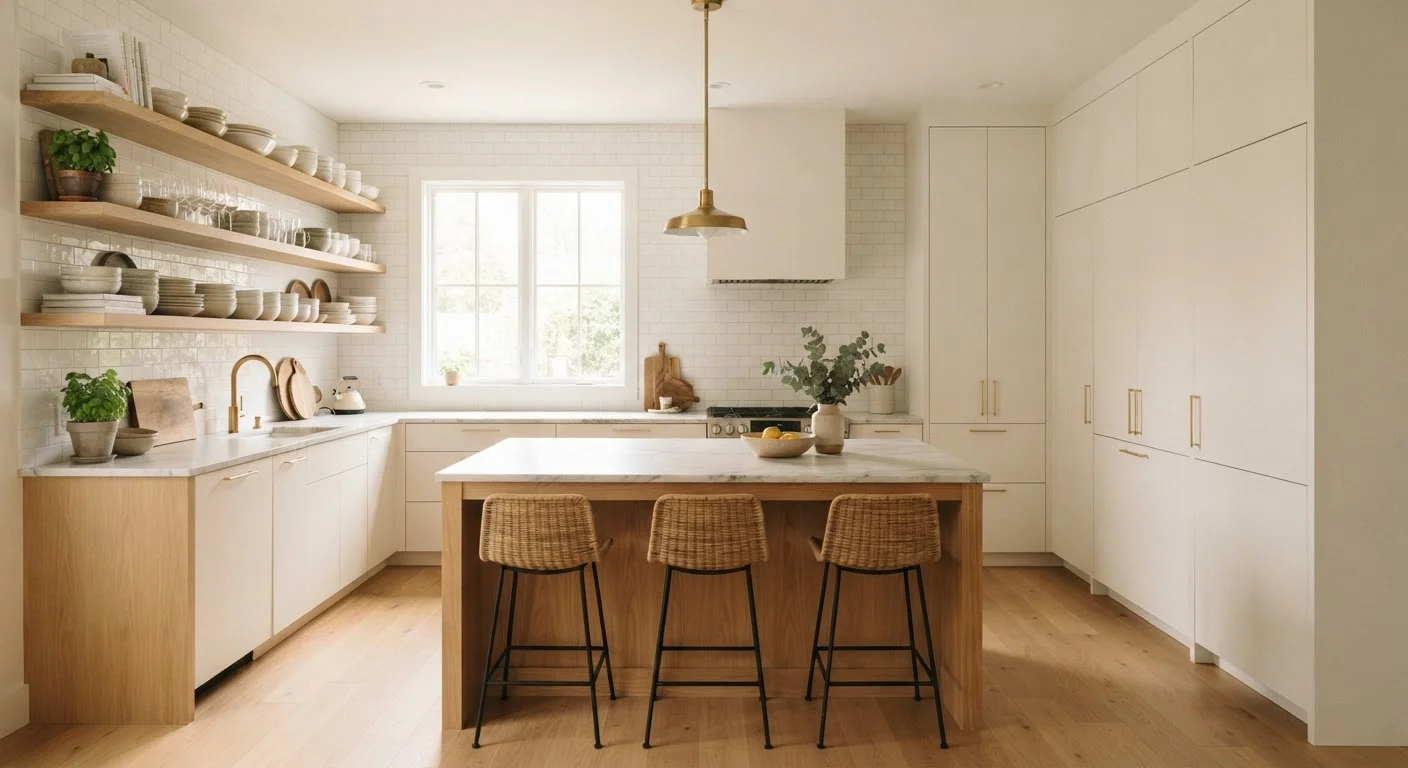
A hybrid layout - some open display, mostly closed storage - gives you the visual interest of shelving without surrendering the practicality of doors. Most interior designers recommend this balance for everyday homes, and it's where many residents land after their first year of figuring out what actually works.
~60%
Renters who cite storage as a top concern
Multiple US renter surveys consistently identify inadequate storage as one of the leading sources of dissatisfaction in apartments.
30-50%
Potential cost savings of open vs. closed storage
Open shelving installations generally run significantly less than equivalent-capacity closed cabinetry, depending on materials and labor.