The Prep Work That Saves You Hours
Flat-pack furniture is genuinely one of the more affordable ways to furnish a first home - but the savings disappear fast if you end up with a box that won't fit through the door, missing a cam bolt, or a bookcase that wobbles because two steps were reversed. Most of the frustration people associate with self-assembly comes not from the furniture itself but from skippable prep mistakes.
If you're still deciding what pieces to prioritize for a new place, this guide on what you actually need in month one is a helpful starting point before you add anything to a cart. And if flat-pack isn't your only option, second-hand furniture can fill some gaps - though it comes with its own considerations.
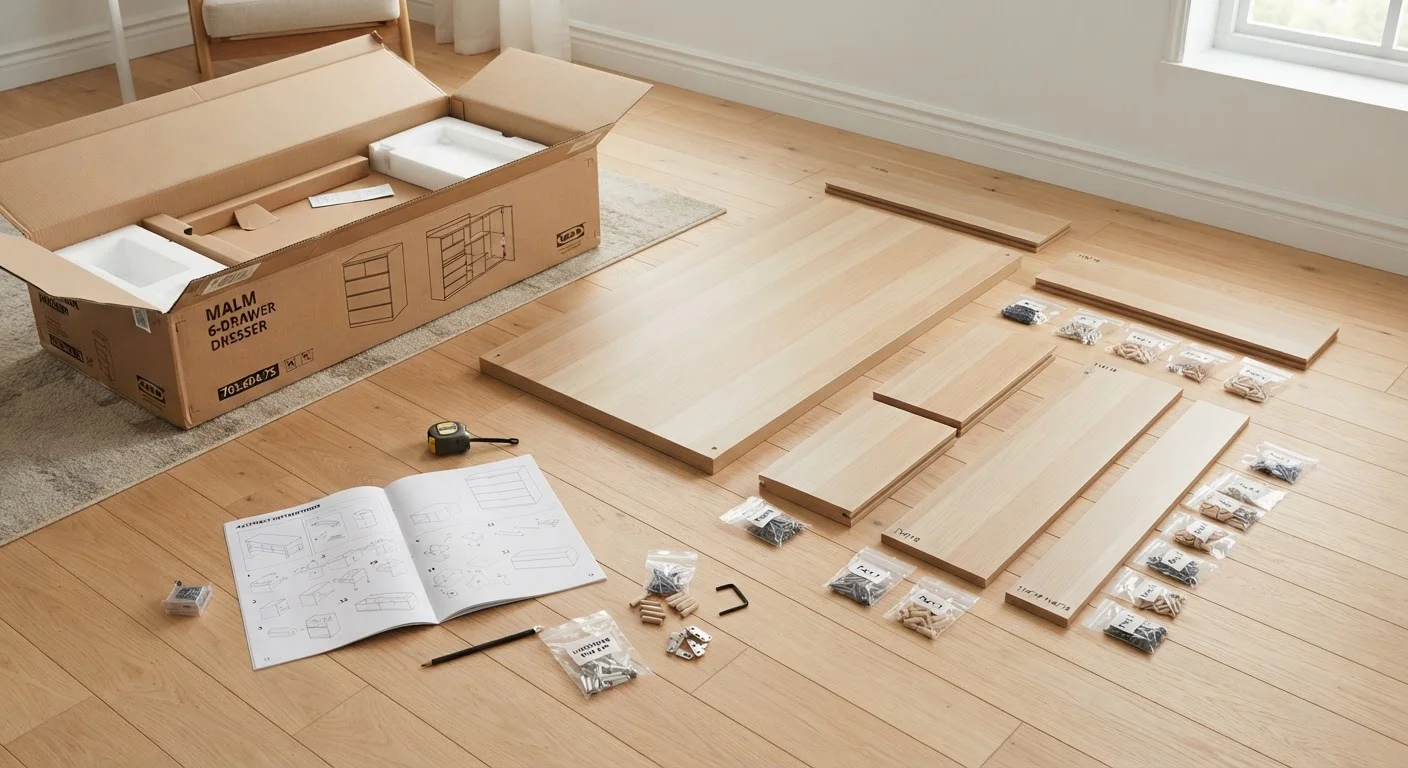
Before opening a single box, do three things: measure twice (room and route), read the full instruction booklet, and inventory every part against the list included in the packaging. These steps take under 20 minutes and routinely prevent hours of backtracking.
~65%
Assembly errors traced to skipped instructions
Consumer feedback studies consistently show that the majority of flat-pack assembly problems stem from skipping or misreading instruction steps rather than defective parts.
1 in 4
Flat-pack boxes contain a missing or wrong part
Manufacturer quality-control data and consumer surveys suggest roughly one in four flat-pack orders arrives with at least one missing, damaged, or incorrect component.
Common Assembly Mistakes - and How to Dodge Them
The errors below show up repeatedly with first-time assemblers. None of them are obvious in the moment, which is exactly why they're worth knowing before you start.
Ordering without measuring the room, doorways, and stairwells first.
Why it happens: Product pages show assembled dimensions, but shoppers focus on the finished look rather than the delivery logistics or fit in the actual space.
Diving into assembly without reading the full instructions first.
Why it happens: Instructions look repetitive and illustrated steps seem self-explanatory, so most people skip straight to step one.
Assuming all parts are present without checking the inventory list.
Why it happens: Excitement to start building - and the assumption that factories don't make mistakes - means the parts list gets ignored.
Tightening every joint fully as you go, instead of loosely first.
Why it happens: It feels logical to finish each connection before moving on, but most frames need to be square before fixings are final.
Skipping or incorrectly installing the wall-anchoring hardware.
Why it happens: The anchor step is often at the very end of the manual, and the piece feels stable without it, so people skip it - especially renters worried about making holes.
Building in the wrong room or in a space too small to work in comfortably.
Why it happens: People assume they can slide or carry the finished piece to its final location, underestimating how heavy assembled flat-pack furniture becomes.
Anchor Tall Furniture to the Wall
Bookcases, wardrobes, and tall shelving units can tip forward under load - a serious risk if children or pets are nearby. Most flat-pack manufacturers include wall-anchoring hardware in the box. Always install it, even if the piece feels stable freestanding. If you rent, check your lease before drilling; some landlords require specific wall-repair procedures.
If you're furnishing a shared space and splitting assembly duties with housemates, it's worth agreeing on roles before you start - navigating shared home setup covers how to handle those conversations without friction. And if your space has to do double-duty - bedroom and office, say - multifunctional furniture choices may be worth reading before you commit to a layout.
Don't Overtighten Cam Locks and Screws
Particle board and MDF (medium-density fibreboard) strip easily. Once a cam lock or screw loses its grip in the material, the joint is weakened permanently. Stop turning as soon as resistance firms up - snug is enough. If a screw won't hold, a toothpick dipped in wood glue inserted into the hole can restore grip after it dries.
For storage-specific decisions, open shelving vs. closed storage can help you decide which type to build in the first place - before you've committed to a flat-pack unit that doesn't match how you actually live.