Why Double-Duty Rooms Are the New Normal
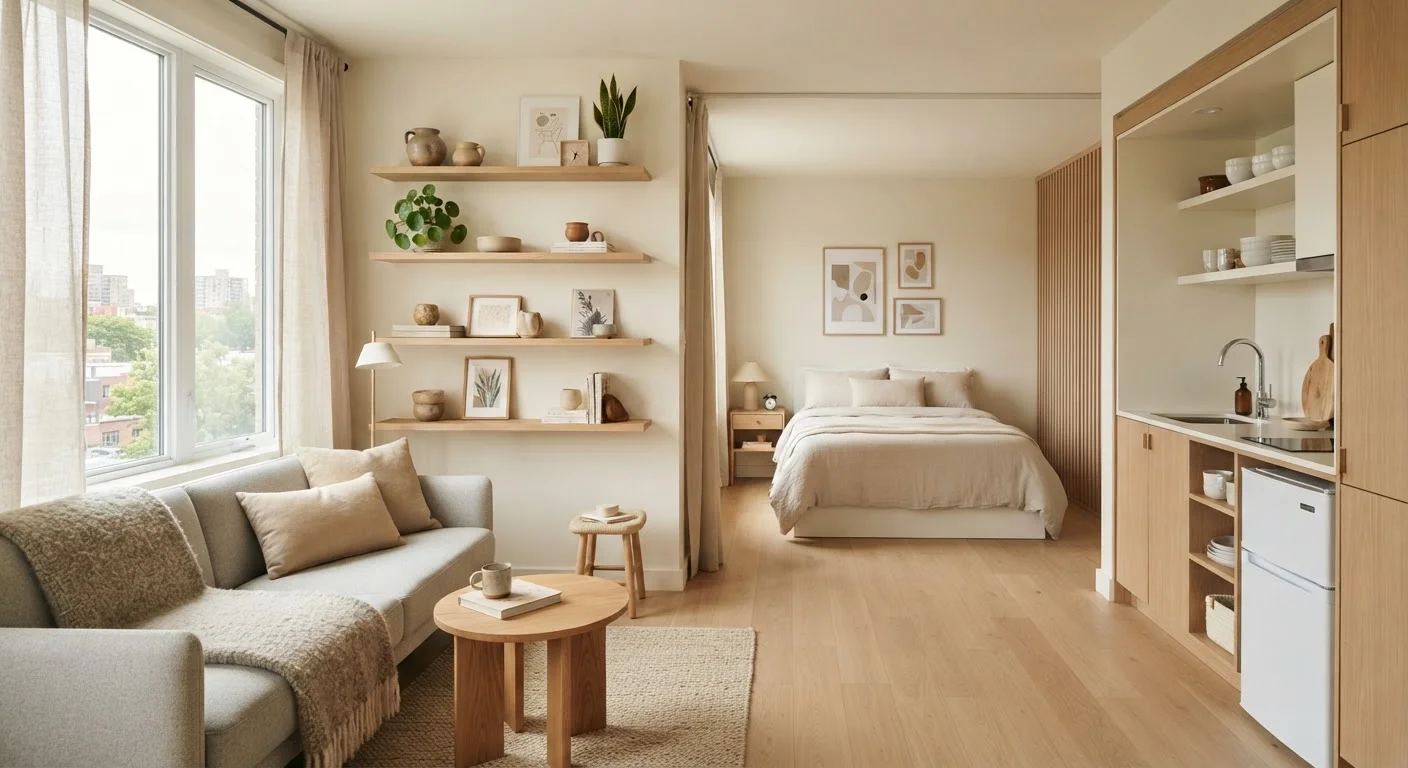
Whether you're renting a studio in a high-cost city or trying to fit a home office into a one-bedroom apartment, the reality for many first-time renters is simple: every room has to do more than one job. That's not a design failure - it's just modern life.
The challenge is that most furniture is designed with a single purpose in mind. A desk is a desk. A bed is a bed. When your space demands that the same square footage be a bedroom at night and a productive workspace by morning, that mismatch creates friction - visual clutter, mental noise, and a home that never quite feels settled.
Thoughtful furniture selection won't double your square footage, but it can dramatically change how a room functions and feels. If you haven't looked at layout principles yet, our piece on why small spaces feel cramped is a useful companion read before you start shopping.
~500 sq ft
Average US studio apartment size
According to US Census Bureau housing surveys, studio apartments typically range from 400 to 600 square feet, making efficient use of every piece essential.
1 in 3
Renters living alone in small units
US Census data indicates a significant share of renter households are single-person, often in compact units where rooms must serve multiple functions.
The Core Categories of Multifunctional Furniture
Not all convertible furniture is equal. Here's how to think about the main types and where each earns its place:
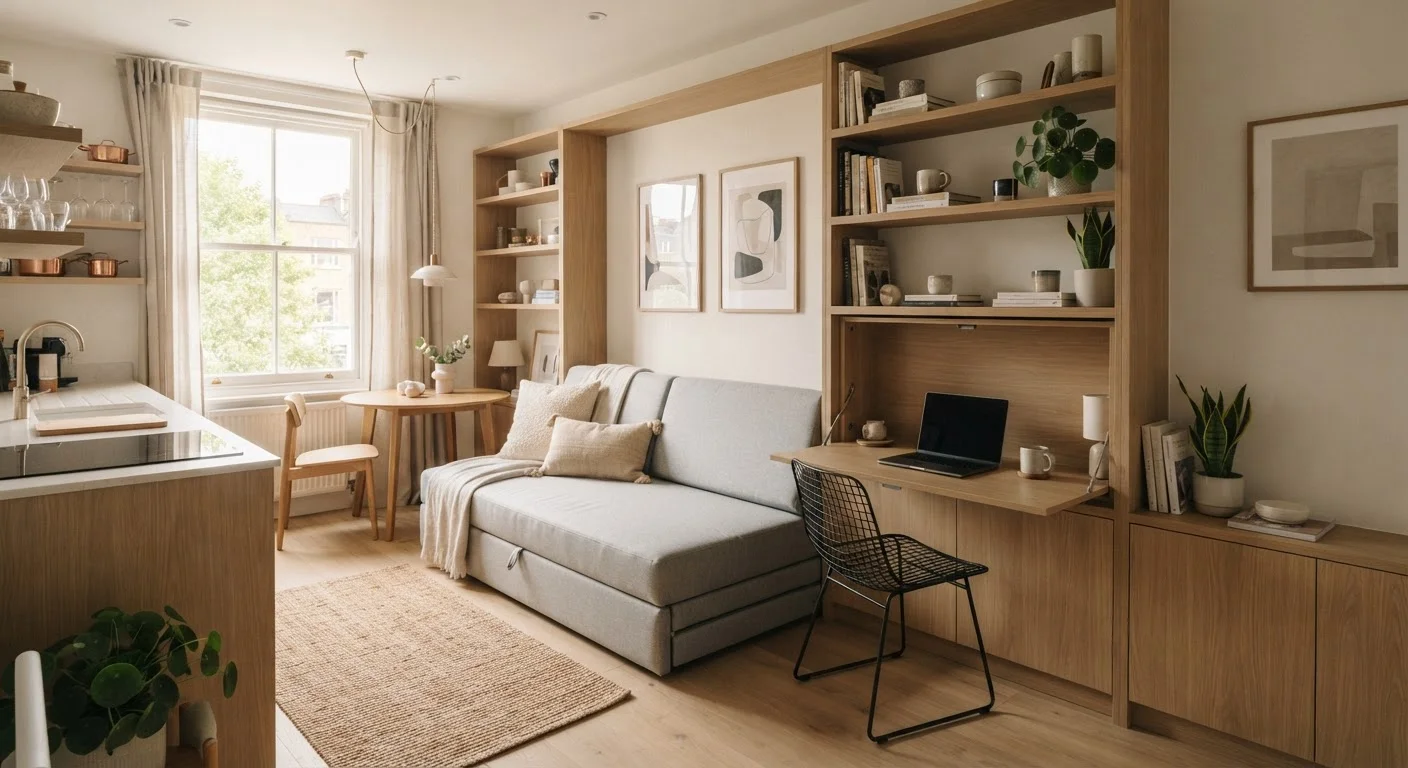
- Sleep-to-seating conversions: Sofa beds, futons, and daybeds let a living area double as a guest room - or let a studio serve as both sleeping and socializing space. Quality varies widely; look for mechanisms you can test in person and mattresses thick enough to actually sleep on comfortably.
- Storage-integrated furniture: Bed frames with drawers, ottomans with interior space, and benches with lift-up lids are among the most practical options available. They solve two problems at once without requiring extra floor space.
- Fold-out and wall-mounted desks: A desk that folds flat against the wall disappears when not in use - a genuine win for a bedroom that needs to feel restful in the evening. Murphy bed and desk combos take this further, though they require wall anchoring and possibly landlord approval.
- Expandable dining tables: A small table that extends for hosting is one of the best space investments for a compact kitchen or dining area. Collapsed, it keeps daily life manageable; extended, it handles real gatherings.
- Nesting and stackable pieces: Side tables, stools, and chairs that stack or nest together take up minimal footprint when idle and appear when needed.
When evaluating a sofa bed or fold-out piece, open and close the mechanism at least five times in the store. If it's stiff or awkward on day one, it'll only get worse with daily use.
Mechanical components in convertible furniture are the most common failure point; repeated testing reveals issues that photos and descriptions never will.
Place your most-used function in the best light. If you work from home, your desk - not your sofa - should sit nearest the window.
Natural light has a meaningful effect on focus and mood during work hours, and most people underestimate how much placement affects daily comfort.
Zoning: How to Make One Room Feel Like Two
Furniture placement and simple visual cues are what transform a single open space into something that actually functions like multiple rooms. This concept is called zoning, and it relies on boundaries you create - not walls.
Practical zoning tools
- Rugs: Anchoring a seating area with a rug and keeping the sleeping area rug-free (or using a different rug) signals a clear visual divide.
- Lighting: A warm floor lamp near a reading chair and cooler task lighting at a desk reinforce that each area has a different purpose. Separate light sources mean you're not always lighting the whole room at once.
- Shelving as a soft divider: An open bookshelf placed perpendicular to a wall can separate a sleeping area from a workspace without blocking light. It also adds storage - a bonus in tight quarters. See our guide to open shelving vs. closed storage for more on making that call.
- Consistent color cues: Keeping each zone's textiles and accessories in a consistent palette helps the eye understand the room's organization, even without physical separation.
What to Measure Before You Buy Anything
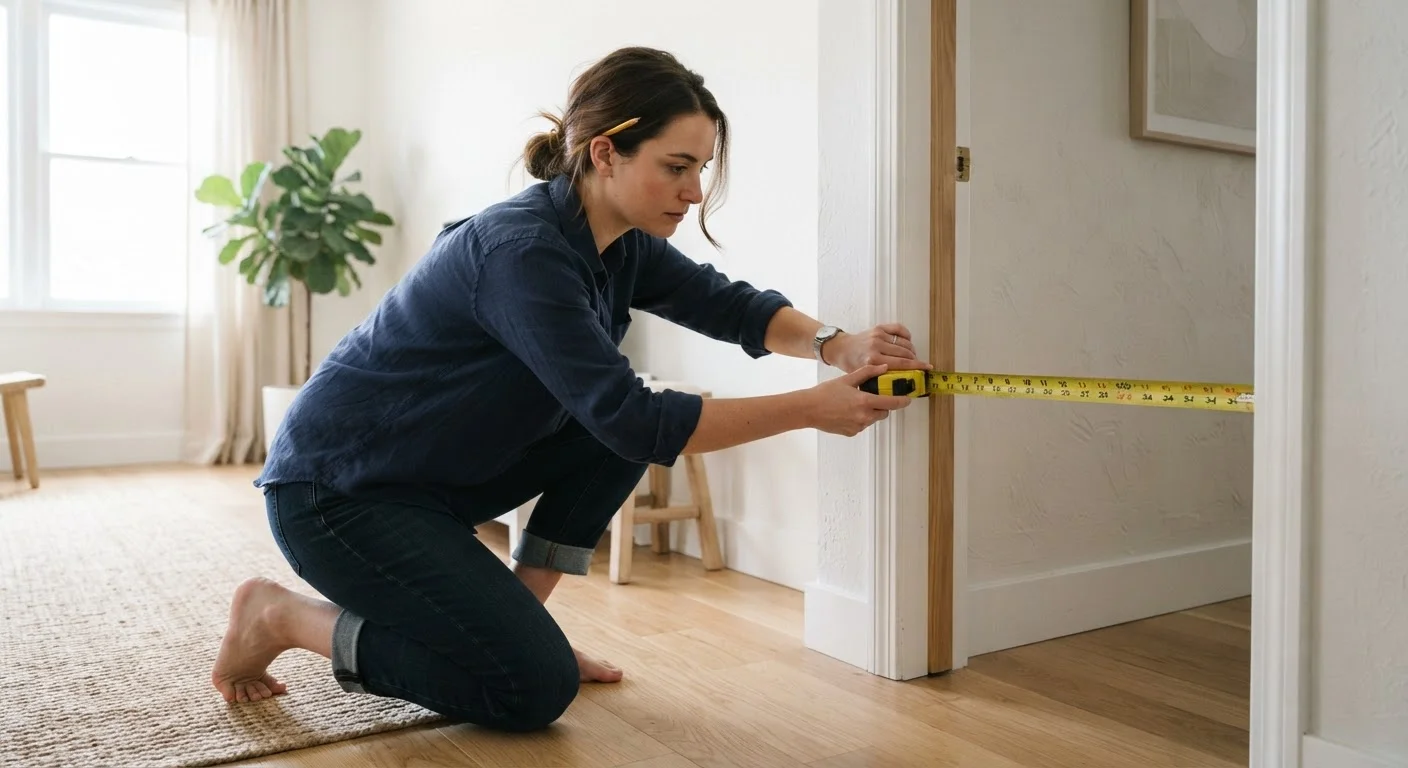
Convertible furniture is often bulkier than it looks in product photos - and harder to maneuver through a doorway or up a staircase. Before you buy anything, take the time to record key dimensions.
Our detailed reference on everything to measure before buying furniture covers this thoroughly, but the essential list for multifunctional pieces is:
- The room's floor area and ceiling height
- Door width and hallway width (for delivery and moving)
- The clearance a fold-out piece needs when fully open - a sofa bed in recline mode, a fold-out desk at full extension
- Any fixed features that limit placement: radiators, outlets, window sills
It's also worth checking whether wall-mounted items like Murphy beds would require drilling into walls - many leases restrict this, so confirm with your landlord before purchasing.
Budget Approach: Prioritizing What Actually Matters
A room full of clever convertible furniture is only useful if the pieces work reliably and suit your actual habits. Stretching a limited budget across too many novelty items usually backfires.
A practical approach: identify the one or two functions that cause the most daily friction in your space and solve those first. If you have no desk and work from home, a wall-mounted fold-down desk addresses a real daily problem. If overnight guests are rare, a sofa bed is a lower priority than a storage ottoman that helps you stay organized every single day.
Second-hand furniture can be an effective way to stretch a budget, but take extra care with anything that has a mechanical component - hinges, folding legs, and drawer runners wear out. Test them before buying. Similarly, if you're considering flat-pack options, read up on what nobody tells you before you open the box to avoid assembly surprises.
If you're furnishing a shared rental, our piece on navigating home setup with housemates addresses how to agree on shared furniture decisions without creating conflict.
Common Mistakes and How to Avoid Them
Even well-intentioned multifunctional setups can go wrong. Here are the pitfalls that come up most often:
- Buying for hypothetical use: A fold-out guest bed sounds useful until you realize guests visit once a year. Match purchases to actual frequency, not aspirational scenarios.
- Ignoring ergonomics: A fold-out desk at the wrong height or a futon that's too low creates physical discomfort over time. Comfort in daily use should outweigh compactness.
- Overloading a room with too many pieces: A room crammed with clever items is still a cramped room. Fewer pieces that work harder is nearly always better than many pieces that each do one thing poorly.
- Skipping the mechanism test: Sofa beds that are stiff, tables that wobble when extended, and drawers that stick will frustrate you daily. Test before purchasing if at all possible.
- Neglecting style consistency: Multifunctional furniture in clashing styles makes a small space feel busier, not more organized. Aim for a coherent visual language - similar materials, finishes, or color tones - across pieces.
For a logical sequence on setting up the rest of your home once the furniture decisions are made, the room-by-room setup guide is worth bookmarking.
Wall-Mounted Furniture and Lease Restrictions
Murphy beds, wall-mounted desks, and fold-down shelves often require drilling into walls or studs. Many standard rental leases restrict permanent modifications, and unauthorized drilling can result in deductions from your security deposit. Always review your lease and get written landlord permission before mounting anything structural.