The Real Reason Small Spaces Feel Cramped
Square footage matters - but it's rarely the main culprit when a room feels suffocating. The more likely issue is how the space is arranged. A 400-square-foot studio with good layout can feel genuinely comfortable. A 700-square-foot apartment with poor furniture placement can feel chaotic and tight.
Three forces shape how a room feels: clearance (how much room you have to move), scale (whether furniture fits the proportions of the space), and visual noise (how much the eye has to process at once). When all three are working against you simultaneously, even a generously sized room starts to feel like a closet.
The good news is that layout is something you can change without spending money. Understanding why a space feels off is the first step toward fixing it. If you're setting up a new place and trying to get functional fast, our practical home setup sequence pairs well with these principles.
Clearance and Traffic Flow: The Foundation
The most immediate cause of a cramped feeling is blocked movement. When you have to turn sideways to get to the kitchen or shuffle between the couch and the coffee table, your body registers the space as constrained - even when the room is technically large enough.
Interior designers commonly use a minimum of 36 inches for primary pathways (the routes you travel most) and around 24 inches for secondary ones, like the side of a bed. These aren't regulations, but they provide a practical reference point.
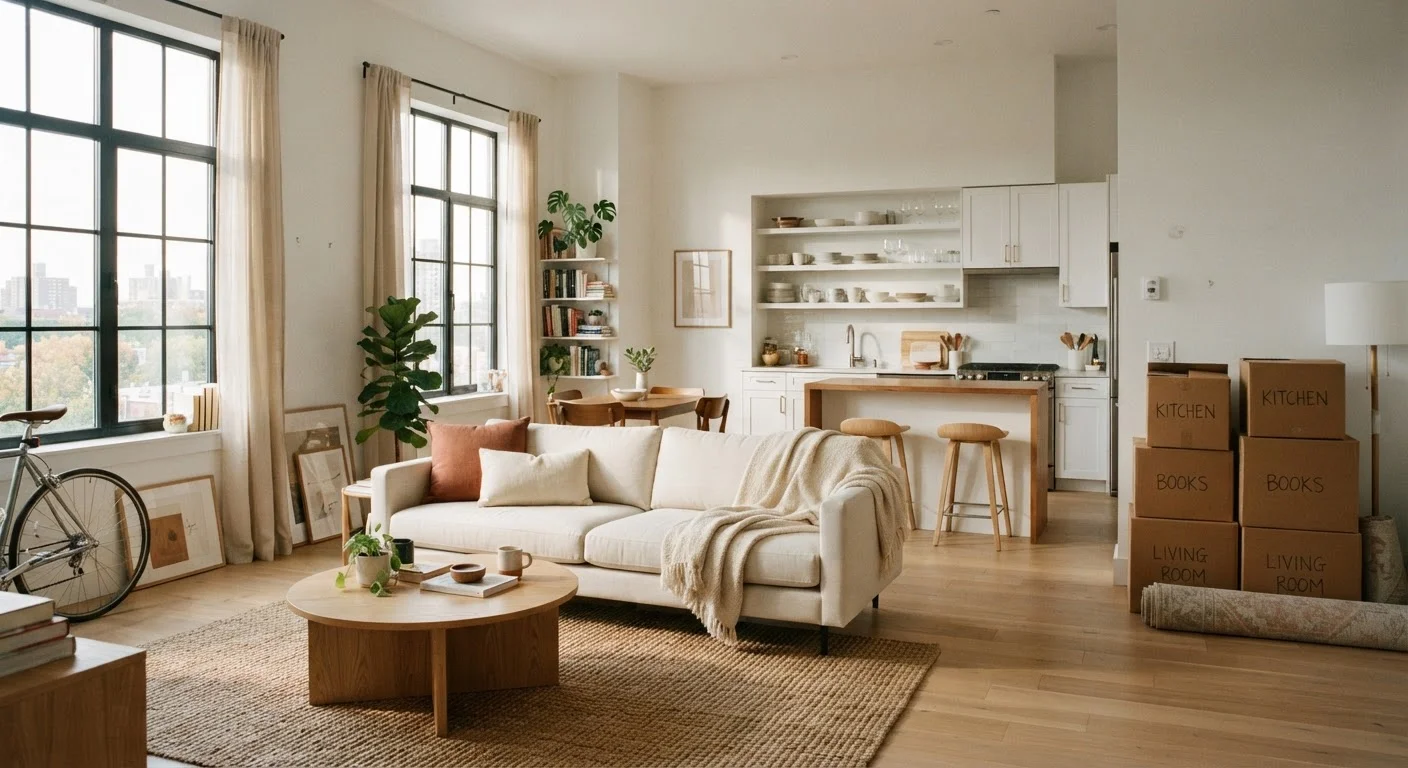
A common mistake: pushing all furniture flat against the walls to "free up" the middle of the room. This often creates a hollow, undefined center with no sense of purpose. Pulling a sofa slightly away from the wall and grouping furniture into a cohesive arrangement usually feels more open, not less.
Try a Paper Floor Plan First
Before moving heavy furniture around, sketch your room's dimensions on graph paper (or use a free online room planner) and cut out scaled furniture shapes. You can test several arrangements in minutes without lifting anything. Measure doorways and note which walls have windows or outlets - these constrain placement more than people expect.
Scale: When Furniture Is the Problem
Furniture that's too large for a space doesn't just take up physical room - it visually compresses everything around it. A king-size bed in a 10×10 bedroom leaves so little floor visible that the room reads as entirely consumed by a single object.
Scale works in the other direction too. Furniture that's too small looks lost, which creates visual clutter as the eye tries to make sense of many unrelated pieces. The goal is proportion: pieces that relate logically to the room's dimensions and to each other.
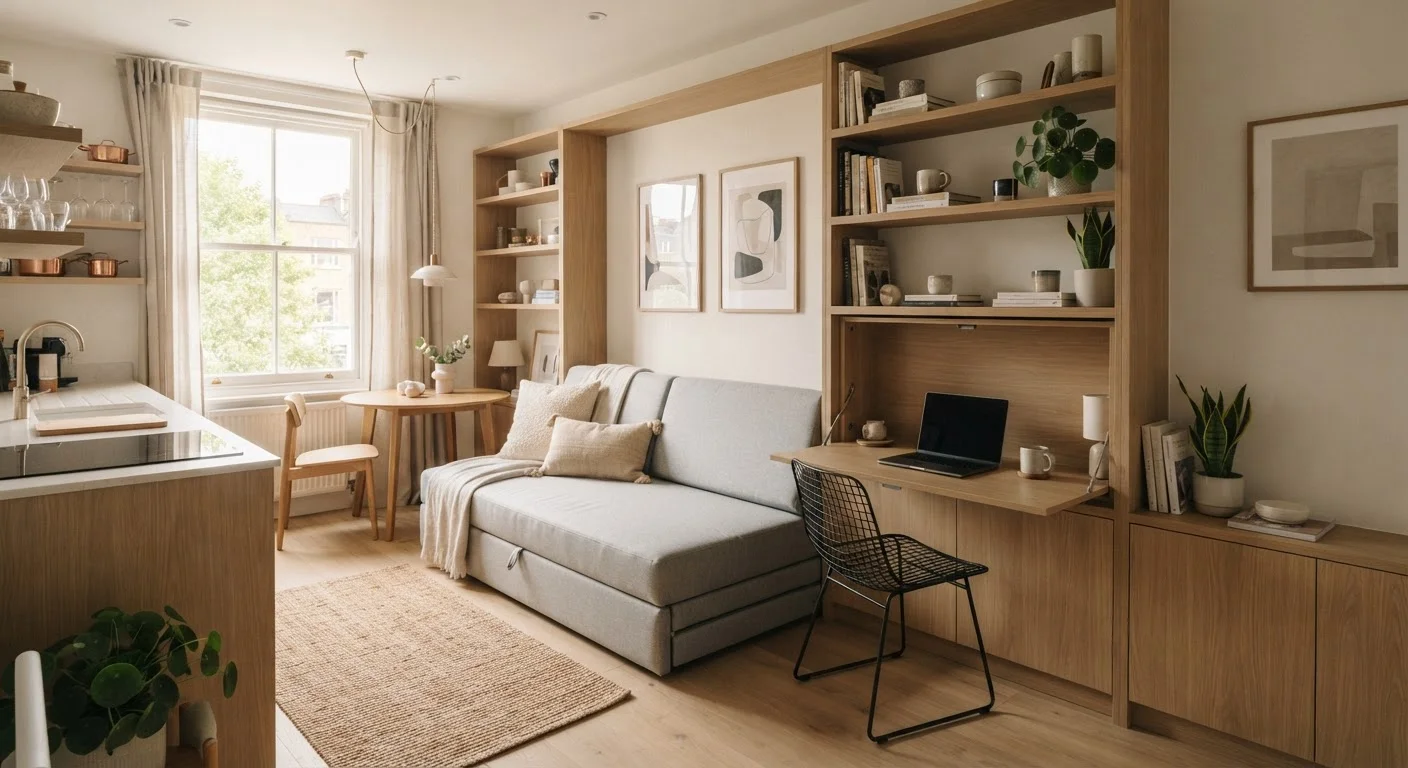
Leggy furniture - pieces raised off the floor on visible legs - helps because they show floor underneath, which the eye reads as open space. Low-profile sofas and beds with storage drawers built in can reduce the visual weight of a room while adding genuine utility.
36 in
Recommended primary walkway clearance
Interior design guidelines commonly cite 36 inches as a minimum for main traffic paths in residential spaces to maintain comfortable movement.
~500 sq ft
Average US studio apartment size
According to real estate data aggregators, the average studio apartment in the US falls in the 400-600 square foot range, making layout efficiency a genuine daily concern for many renters.
2-3
Recommended base colors for visual continuity
Interior designers generally suggest limiting a small space to two or three base colors to reduce visual noise and create a more cohesive, open feel.
Visual Continuity: Reducing What the Eye Has to Work Through
Even a well-arranged room can feel overwhelming if there's too much going on visually. Each competing color, pattern, and texture asks your brain to register and process it - and in a small space, that adds up quickly.
Visual continuity doesn't mean everything has to match exactly. It means keeping a consistent palette (typically two or three base colors), limiting bold patterns to one or two focal pieces, and letting surfaces breathe. A wall of floating shelves with books, plants, decorations, and cables running everywhere will read as chaotic regardless of how well the furniture is arranged.
Mirrors are a legitimate tool here - they reflect light and create the illusion of depth. A single large mirror on a wall perpendicular to a window effectively doubles the perceived natural light in a room.
This connects to a broader idea: your environment shapes how you feel and behave in a space. Our piece on designing your environment explores that further.
Zoning: Giving Small Spaces a Sense of Order
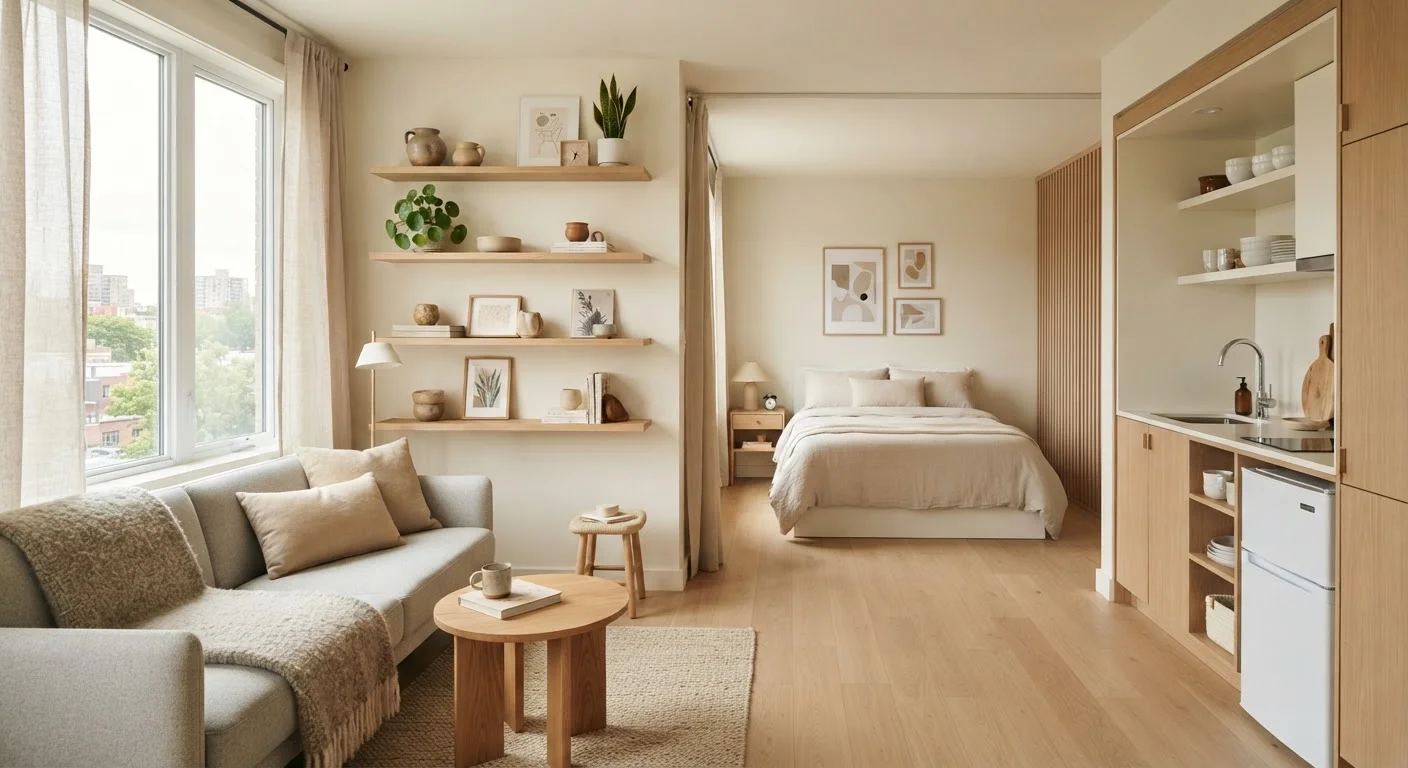
In a studio or open-plan apartment, one of the biggest contributors to a cramped feeling is the absence of defined areas. When sleeping, working, and relaxing all happen in an undifferentiated blob of space, the room never fully "turns off" - and it reads as cluttered even when it isn't.
Zoning doesn't require walls. A low bookcase used as a divider, a rug that anchors the seating area, or even a consistent lighting scheme (warmer light near the bed, cooler task lighting at a desk) signals different functions without adding visual weight.
When a room has to do multiple jobs, multifunctional furniture becomes an important part of the equation - but zoning is the principle that makes those furniture choices coherent.
It's also worth questioning some assumptions you might have about organization. Not every popular organizing idea holds up in practice - our article on common home organization myths covers a few worth reconsidering.
Renting Limits What You Can Change
If you're renting, structural changes like removing walls or installing built-in shelving usually aren't an option without landlord approval. The good news is that the most impactful layout principles - furniture placement, zoning with rugs, and managing visual noise - don't require any permanent modifications. Check your lease and local renter guidelines before making any changes that affect the property itself. For more foundational renting guidance, see the renting basics hub.