How Each Budgeting Framework Works
Before comparing the three methods, it helps to understand what each one actually asks you to do. This article is part of a broader series - see the end-to-end personal budgeting guide for foundational context.
The 50/30/20 Rule
Popularized by US Senator Elizabeth Warren and her daughter Amelia Warren Tyagi in their 2005 book All Your Worth, the 50/30/20 rule divides your after-tax income into three broad buckets:
- 50% - Needs: rent, utilities, groceries, insurance, minimum debt payments
- 30% - Wants: dining out, streaming services, travel, hobbies
- 20% - Savings and debt repayment: emergency fund, retirement contributions, extra loan payments
It's a percentage-based guideline, not a rigid law. You don't track individual purchases - you simply check at the end of the month whether your spending landed in roughly the right buckets.
Zero-Based Budgeting
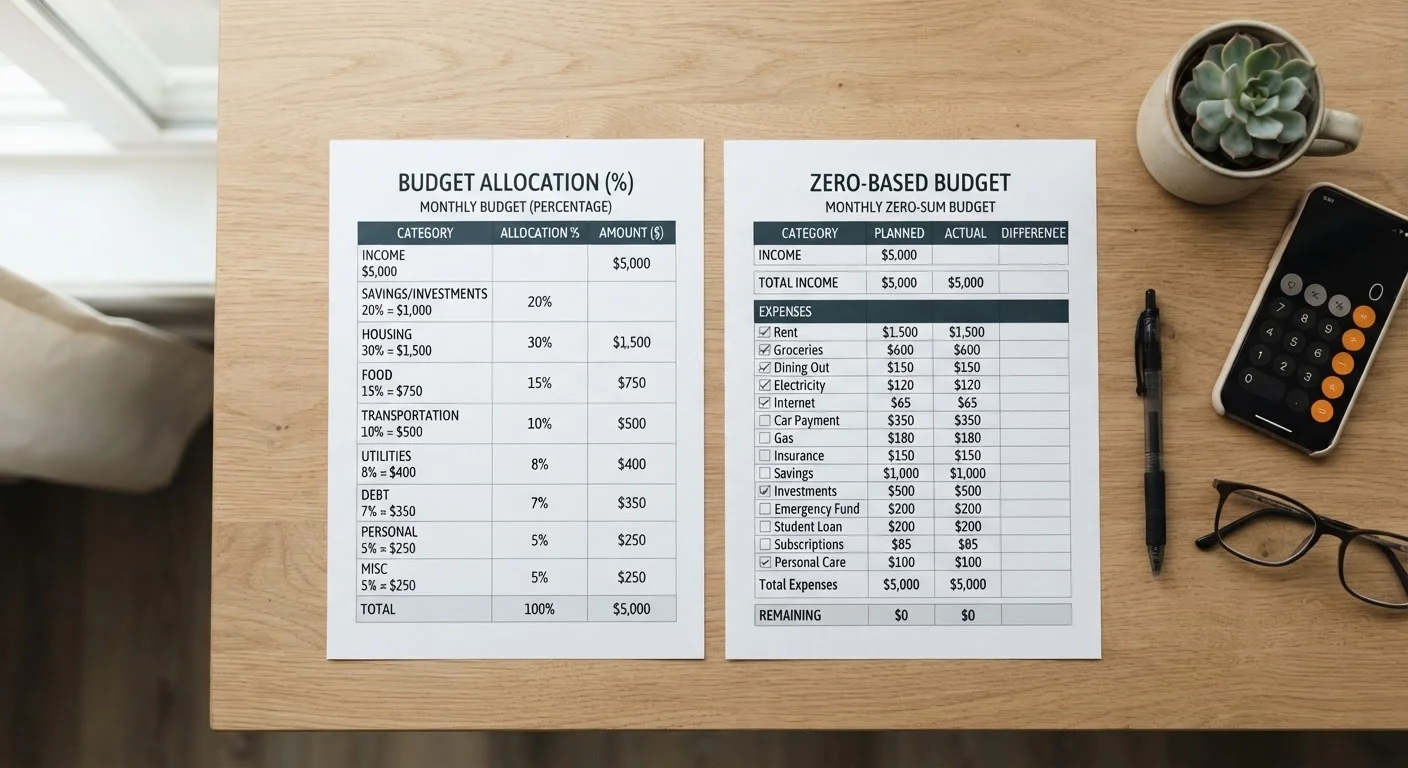
Zero-based budgeting (ZBB) means your income minus your expenses equals zero - every dollar is assigned a job before the month starts. You list every expected expense and savings goal, then allocate your full income until nothing is unaccounted for. This doesn't mean spending everything; savings and investments count as expenses that bring your balance to zero.
The Envelope Method
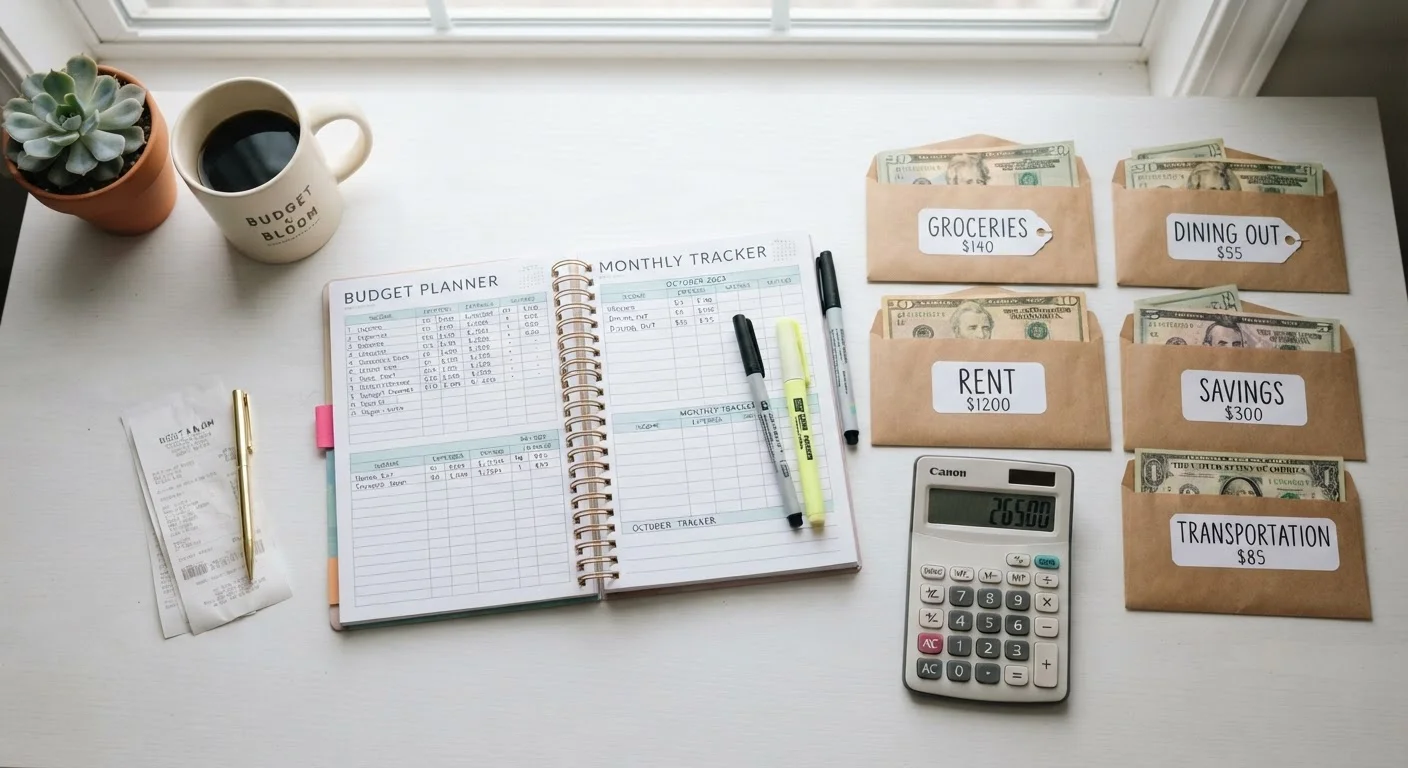
Originally a cash-based system, the envelope method involves dividing money into labeled envelopes for specific spending categories (groceries, gas, entertainment, and so on). When the envelope is empty, spending in that category stops until the next cycle. Digital versions using budgeting apps replicate the same logic without physical cash.
Key Differences That Actually Matter
| 50/30/20 Rule | Zero-Based Budgeting | Envelope Method | |
|---|---|---|---|
| Setup time | Low - a few calculations | High - plan every category | Moderate - set up envelopes |
| Ongoing effort | Low - monthly check-in | High - track all spending | Moderate - replenish regularly |
| Best income type | Stable, salaried | Variable or irregular | Any, especially cash spenders |
| Flexibility | High | Low to moderate | Low - limits are hard |
| Control over spending | Moderate | Very high | High in chosen categories |
| Savings visibility | Built in at 20% | Explicit savings line item | Requires a savings envelope |
| Suitable for beginners | Excellent | Steep learning curve | Good with physical cash |
The comparison above highlights the practical trade-offs, but a few differences deserve more detail.
Effort vs. Control
The 50/30/20 rule is low-maintenance - you're checking broad categories, not logging every coffee purchase. Zero-based budgeting is the opposite: it demands a detailed, proactive plan and regular reconciliation. The envelope method sits in between for overall effort, but applies strict category-level control.
Variable vs. Fixed Income
If your paycheck changes month to month - freelancers, gig workers, commissioned salespeople - zero-based budgeting tends to be more practical because you rebuild the budget fresh each month based on actual income. The 50/30/20 rule works best when you know your starting number. For a deeper dive on this tension, see zero-based budgeting vs. the 50/30/20 rule.
Psychological Fit
Some people are motivated by seeing a complete zero-dollar plan on paper. Others find that level of detail paralyzing. If you've repeatedly overspent in categories like dining or shopping, the hard boundaries of envelopes may be more effective than a flexible percentage rule that lets you rationalize overages. Honest self-assessment here matters more than which system is theoretically superior.
Start Simple, Then Adjust
If you've never budgeted before, the 50/30/20 rule is often the easiest entry point - it requires fewer categories and less ongoing tracking. Once you're comfortable with the habit, you can layer in more detail with zero-based budgeting or envelope categories where you tend to overspend. Building the habit matters more than choosing the 'perfect' method from day one.
Choosing the Right Method for Your Situation
No single framework is objectively best - the right one depends on your specific circumstances. Consider these scenarios:
~77%
Americans living paycheck to paycheck
Survey data from LendingClub and PYMNTS (2023) found approximately 77% of US consumers reported living paycheck to paycheck at some point, underscoring the need for structured budgeting.
20%
Savings target in the 50/30/20 rule
Financial educators widely recommend directing at least 20% of after-tax income to savings and debt repayment as a foundational goal.
You're a First-Time Budgeter
Start with 50/30/20. It reduces the learning curve dramatically and lets you build the tracking habit before adding complexity. Once you understand how your spending actually breaks down, you can refine your approach. See how budgeting priorities shift for new earners for more on starting out.
You're Paying Off Debt or Saving for a Specific Goal
Zero-based budgeting excels when you have a clear financial target - paying down a credit card, building an emergency fund, or saving for a down payment. Because every dollar has a purpose, money is less likely to disappear into vague spending. For guidance on structuring savings goals, the Saving & Goals hub is a useful starting point.
You Overspend in Specific Categories
If you consistently blow your food or entertainment budget, the envelope method creates a real constraint. When the envelope is empty, it's gone - there's no mental accounting to rationalize moving money around. Digital apps that replicate this method can work if carrying cash feels impractical.
High-Cost-of-Living Areas May Not Fit 50/30/20
In cities where rent alone can exceed 40-50% of take-home pay, the 50/30/20 percentages can feel unrealistic. If needs regularly exceed 50%, that's not a budgeting failure - it's a signal to adjust ratios, look for ways to reduce fixed costs over time, or explore an alternative framework that accounts for your real numbers rather than preset ones.
You Want to Combine Approaches
Many effective budgeters use hybrids: a 50/30/20 framework for the overall picture, with envelope-style limits on two or three problem categories, and a zero-based approach to savings goals. The frameworks aren't mutually exclusive. If you're weighing the experience of planning with tools, spreadsheet vs. app-based budgeting explains how your tracking method interacts with whichever framework you choose.
This article is for general informational and educational purposes only and does not constitute personalized financial advice. Consult a qualified financial professional for guidance specific to your situation.