
What Actually Separates the Two
Most travelers use "jet lag" and "travel exhaustion" interchangeably, but they describe distinct problems. Getting the distinction right matters because the recovery strategy for one won't necessarily fix the other.
Jet lag is a circadian rhythm disruption. Your body runs on an internal clock - roughly 24 hours - that governs when you feel alert, when you're hungry, and when you're ready to sleep. When you fly across multiple time zones rapidly, your internal clock stays anchored to the departure zone while the world around you operates on a different schedule. The result: you're wide awake at 3 a.m. local time, foggy at noon, and inexplicably hungry when the restaurant is closed. This is biology, not just tiredness.
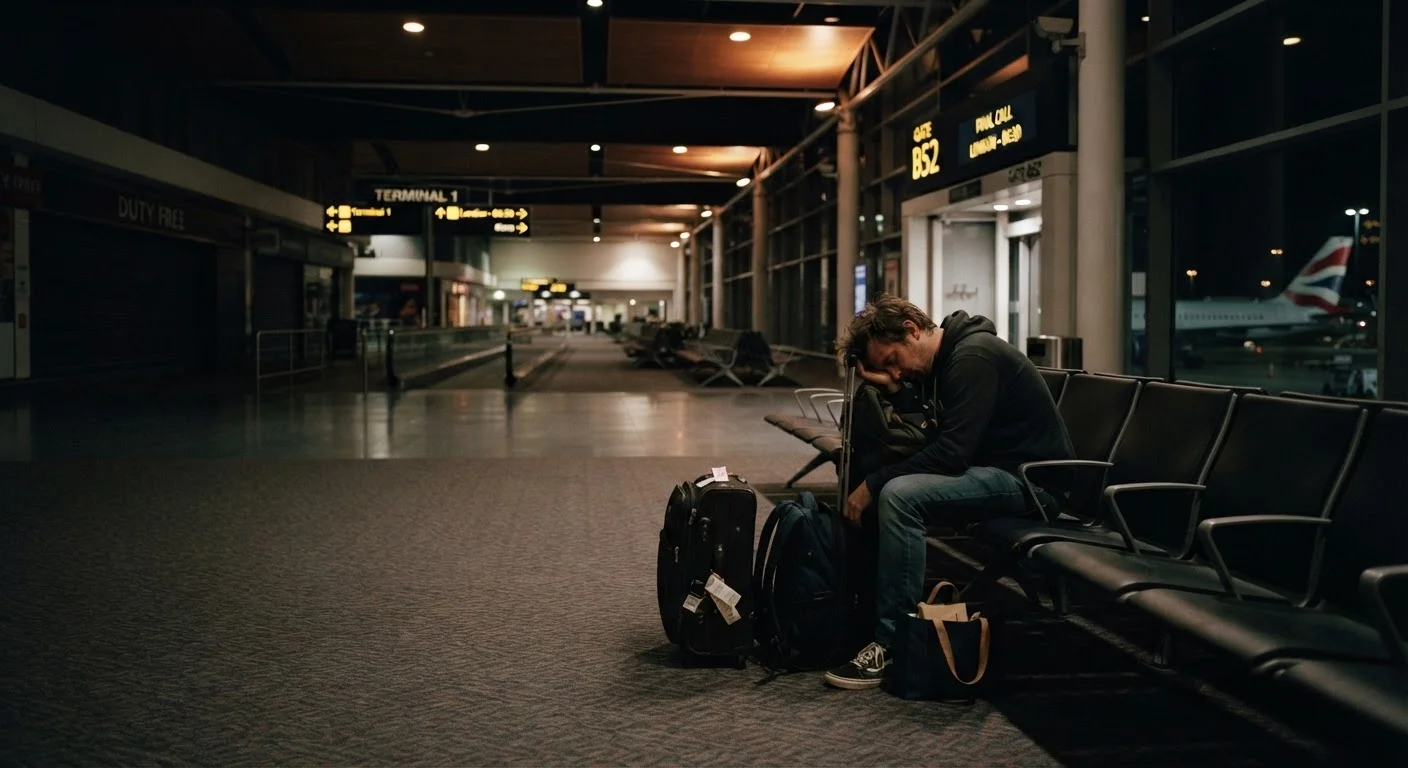
Travel fatigue is different. It's the accumulated physical and mental toll of the travel process itself - cramped seating, recycled air, dehydration, disrupted meals, noise, long waits, and the cognitive load of navigating unfamiliar environments. You can develop travel fatigue on a two-hour domestic flight or a long drive without crossing a single time zone. For more on how driving specifically taxes your body, see what happens to your body during a long drive.
| Criterion | Jet Lag | Travel Fatigue |
|---|---|---|
| Root cause | Circadian rhythm disruption | Physical and mental exhaustion |
| Triggered by | Crossing multiple time zones | Travel stress, poor sleep, sensory load |
| Can occur on short domestic trips | Rarely, if at all | Yes, commonly |
| Primary symptoms | Insomnia, daytime fatigue, appetite changes | General tiredness, irritability, brain fog |
| Recovery approach | Sync to local schedule, light exposure | Rest, hydration, reduced stimulation |
| Typical resolution time | Days (roughly 1 per time zone crossed) | Hours to days with adequate rest |
How Each Condition Plays Out in Practice
Jet lag tends to follow a predictable pattern tied to direction of travel. Eastward flights - where you're "losing" time - are generally harder to adjust to than westward flights. Your body finds it easier to delay sleep than to advance it. Symptoms typically include insomnia at local nighttime, daytime drowsiness, difficulty concentrating, and sometimes digestive irregularity. Most people experience roughly one day of adjustment per time zone crossed, though this varies significantly between individuals.
Travel fatigue, by contrast, accumulates across the duration of a trip regardless of direction. A packed itinerary that leaves no downtime, a red-eye flight that cuts into a full night's sleep, or a multi-layover journey through three airports can all trigger it. Symptoms look similar on the surface - low energy, irritability, difficulty focusing - but they don't follow a time-zone pattern and don't respond to circadian reset strategies. See our article on rest days vs. recovery days for a useful framework on how different kinds of exhaustion require different responses.
~1 day
Typical adjustment per time zone crossed
General guidance from sleep medicine literature suggests jet lag symptoms often ease at roughly one day per time zone, though individual variation is significant.
Eastward
Direction of travel harder to adjust to
Research on circadian rhythms consistently finds eastward travel more disruptive than westward, as advancing the internal clock is biologically harder than delaying it.
Practical Recovery Approaches for Each
For jet lag, the general guidance is to align with your destination's schedule as quickly as possible. That means eating meals at local times, getting natural daylight during the day (especially morning light for eastward travelers), and resisting the urge to nap heavily on arrival. Melatonin - a hormone your body produces naturally to signal sleep - is commonly discussed in the context of jet lag management, but dosing, timing, and appropriateness vary by individual. Consult a healthcare provider before using any supplement, particularly if you take other medications or have underlying health conditions.
For travel fatigue, the fix is more straightforward: rest, hydration, food, and reduced stimulation. This might mean building in a recovery day after a particularly draining travel stretch rather than immediately diving into sightseeing. Pacing matters enormously on longer trips. If you're managing a demanding itinerary, look at trip planning basics for guidance on structuring trips with realistic buffers. Environmental stressors like heat and altitude can compound fatigue further - see managing environmental health risks while traveling for context on those factors.
This article is for general informational purposes only and does not constitute medical advice. If you have concerns about sleep disorders, chronic fatigue, or reactions to travel, consult a qualified healthcare professional.