The Three Environmental Risks Most Travelers Underestimate
Sunburn, heat illness, and altitude sickness are among the most common health problems travelers encounter - and also among the most preventable. Unlike food contamination or insect-borne disease, these risks are tied directly to where you are and when you're moving through it. That makes them highly predictable, which is useful.
The challenge is that all three tend to sneak up. Mild sunburn feels like warmth until it doesn't. Heat exhaustion starts with fatigue you might blame on travel. Early altitude sickness mimics a hangover. Understanding how each condition progresses - and what distinguishes normal discomfort from a warning sign - is foundational travel health knowledge.
This article covers the general mechanics of each risk and the precautions that broadly reduce harm. It is general health information, not medical advice. Always consult a qualified healthcare professional before traveling if you have underlying health conditions or specific concerns.
Sun Exposure and UV Damage
UV radiation intensity depends on latitude, altitude, time of day, and surface reflection. Snow, water, and sand all amplify exposure significantly. At higher altitudes, the atmosphere filters less UV - a factor that overlaps directly with altitude travel.
Sunburn is inflammatory damage to skin cells. Repeated or severe burns accumulate long-term risk, but even a single bad burn during travel can become painful enough to disrupt plans for several days. Heat adds to the problem: sun-exposed skin loses water faster, contributing to dehydration.
General protective strategies
- Limit direct sun exposure during peak hours (broadly midday, though this varies by region and season).
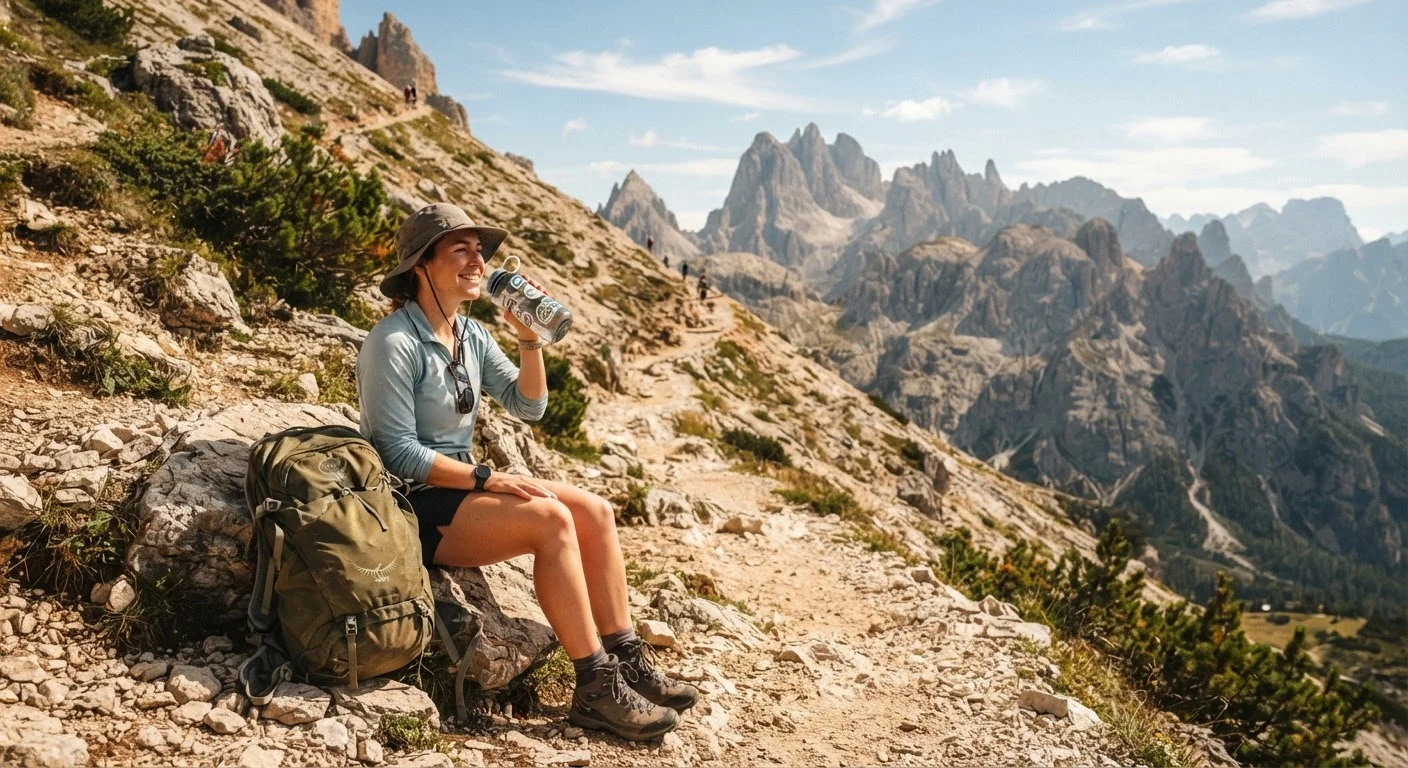
- Wear sun-protective clothing - tightly woven fabrics, long sleeves, and wide-brim hats - as a consistent baseline.
- Apply broad-spectrum sunscreen to exposed skin and reapply after swimming or heavy sweating; check product instructions for frequency.
- Use UV-protective eyewear, especially at altitude or near reflective surfaces.
Travelers heading to tropical or high-elevation destinations should factor in that both settings produce conditions where UV exposure can be much higher than at sea level or in temperate climates.
Heat Illness: Exhaustion vs. Heatstroke
Heat illness exists on a spectrum. Heat cramps and heat syncope (fainting) are milder. Heat exhaustion is more serious and characterized by heavy sweating, weakness, nausea, and a fast but weak pulse. Heatstroke is a medical emergency - the body's core temperature rises dangerously high and the cooling system effectively fails. A person with heatstroke may stop sweating, become confused, or lose consciousness.
The key distinction to remember: if someone is confused, not sweating despite extreme heat, or unresponsive, seek emergency care immediately.
Reducing heat illness risk
- Stay hydrated consistently - don't wait until you feel thirsty, especially during physical activity in humid or hot climates.
- Acclimatize gradually when possible. Arriving in a hot destination and immediately doing strenuous outdoor activity on day one is higher risk than easing into it.
- Identify cool rest spaces along your route before you need them.
- Monitor companions, especially older travelers or those with chronic conditions, who may be more vulnerable.
Hydration is also complicated abroad - if you're unsure about the safety of local tap water, factor that into how you plan to stay hydrated rather than simply drinking less.
Acute Mountain Sickness (AMS)
A condition caused by reduced oxygen at high elevations, typically producing headache, nausea, and fatigue. It can progress to life-threatening conditions if ignored and ascent continues.
Acclimatization
The process by which the body gradually adjusts to lower oxygen levels or higher temperatures. It takes time and cannot be reliably rushed.
Heatstroke
A medical emergency where the body's core temperature rises to a dangerous level and its cooling mechanisms fail. It requires immediate emergency care.
Broad-spectrum sunscreen
A sunscreen formulated to block both UVA and UVB radiation. The 'broad-spectrum' label indicates protection against both wavelength types, not just one.
HAPE / HACE
High-altitude pulmonary edema (fluid in the lungs) and high-altitude cerebral edema (fluid around the brain) are severe, potentially fatal altitude illnesses requiring immediate descent and emergency care.
Altitude Sickness: What It Is and How to Respond
Altitude sickness - also called acute mountain sickness (AMS) - occurs when the body doesn't have enough time to adapt to lower oxygen levels at elevation. It can affect anyone regardless of fitness level, and prior experience at altitude doesn't guarantee immunity on a subsequent trip.
Common symptoms include headache, nausea, fatigue, dizziness, and disturbed sleep. These typically appear within hours of arriving at high altitude. More severe forms - high-altitude pulmonary edema (HAPE) or high-altitude cerebral edema (HACE) - are medical emergencies requiring immediate descent and care.
Practical considerations for high-altitude travel
- Ascend gradually. Most general guidance suggests not increasing sleeping altitude by more than approximately 300-500 meters per day above 2,500 meters, though individual responses vary.
- Hydrate and rest. Alcohol and sedatives can impair breathing during sleep at altitude - most travelers are advised to avoid them during acclimatization.
- Know the descent rule. If symptoms are worsening - especially any signs of confusion, loss of coordination, or severe breathlessness - descending is the primary intervention. Do not ascend with symptoms.
- Discuss medications with your doctor. Some travelers use prescription medications for AMS prevention or treatment. This is a conversation for a qualified healthcare provider, not a self-directed decision.
Destinations like Cusco, La Paz, and Lhasa sit at elevations where AMS is a routine consideration. Many travelers also experience symptoms when flying into high-altitude airports without prior acclimatization. If you're planning any high-elevation travel, include this in your pre-trip consultation with a doctor.
For a broader view of health and safety planning, see our overview of solo travel safety patterns and tropical travel health overview. The trip planning basics hub also covers how to build health preparation into your overall travel framework.
This article provides general health information for educational purposes only and is not a substitute for professional medical advice. Consult a qualified healthcare provider before traveling, especially if you have underlying health conditions or are planning travel to high-altitude or extreme-climate destinations.