
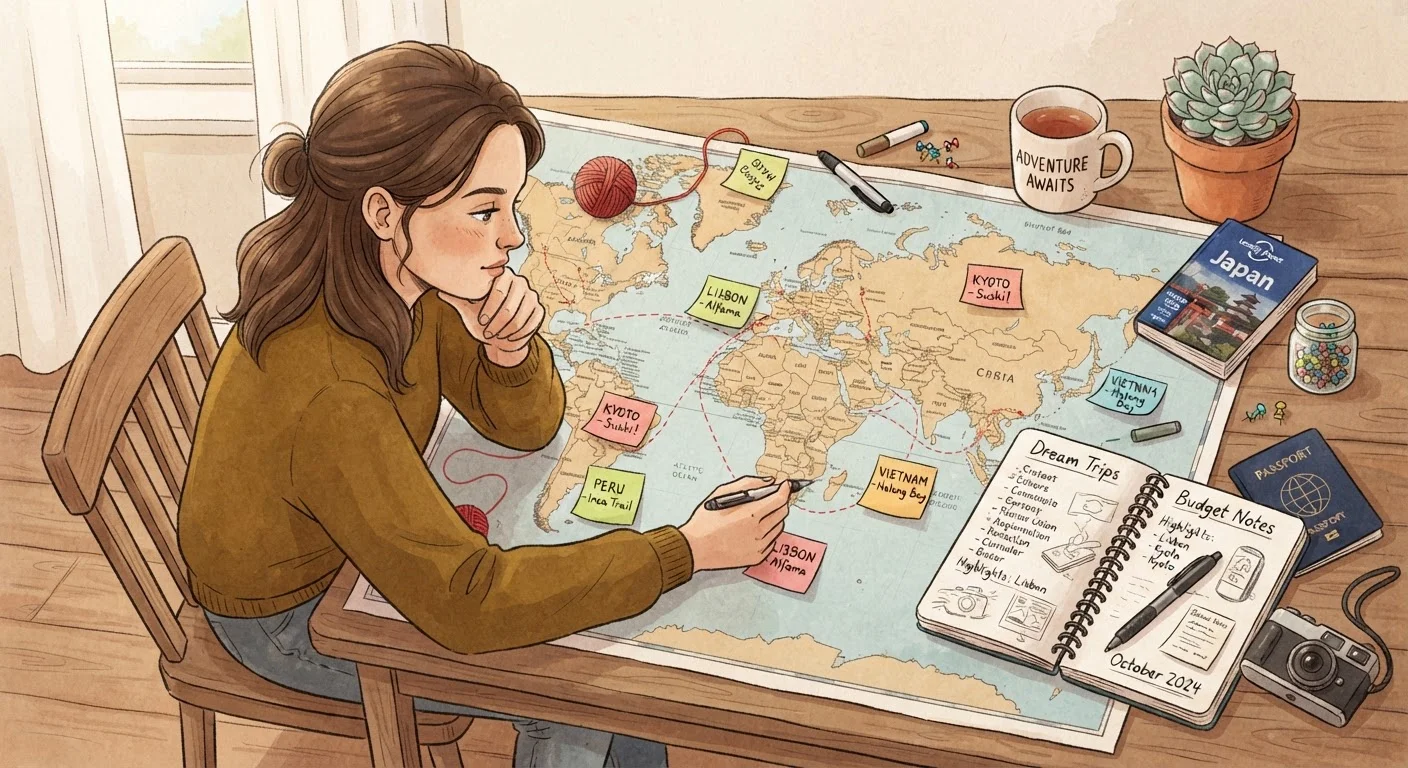
Why Picking a Destination Feels So Hard
The modern travel landscape offers an almost unlimited number of options, and that abundance is precisely what makes choosing so difficult. When everything is theoretically possible, it's hard to know where to start. The result is hours of tab-browsing that produces no actual decision.
The fix isn't to find the "perfect" destination - it's to build a decision framework that filters options down to a realistic short list fast. That's exactly what the steps below are designed to do. If you're planning a trip for the first time, this process pairs well with the broader complete trip planning walkthrough for first-time travellers.
What you will need
U.S. Department of State Travel Website (travel.state.gov)
Check travel advisories, passport requirements, and visa information for any destination.
Personal calendar or time-off tracker
Confirm exactly how many days you have available to travel before shortlisting destinations.
Simple spreadsheet or notes app
Track and compare shortlisted destinations across budget, visa needs, and interests.
CDC Traveler's Health page (wwwnc.cdc.gov/travel)
Review general health considerations and recommended precautions for destinations you're considering.
Follow These Steps to Find Your Destination
Work through each step in order. Skipping ahead - especially jumping to "what looks cool" before establishing your budget and time - is the most common way people end up overwhelmed or disappointed. Treat this as a funnel: start broad, filter systematically, and commit to whatever clears all the criteria.
Lock in your real constraints first
Before you think about destinations at all, write down three fixed facts: how many days you can actually travel, your total budget (flights, accommodation, food, and activities combined), and whether your passport is valid with at least six months remaining. These aren't limitations - they're the boundaries that make the decision manageable.
Most destination confusion comes from skipping this step and jumping straight to inspiration. A week-long trip with $1,500 total points to a very different set of options than a two-week trip with $4,000. Know your numbers first.
Identify what you actually want from the trip
Ask yourself one direct question: what do you want to spend most of your time doing? Lying on a beach, exploring cities, hiking, eating your way through local food markets, or visiting historical sites all point toward different regions. You don't need a detailed itinerary yet - just a primary travel mode.
If you genuinely don't know, start with what you've enjoyed in past trips or domestic travel. Someone who loved a long weekend in New Orleans for food and culture is likely a better fit for an urban international destination than a remote outdoor adventure.
Factor in your experience level honestly
First-time international travellers generally do better starting with destinations that have strong tourism infrastructure - clear signage in English, reliable public transport, and straightforward entry requirements. That's not a judgment on ambition; it's practical risk management.
If this is your first trip abroad, countries with well-established visitor systems reduce the likelihood that a logistical problem becomes a crisis. As your experience grows, more complex destinations become much more manageable. For a full planning framework that accounts for experience level, see Trip Planning from Scratch.
Build a short list of two or three candidates
Using your budget, time, interests, and experience level, generate a shortlist - no more than three destinations. Resist the urge to keep the list open-ended. A specific short list forces you to do real research instead of indefinite browsing.
For each candidate, note the approximate flight time from your nearest major airport, the rough daily cost on a budget, and whether a visa is required for U.S. citizens. A simple comparison like this often eliminates one or two options quickly.
Check advisories and entry requirements for each candidate
For every destination on your short list, check the current U.S. State Department travel advisory level and confirm visa requirements for U.S. passport holders. Also review the CDC's traveler health page for the destination to understand any recommended vaccinations or health precautions - and consult a healthcare provider well before departure for personal medical guidance.
This step sometimes eliminates a destination entirely or reveals a requirement (like a visa application that takes six weeks) that affects your timeline. It's far better to discover this now than after you've started booking. Avoid common planning mistakes by reading Planning Assumptions That Catch Travellers Off Guard.
Make the call and move forward
Once you've filtered your short list through budget, time, interests, experience level, and entry requirements, pick the destination that survives all four filters most cleanly. If two options remain equally viable, choose the one you'd be most disappointed to miss - and then stop deliberating.
The next phase is building the actual trip. For practical next steps on booking, spending, and planning your first international trip on a budget, see Planning Your First Budget Trip Abroad.
Always Verify Entry Requirements Independently
Visa rules, vaccination requirements, and border policies change without much notice. Before committing to any destination, check the official U.S. Department of State travel pages and the destination country's embassy website. Do not rely solely on travel blogs or third-party booking platforms for entry information - confirm directly with official sources.
This article is for general travel planning information only. Entry requirements, health recommendations, and travel advisories change frequently - always verify current conditions with official U.S. government and destination country sources before making any travel decisions. For personal health and medical questions related to travel, consult a qualified healthcare provider.