
Why These Myths Have Such Staying Power
Travel planning myths persist because they feel protective. Telling yourself that you need more time, more money, or more knowledge before booking gives you a reason to delay - and delay feels safer than committing. But most of these beliefs don't reflect how planning actually works for the majority of trips most people take.
The result is a cycle where the trip never quite becomes real. A destination stays on a wish list for years. A reasonable window to book gets passed over. The planning process feels so overwhelming in theory that it never gets started in practice.
The myths below are among the most common barriers. Each one has a straightforward correction - not to make travel sound effortless, but to give you an accurate picture of what's actually involved.
Myth
You need months of planning before you can book anything.
Fact
Many domestic and short-haul trips can be planned in a weekend - sometimes even a few days out.
The idea that travel requires a six-month runway stops a lot of people from ever starting. In reality, planning complexity scales with trip length and destination, not some fixed rule. A long weekend road trip or a nearby city break can come together in a few focused evenings. Even some international trips, especially to destinations with straightforward entry requirements, can be booked and arranged within a few weeks.
That said, some trips do benefit from earlier planning - particularly those involving complex visa applications, peak-season destinations, or multi-country routes. See how planning complexity scales with trip duration for a clearer sense of what actually needs lead time and what doesn't.
Myth
You have to research everything thoroughly before you can feel ready to go.
Fact
Over-researching can be just as paralyzing as under-researching - a working outline is usually enough to start.
There's a point where research stops reducing uncertainty and starts creating it. Reading dozens of conflicting reviews, comparing every possible route, and trying to pre-decide every meal can leave you more anxious, not less. Most experienced travelers work from a short list of priorities - where to sleep, how to get there, and one or two anchor activities - and figure out the rest on the ground.
A basic travel itinerary doesn't need to be exhaustive. It just needs to answer the core logistical questions. Everything else can stay flexible.
Myth
Travel is only worth doing if you can afford to do it properly.
Fact
Budget constraints shape the kind of trip you take, not whether a trip is worth taking.
"Doing it properly" is a moving target that shifts depending on who's talking. The assumption that travel requires a large discretionary budget causes many people to defer trips indefinitely. In practice, most destinations offer a wide range of accommodation, food, and activity options at different price points. Spending less doesn't automatically mean a worse experience - it often means different trade-offs.
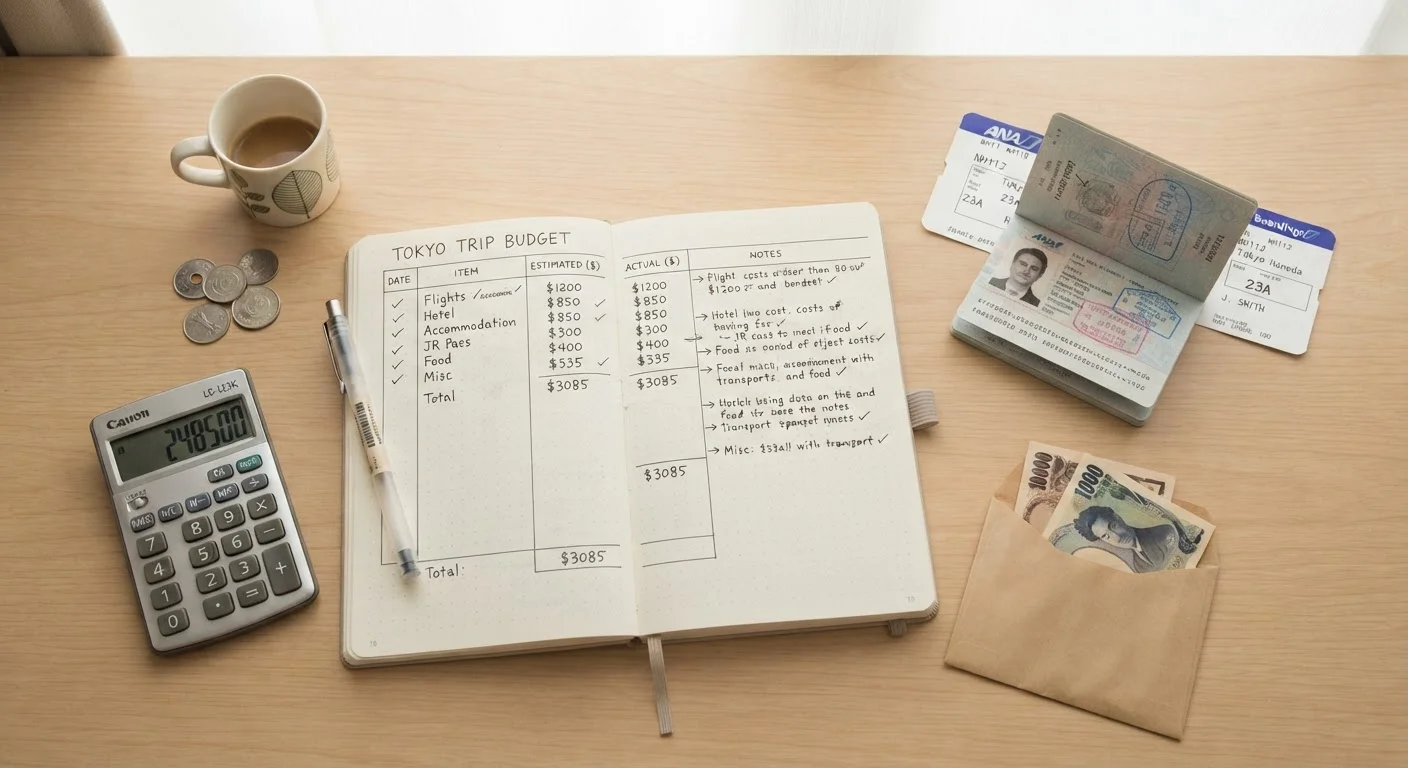
Before assuming a trip is out of reach, it's worth actually mapping out what it would cost. Travel Budgeting 101 walks through the real cost categories so you can assess affordability with actual numbers, not assumptions.
Myth
If you don't book the cheapest flights at exactly the right moment, you've already failed.
Fact
Obsessing over flight timing often costs more in stress and missed trips than it saves in dollars.
Fare optimization is real but overstated. Flight prices fluctuate based on many variables, and there's no universally reliable window that guarantees the lowest price every time. Spending weeks refreshing fare trackers and waiting for the perfect deal often means the trip doesn't happen at all - or you book so late that accommodation and other costs have risen to offset any flight savings.
A reasonable approach: set a budget range you're comfortable with, check fares across a few date options, and book when the price falls within that range. The order you book things in matters more than squeezing out the last few dollars on airfare.
Myth
Traveling alone is inherently more dangerous and complicated than traveling with others.
Fact
Solo travel carries specific considerations, but it isn't categorically riskier than group travel.
Solo travel does require more self-reliance - there's no one to share navigation duties, watch your bag, or make decisions with you. But many destinations are well-suited to solo travelers, and the planning process is often simpler without having to coordinate multiple schedules and preferences. Safety depends far more on destination, preparation, and situational awareness than on whether you're alone or with a group.
Understanding the real differences between solo and group trips helps set realistic expectations. Solo vs. group travel planning breaks down what actually changes - and what stays the same - depending on who's coming with you. For destination-specific safety information, always verify current conditions through official government travel advisories before you go.
What Gets in the Way After the Myths Are Cleared
Once the biggest misconceptions are out of the way, a more manageable picture emerges. Most trips involve a handful of real decisions - destination, dates, accommodation, transport - and a longer list of things that can wait or be decided on arrival.
Don't Confuse Flexibility with No Plan
Leaving everything open-ended isn't the same as being a flexible traveler. Arriving without confirmed accommodation, a rough sense of local transport options, or any idea of entry requirements creates avoidable stress. The goal is a light, adaptable framework - not zero preparation. Even a one-page outline covering where you'll sleep the first night and how you'll get from the airport goes a long way.
One genuine area that deserves attention before you travel: entry requirements, health documentation, and local regulations. These aren't myths - they're real variables that change frequently and vary by destination. Always verify visa requirements, vaccination recommendations, and any travel advisories through official government sources well before your departure date. The Travel Safety & Health hub covers what to check and how to stay prepared without over-engineering your trip.
Planning assumptions - the things travelers take for granted without checking - are a separate and underappreciated risk. Common planning assumptions that catch travelers off guard covers the gaps that tend to create real problems, as distinct from the fears that never materialize.
The goal isn't to eliminate uncertainty - it's to distinguish between uncertainty that requires action and uncertainty that's simply part of the experience. Most of the friction in travel planning comes from the latter category.