Why Budgeting Before You Book Actually Matters
Most first-time travellers do it the wrong way around: they find a flight deal, get excited, book it - then figure out the rest later. The problem is that "the rest" often costs two or three times what the flight did. By the time accommodation, food, and activities are factored in, the trip is already over budget before it's even started.
Mapping out costs before you commit to anything changes that dynamic. It turns a vague travel dream into a concrete financial target you can actually plan toward. It also reveals early whether your destination, travel style, or timeline needs adjusting - when you still have the flexibility to make those changes.
If you've never built a personal budget before, the principles here transfer directly. See our beginner's budgeting walkthrough for a foundation before diving in.
The Five Core Categories of Travel Spend
Every trip - regardless of destination or length - breaks down into five spending categories. Understanding these categories is the first step to building a budget that doesn't fall apart.
Travel buffer
An extra percentage (typically 10-15%) added on top of your estimated total to cover unexpected costs, price changes, or overspending in any category.
Fixed travel cost
A cost you pay once and that doesn't change based on your behaviour - like a flight or a visa fee.
Variable travel cost
A cost that changes depending on your choices day-to-day, like food, taxis, or shopping. These are the easiest to overspend on.
Shoulder season
The travel period just before or after peak tourist season, when prices are typically lower and crowds are smaller.
Daily destination cost
The average amount a traveller spends per day at a specific destination, covering food, local transport, and activities - useful as a budgeting benchmark.
- Transportation: Flights, trains, buses, car hire, taxis, and any transit within your destination city. This is usually the largest single line item.
- Accommodation: Hotels, hostels, short-term rentals, or any place you sleep. Costs vary enormously by city and travel season.
- Food and drink: Every meal, coffee, and snack. It's easy to underestimate - especially in cities where eating out is the norm.
- Activities and experiences: Entry fees, tours, day trips, and anything you pay to do or see.
- Admin and essentials: Travel insurance, visas, baggage fees, airport transfers, tips, and currency conversion costs. This category is where most budgets develop unexpected holes.
That last category deserves special attention. Our companion guide on hidden travel costs goes deeper on the fees and charges that quietly inflate trip costs.
How to Estimate Each Category Realistically
Generic cost estimates online are often useless - they're either outdated, averaged across wildly different travel styles, or based on a country rather than a specific city. Do destination-specific research instead.
Research your city, not just the country
Cost of living varies dramatically within a single country. Major capitals are often two to three times more expensive than smaller regional cities. Always look up costs for the specific city you're staying in rather than relying on country-level averages.
Here's a practical approach for each category:
- Transportation
- Search actual fares for your dates on a flight or rail search tool. Don't assume prices - look them up. Factor in ground transport at both ends of the journey.
- Accommodation
- Search your destination dates on an accommodation platform and note the nightly range for the type of stay you want. Multiply by the number of nights.
- Food
- Look up cost-of-living data for your destination city. Travel forums often have real-world meal cost breakdowns by budget tier. Estimate three meals daily and add a small buffer for snacks and drinks.
- Activities
- List the things you actually want to do and look up entry fees individually. A museum, a guided tour, and a national park all have published costs.
- Admin and essentials
- Check whether your destination requires a visa (and what it costs), confirm travel insurance quotes, and estimate airport transfer costs. These figures are findable - they just require a few extra minutes of research.
Understanding the difference between fixed and variable costs matters here too. Fixed vs. variable expenses explains how to plan for both types - a concept that applies directly to travel spending.
Building Your Budget in a Simple Spreadsheet
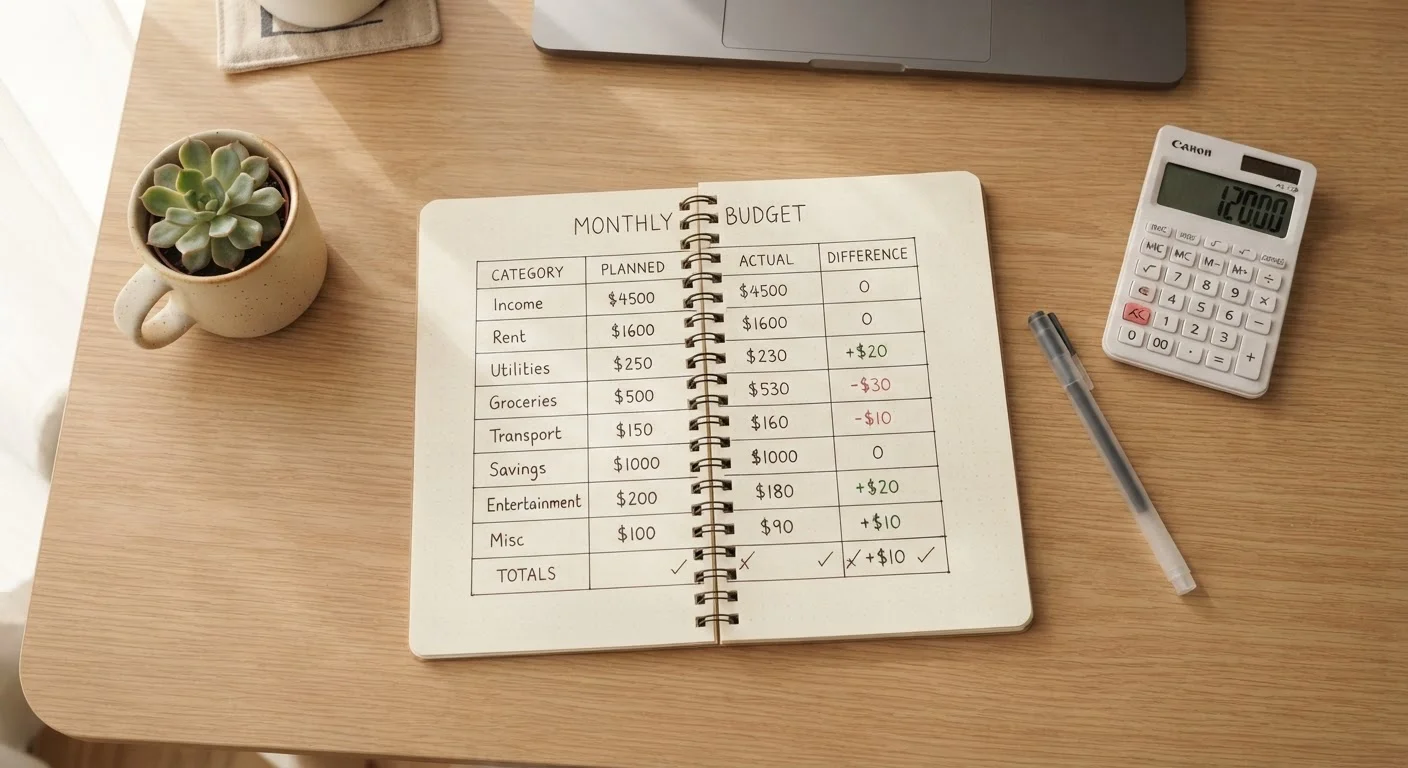
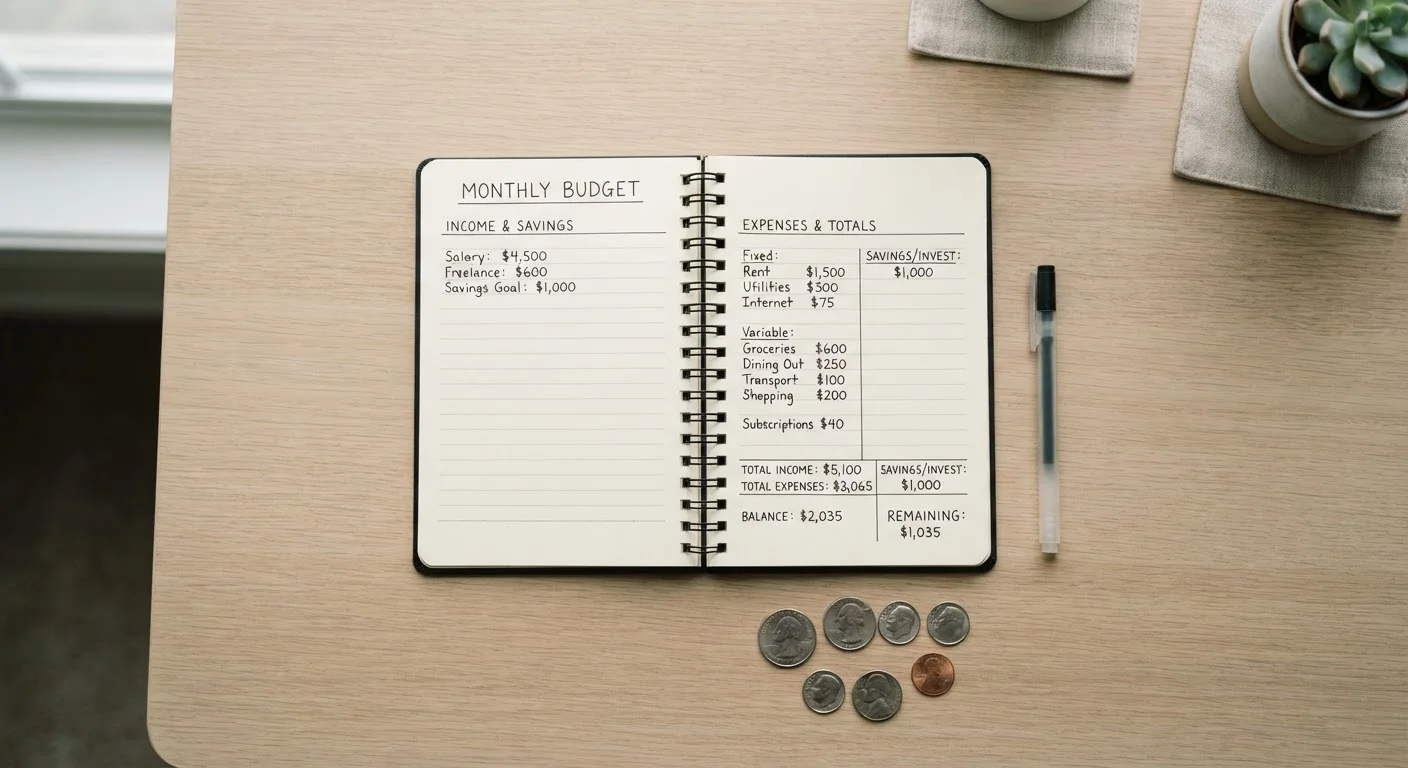
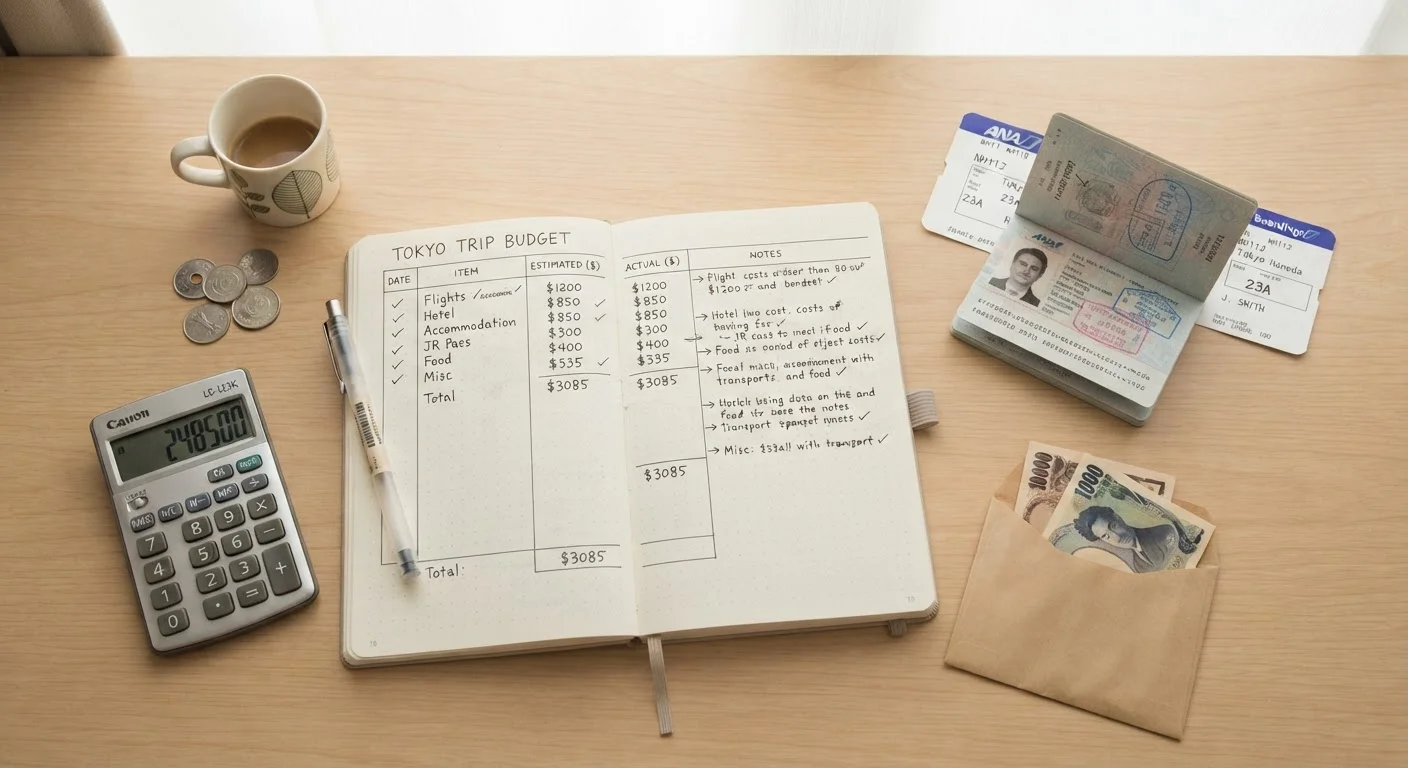
Open a blank spreadsheet and create five rows - one for each spending category above. Add columns for your estimated cost, your researched figure, and a notes field. That's your planning document.
For each row, enter the most realistic number you found during research - not the cheapest possible scenario and not a wild guess. Then add a row at the bottom labelled Buffer and set it to 10-15% of the subtotal. This covers price changes, unexpected fees, a missed transfer, or a spontaneous dinner that wasn't in the plan.
Your total is your trip savings target. Divide it by the number of weeks until your travel date to get a weekly savings figure. If that number is manageable, you have a viable plan. If it isn't, something needs to change - destination, trip length, timing, or travel style.
Once you're on the ground, tracking your daily spending keeps you honest without becoming a chore. A quick daily tally against your category budgets is usually enough.
What to Do When Your Budget Doesn't Add Up
If your researched total is significantly more than you can realistically save, you have four levers to pull - and you don't have to max out all of them.
- Adjust the destination. Some regions cost two or three times more than others. A different destination might deliver a similar experience for considerably less.
- Shorten the trip. Fewer nights means less spend on accommodation and food. A well-planned seven-day trip often delivers more value than a rushed ten-day one.
- Change the travel season. Shoulder season (just before or after peak) typically brings lower fares and accommodation rates without dramatically changing the experience.
- Set a longer savings runway. Sometimes the trip just needs more time to fund. Pushing a departure date back by a few months can make the weekly savings target entirely achievable.
When you're ready to move from budgeting to full trip planning, our guide to planning your first budget trip abroad walks through every subsequent step. And if you've heard that budget travel means miserable compromises, common budget travel myths addresses that directly.
One final item most first-time travellers overlook: travel insurance. It's a genuine line item in your budget, not an optional extra. Our plain-language breakdown of travel insurance explains what it covers and what to look for in a policy.