
Why Travel Budgets Consistently Come Up Short
Most people build a travel budget around three things: flights, accommodation, and food. That instinct is understandable - those are the biggest line items. But the costs that actually blow a budget tend to live in the spaces between those categories.
Research consistently shows that travelers underestimate total trip spending, not because they're careless, but because the ancillary costs are scattered across different stages of a trip and rarely appear in one place. A flight aggregator shows you the fare. It doesn't show you the $35 checked bag fee, the $25 airport shuttle, or the $70 travel insurance policy you probably should have bought.
Understanding where these gaps typically appear is the first step toward a budget that actually holds. See our guide to mapping out what a trip will actually cost for a broader framework before you start booking anything.
15-20%
Recommended travel budget buffer
Travel finance educators commonly recommend adding 15-20% on top of estimated costs to cover the unexpected expenses that arise on most trips.
$40-$80+
Typical airport taxi cost in major cities
Ground transfer costs from major international airports vary widely by city but can rival the cost of a budget meal for two - and are rarely included in any advertised travel price.
3 in 10
Travelers who underestimate trip spending
Surveys of travelers suggest a significant proportion consistently spend more than their original budget, with transport incidentals and daily fees among the most cited surprises.
Before You Even Leave: Pre-Trip Costs That Get Skipped
Visa and entry fees. Many US travelers don't need a visa for short stays in popular Western European countries, but that's not universally true. Some destinations charge tourist taxes, entry fees, or require advance electronic travel authorizations - each with its own cost and timeline. These aren't optional and can't be recouped if you miss the window. For a reliable starting point on entry requirements, see our article on visa requirements and why official sources matter.
Travel insurance. Skipping insurance to save upfront is a trade-off many travelers regret. A single medical evacuation abroad can cost tens of thousands of dollars out of pocket. Insurance policies vary enormously in what they cover, so reading the fine print matters. Our travel insurance explainer breaks down the key policy types and common exclusions.
Vaccinations and health prep. Some destinations recommend or require certain vaccinations. Consultation fees and vaccine costs are real expenses that need to appear in your pre-trip budget. Always consult a qualified healthcare professional or a travel medicine clinic for personalized guidance - this article is general information, not medical advice.
Getting There and Back: Transport Costs Beyond the Ticket
The flight price on your screen is rarely the final number. Checked baggage fees, seat selection charges, and in-flight meals can add meaningful amounts to a budget airline ticket - sometimes bringing the total close to a full-service fare. Read baggage policies carefully before booking.
Airport transfers are another consistent blind spot. Getting from an airport to your accommodation in an unfamiliar city isn't free, and options range significantly in cost. A taxi from a major international airport can cost $40-$80 or more depending on the city. Public transit options exist in many destinations and cost a fraction of that, but they require advance research to use confidently.
If you're renting a vehicle at your destination, factor in collision coverage, fuel, tolls, and parking. These costs compound quickly, especially in cities where parking is expensive. For a parallel look at how transport costs add up at home, our car costs and finance hub covers the same principle applied to everyday vehicle ownership.
Check the Total Cost Before You Commit
When comparing transport options, always calculate the door-to-door cost, not just the ticket price. A cheaper flight that lands at a remote secondary airport may cost more overall once you add the longer, pricier transfer. The same logic applies to accommodation: search for the total nightly rate including all fees before comparing properties.
On the Ground: Daily Costs That Are Easy to Underestimate
Tipping. In the US, tipping 18-20% at restaurants is a social norm and forms a meaningful part of service workers' income. Other countries have entirely different norms - some where tipping is appreciated but modest, and others where it's uncommon. Budgeting for tips in destinations where they're expected is simply good planning. Ignoring them isn't a saving; it's an oversight that shows up as a daily shortfall.
Resort and destination fees. Hotels in some US resort markets charge mandatory daily fees on top of the advertised room rate - covering amenities whether or not you use them. Some international destinations also charge tourist taxes per night, collected at the property. These are disclosed in fine print but rarely surface during a price search. Our article on spending traps for first-time budget travelers covers how to spot these before they catch you.
Currency conversion costs. Airport exchange kiosks and hotel currency desks typically offer poor rates. ATM fees and foreign transaction charges from your home bank add up on longer trips. Using a card with no foreign transaction fees and withdrawing local currency in sensible amounts from local ATMs is generally more cost-effective - though checking your bank's specific policies before you leave is essential.
Building a Budget That Actually Accounts for All of This
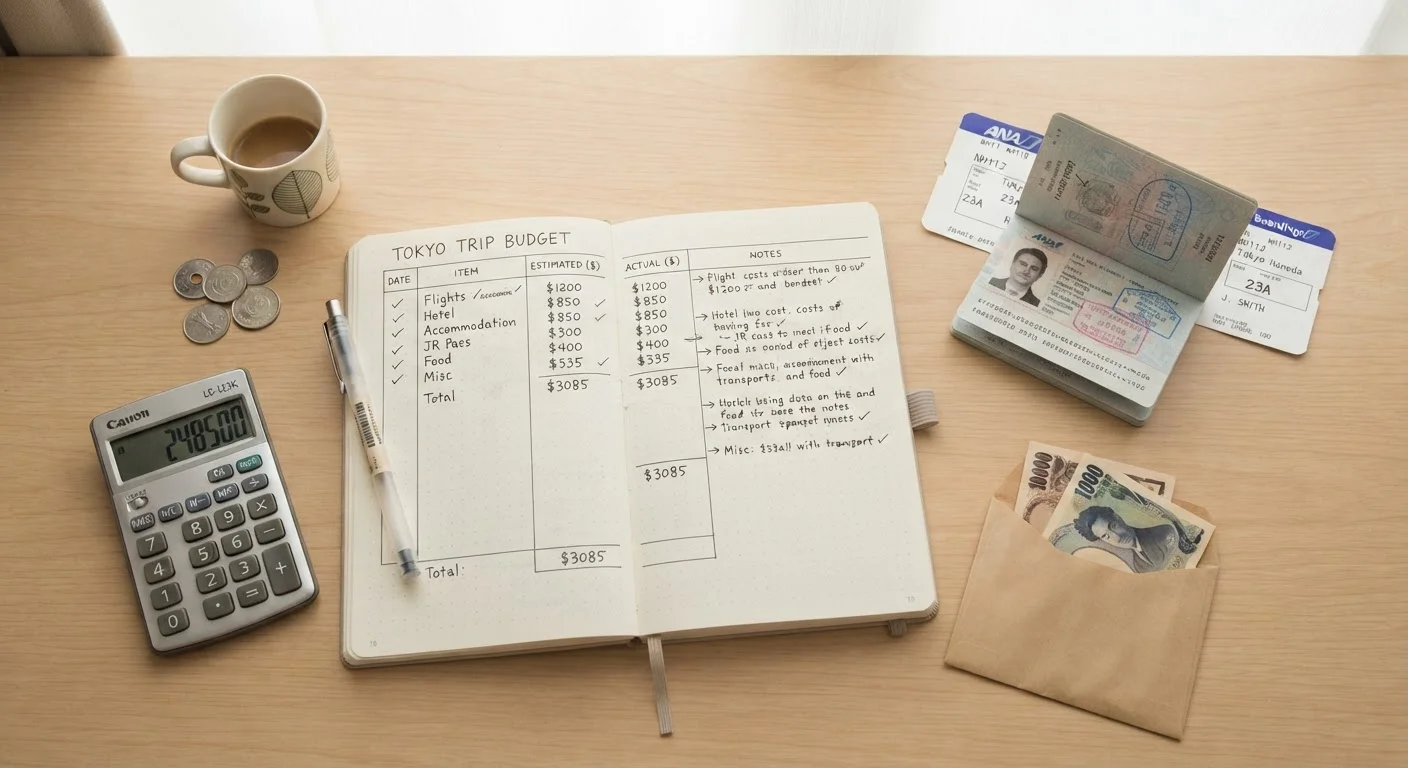
The practical fix is straightforward: build your budget in categories that match how travel money actually flows, not just the headline costs. A pre-trip category (visas, insurance, vaccines), a transport category (flights plus all ground transfers), an accommodation category (room rate plus fees), a daily spending category (food, tips, activities, incidentals), and a buffer.
That buffer - typically 15-20% of your total estimated spend - is not wasteful padding. It's the honest acknowledgment that travel involves uncertainty. If you don't use it, great. If you do, the trip doesn't get derailed.
Slowing down your itinerary is another lever that naturally reduces these costs. Fewer city changes mean fewer airport transfers and less time lost to transit. Our piece on slow travel vs. rushing between cities explores why staying longer in fewer places often costs less. And for a practical checklist to run through before departure day, see our pre-departure checklist for travelers watching their spending.
If any of the common assumptions holding you back from planning feel familiar, our article on budget travel myths addresses several of them directly.
This article is for general informational purposes only and does not constitute financial, medical, or legal advice. Always verify entry requirements, health guidance, and costs with official government sources and qualified professionals before traveling.