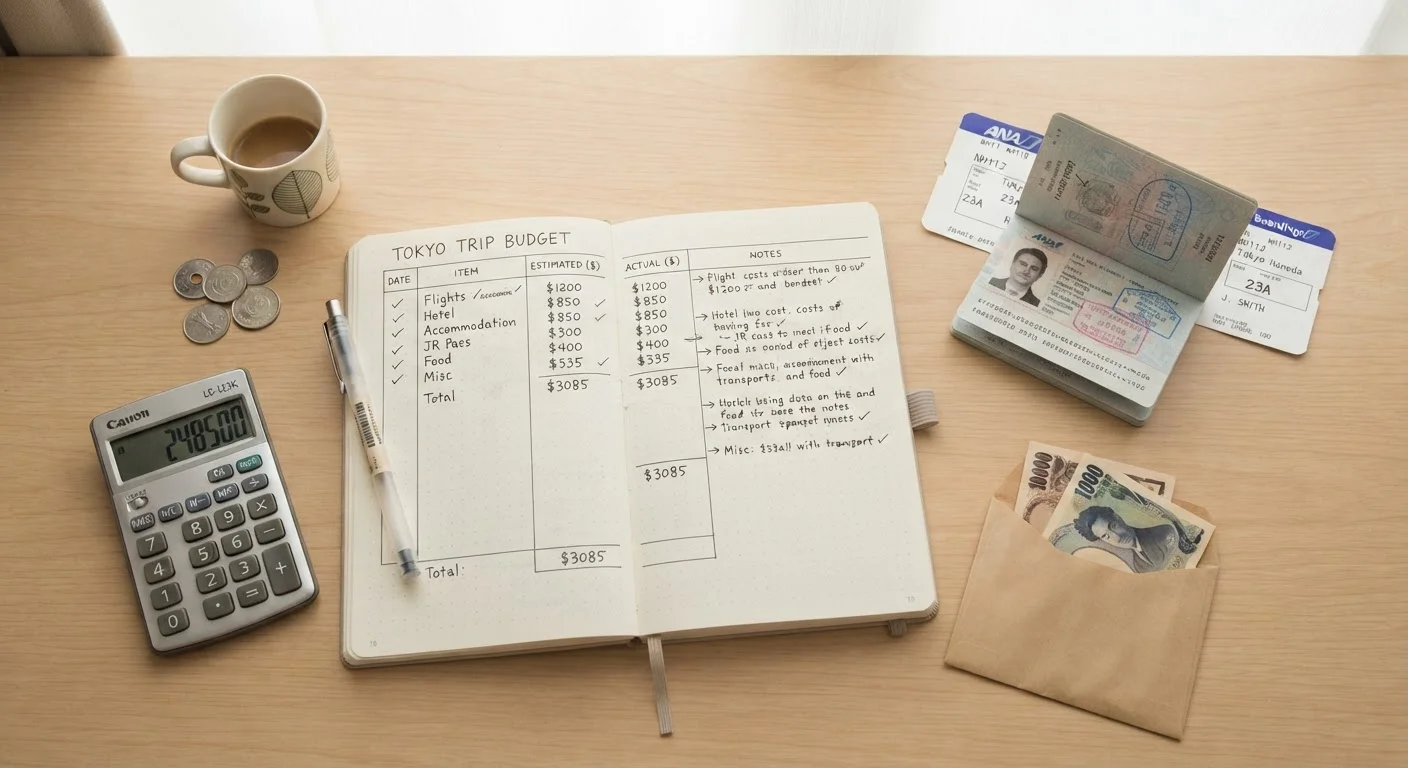

Where the Money Actually Goes
When people compare slow travel with city-hopping, the conversation usually starts with flights or train tickets. But the real budget picture is more layered than that. To understand what your wallet prefers, you need to account for every cost category - not just the ones that feel obvious at booking time. See our guide to building a realistic travel budget for a full breakdown of cost categories before you commit to either approach.
With city-hopping, the per-move costs accumulate fast: intercity tickets, airport transfers, checked baggage fees, and the first-night premium at unfamiliar accommodation all hit your budget every few days. Slow travel front-loads some costs (usually one larger flight or journey) but then keeps the daily overhead low and predictable.
| Criterion | Slow Travel | City-Hopping |
|---|---|---|
| Transit costs | Lower - fewer moves overall | Higher - regular intercity fares |
| Accommodation rate | Weekly discounts available | Nightly rack rate typical |
| Food spend | Lower - can cook, find locals spots | Higher - tourist-area convenience |
| Daily budget predictability | High - stable fixed costs | Low - costs vary city to city |
| Destinations covered | Fewer, explored more deeply | More, experienced more briefly |
| Ideal trip length | 2 weeks or more | 7-10 days |
There's also a less obvious cost: decision fatigue. Every time you move cities, you spend time and often money figuring out new transit systems, finding affordable food, and navigating check-in logistics. That friction has a real dollar value - it tends to push travelers toward convenience spending that wouldn't happen in a familiar place.
The Accommodation Math
Accommodation is where slow travel's financial edge is clearest. Most hostels, guesthouses, and short-term rentals offer weekly or monthly discounts that can cut nightly rates by 15-30% compared to booking night by night. When you're moving every two or three days, you almost never access those rates.
City-hoppers also face a structural disadvantage: they tend to pay tourist-area premiums because they're booking near transit hubs and popular sights. Slow travelers, especially those staying a week or more, have time to find accommodation slightly off the main drag where prices are meaningfully lower. Check out our comparison of hostels, guesthouses, and capsule hotels to understand how accommodation type interacts with length of stay.
15-30%
Weekly accommodation discount range
Many hostels and short-term rentals advertise weekly rates that are meaningfully lower than booking equivalent nights individually.
2-4x
Transit cost multiplier per move
Each city change typically involves at least two transit legs (departure transfer and arrival transfer) plus the intercity ticket itself.
~30%
Potential food savings from self-catering
Travelers with kitchen access who prepare some meals can reduce food spend compared to eating out for every meal in tourist zones.
Cooking even a few meals per week also becomes realistic when you stay in one place long enough to learn the local market and stock a kitchen. That habit alone can trim daily food spend considerably without sacrificing quality.
When City-Hopping Makes Financial Sense
Slow travel doesn't automatically win on cost. Context matters a lot. If you're traveling through a region with extensive, affordable ground transport - think budget bus networks or well-priced rail passes - the transit penalty of moving frequently is much smaller. Our article on when overland travel beats flying explains exactly when this math works in your favor.
City-hopping also makes sense when destinations have very different purchasing power and you're deliberately moving from expensive cities to cheaper ones to balance your overall costs. Spending two nights in a pricier capital before heading to a lower-cost region can be a strategic move, not just a logistical one. Our piece on destinations where tight budgets go furthest covers how to factor purchasing power into your itinerary planning.
Finally, trip duration is a real constraint. If you only have eight days of vacation, slow travel to a single destination may not align with your goals. In that case, the priority shifts from pure cost optimization to maximizing the value of limited time - a legitimate trade-off, as long as you budget for the higher daily spending that comes with it. You can also explore common budget travel myths that might be shaping how you're thinking about this choice.
Flight Strategy Still Matters Either Way
Whether you choose slow travel or city-hopping, how you search for flights has a significant effect on your overall budget. Flexible dates and nearby departure airports can reduce airfare substantially. Our piece on flight search strategy explains which habits consistently surface lower fares regardless of your travel style.