Why Accommodation Type Actually Matters on a Budget Trip
Budget travelers often treat accommodation as a pure numbers game - find the lowest nightly rate and book it. But spending a week in the wrong type of place can quietly drain you: poor sleep from a noisy dorm, a guesthouse too far from transit, or a capsule hotel that felt claustrophobic by night three. The real goal is finding the option that fits how you actually travel, not just how you want to spend.
If you're still deciding where you're going, our destination-planning guide can help you think through budget and travel style together before you start searching for beds. Once you have a destination in mind, this comparison will help you decide what kind of place to sleep in.
| Hostels | Guesthouses | Capsule Hotels | |
|---|---|---|---|
| Typical price range | $5-$40/night (dorm) | $15-$60/night (private room) | $25-$70/night |
| Privacy level | Low (shared dorm) | High (private room) | Medium (enclosed pod, shared facilities) |
| Social opportunities | High (common rooms, events) | Low to moderate | Low |
| Cleanliness consistency | Variable by property | Variable by property | Generally consistent |
| Best for trip length | Short stays or slow travel | Multi-night stays | Short, efficient stays |
| Global availability | Worldwide | Worldwide | Asia-heavy, growing elsewhere |
| Space to spread out | Limited | Moderate to good | Very limited |
Hostels: Social Energy at the Lowest Price Point
Hostels typically offer the most affordable per-night rate available, especially in shared dormitory rooms. A dorm bunk in Southeast Asia or Eastern Europe can run as low as $5-$15 per night; even in pricier markets like Western Europe or Japan, dorm beds frequently come in well under $40. Many hostels also include communal kitchens, which can meaningfully reduce food costs on a longer trip.
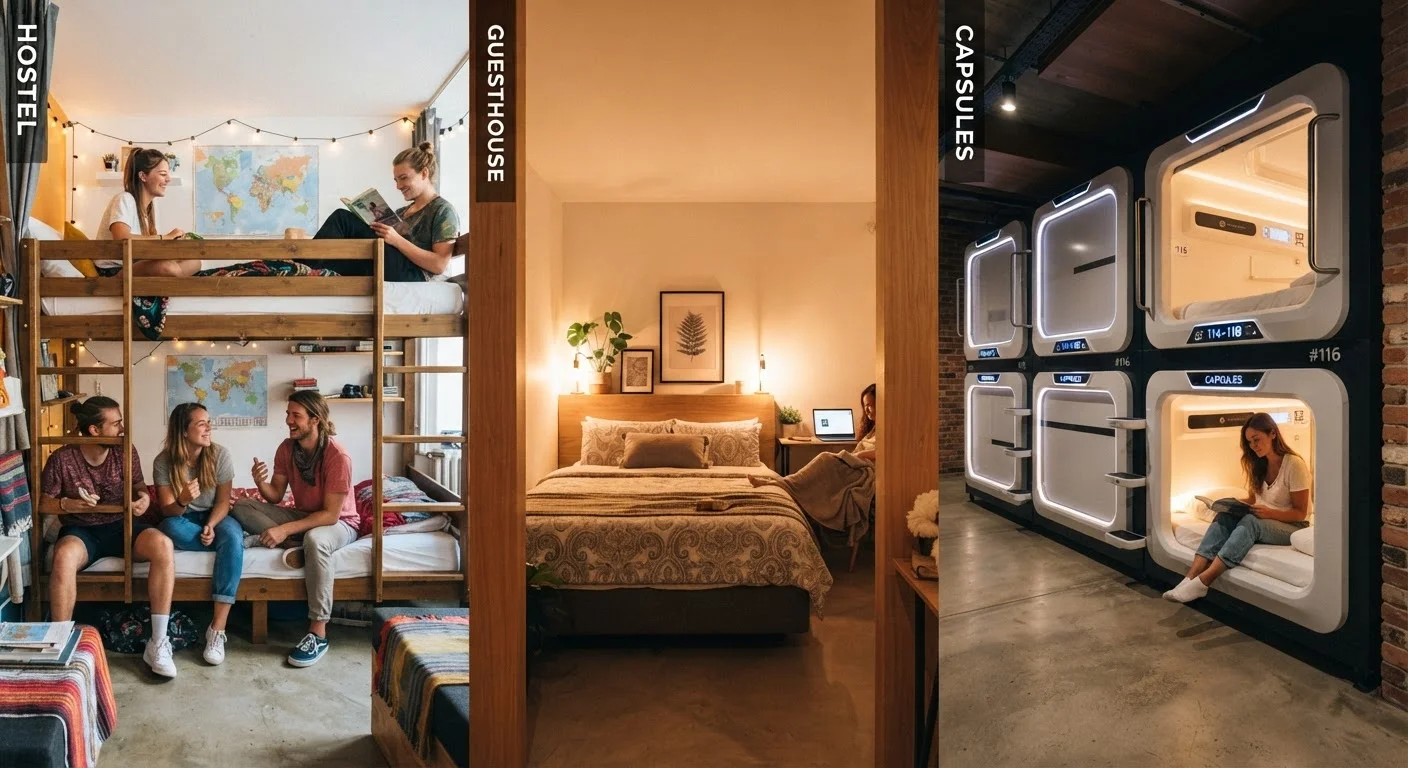
The tradeoff is shared space. Expect shared bathrooms, limited storage, and varying levels of noise depending on your dorm-mates. Light sleepers often find earplugs and a sleep mask non-negotiable. The social upside is real, though: hostel common rooms and organized events are genuinely one of the easier ways to meet other travelers when you're on the road alone.
Check Hostel Reviews Carefully Before Booking
A hostel's star rating matters less than its recent reviews on noise, cleanliness, and security. Look specifically for comments about locker availability and bathroom ratios - these two factors shape your day-to-day comfort more than most other features. Reviews from solo travelers tend to be the most useful comparison point if you're traveling alone.
If you're planning to stay put for several nights in one city rather than hopping between destinations, you may find that weekly rates at hostels or guesthouses reduce your per-night cost significantly. For more on that tradeoff, see our piece on slow travel vs. city-hopping.
Guesthouses: More Privacy, Local Character
A guesthouse typically means a private or semi-private room in a smaller, often family-run property. They sit in the middle of the price spectrum - pricier than a hostel dorm but cheaper than a standard hotel - and they vary enormously by region. In parts of Southeast Asia and South America, guesthouses are often the default budget option, offering clean private rooms with en-suite bathrooms for under $30 a night.
What guesthouses do well is character. Owners who live on-site tend to give straightforward local recommendations rather than tourist-brochure suggestions. The atmosphere is quieter than a hostel, and you typically don't share a room with strangers. The limitations are less predictable quality standards and fewer built-in social opportunities. Vetting recent reviews matters more here than with established hostel chains.
The privacy dynamic of guesthouses shares some DNA with shared housing situations back home. Our guide on navigating shared living arrangements covers similar territory around managing shared space expectations.
Capsule Hotels: Compact, Clean, and Surprisingly Private
Capsule hotels originated in Japan and remain most common there, though the format has spread to parts of Southeast Asia, Europe, and beyond. Each guest gets a pod - a bed-sized enclosed space with a light, power outlet, and usually a privacy curtain or sliding door. Bathrooms and common areas are shared, but the sleeping environment itself is genuinely more private than a dorm bunk.
Capsule hotels tend to be well-maintained and run with consistent standards, which makes them an appealing option for travelers who want predictability. They're not always the cheapest option - in Tokyo, a capsule might cost $30-$60 per night - but you're getting a level of cleanliness and structure that cheaper dorms don't always deliver. The main constraint is space: capsules are designed for sleeping and not much else. If you need room to spread out gear, work at a desk, or decompress with some physical space, a guesthouse room serves you better.
Some travelers assume all budget accommodation means uncomfortable or unsafe conditions. Our budget travel myths piece addresses that directly - capsule hotels in particular tend to challenge the assumption that cheap means low quality.
How to Choose: Key Questions to Ask Yourself
The right accommodation isn't the cheapest one - it's the one you'll actually sleep well in and feel comfortable using. Before booking, run through these questions:
- How sensitive are you to noise and light? If you're a light sleeper, a hostel dorm will cost you rest that affects the rest of your trip.
- How much do you value meeting other travelers? If connecting with people on the road matters, hostels and some guesthouses have built-in social infrastructure.
- How long are you staying? Guesthouses and hostels with weekly rates often make more financial sense for stays longer than three or four nights.
- What destination are you in? Capsule hotels are plentiful in Japan but rare in Central America. Guesthouses dominate in parts of Southeast Asia. Match expectations to what's actually available.
- What's your packing setup? Capsule pods and hostel dorms offer limited storage. A private guesthouse room gives you space to unpack properly.
This article provides general travel information only. Prices, availability, and accommodation standards vary widely by region and change over time. Always verify current conditions and read recent traveler reviews before booking. For entry requirements, local regulations, or safety advisories, consult your government's official travel guidance.