Why Distraction Research Surprises Most Drivers
Ask most drivers what causes distracted driving crashes and they'll say: smartphones. They're not wrong - but they're far from complete. Research consistently shows that distraction behind the wheel covers a much wider range of behaviors, many of which drivers don't recognize as dangerous at all.
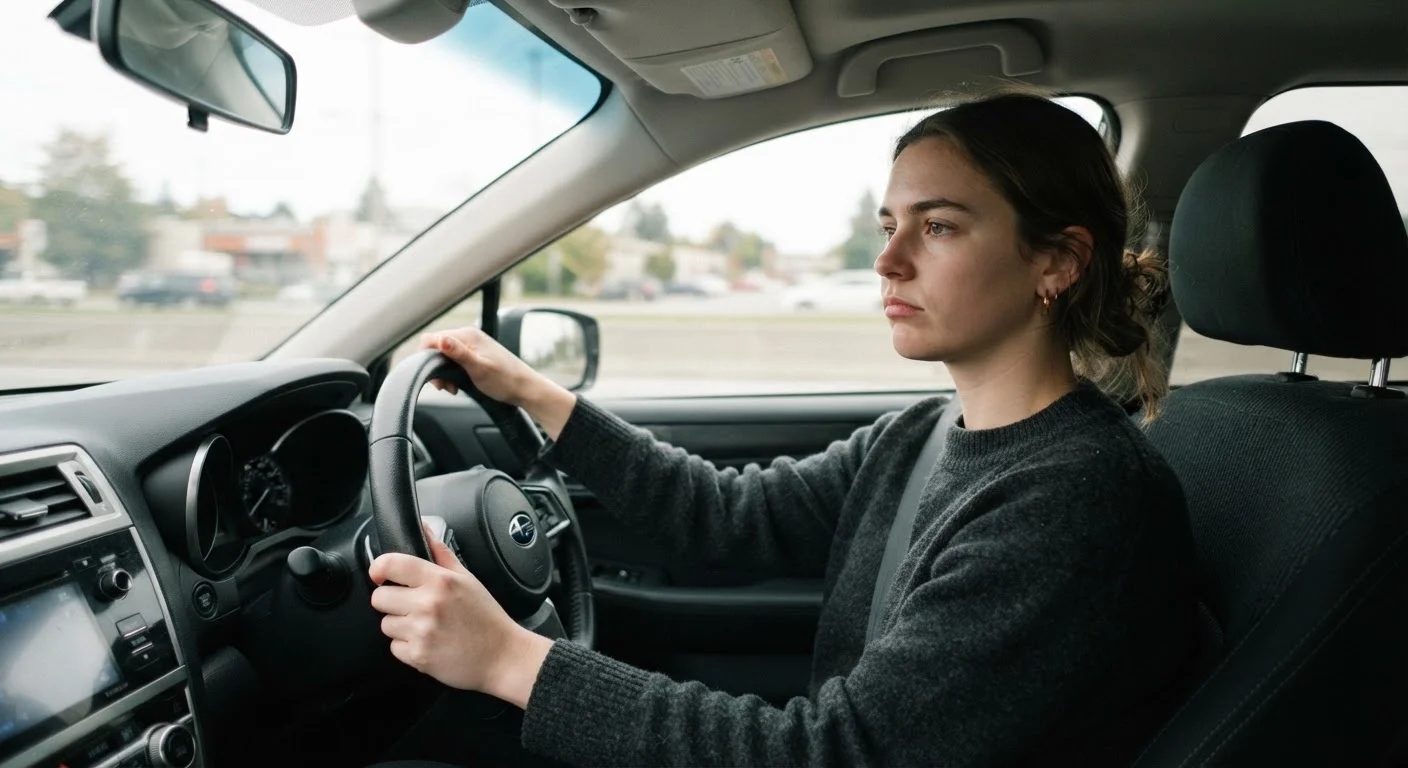
Distraction generally falls into three categories: visual (eyes off the road), manual (hands off the wheel), and cognitive (mind off the task). Texting is dangerous precisely because it hits all three at once. But cognitive distraction - a wandering mind - can occur even with both hands on the wheel and eyes pointed forward. That's what makes it so easy to underestimate.
For new drivers especially, the risk is amplified. Experienced drivers have built a degree of automaticity - certain responses happen with less conscious effort. Newer drivers are still actively processing every lane change and merge, leaving less mental bandwidth to spare. Understanding which distractions are most underestimated is the first step to managing them. See also our guide to defensive driving mental habits for the broader mindset framework that supports safe driving.
Passenger Conversations
Talking to passengers is so normal it barely registers as a distraction - but research has consistently placed it among the most common factors in crashes. Unlike a phone call, a passenger is physically present, which means conversations can become reactive: a sudden comment, a pointing gesture, or an emotional exchange all compete for your attention at unpredictable moments.
The dynamic is especially pronounced for newer drivers who haven't yet developed the ability to automatically filter out in-cab noise. Keeping the conversation low-key on unfamiliar roads or in heavy traffic isn't antisocial - it's a practical safety measure.
Passenger conversations are among the most common crash factors, yet rarely feel like a real risk.
Daydreaming and Mind-Wandering
Studies examining crash causation have found that mind-wandering - thinking about something entirely unrelated to driving - accounts for a significant share of distraction-related incidents. Unlike texting, there's no visible cue that it's happening, which is exactly why it's so underestimated.
Long, familiar routes are especially prone to triggering this. When roads become automatic, the brain disengages. A useful counterhabit is to actively narrate traffic conditions to yourself, which keeps conscious attention tethered to the task. Fatigue accelerates mind-wandering, so adequate rest before longer trips matters more than drivers often acknowledge. Night driving in particular compounds this risk.
Mind-wandering on familiar routes is one of the most common - and least visible - forms of distraction.
Hands-Free Phone Calls
Many drivers assume that switching to a hands-free device solves the distraction problem. It resolves the visual and manual elements, but not the cognitive one. Active conversation requires the brain to process language, formulate responses, and maintain social engagement - all while trying to monitor a dynamic driving environment.
Research from traffic safety bodies suggests that hands-free calls can still meaningfully reduce a driver's ability to detect hazards and respond quickly. This doesn't mean never take a call, but understanding the residual risk helps you make better decisions - such as pulling over for complex or emotionally charged conversations.
Hands-free calls still demand enough cognitive load to meaningfully slow hazard detection.
Adjusting In-Car Controls While Moving
Fiddling with the climate control, changing a radio station, or scrolling through a phone-connected media interface all pull at least one hand off the wheel and your eyes briefly off the road. Modern infotainment systems - despite being designed for in-car use - can require multiple taps or glances to navigate.
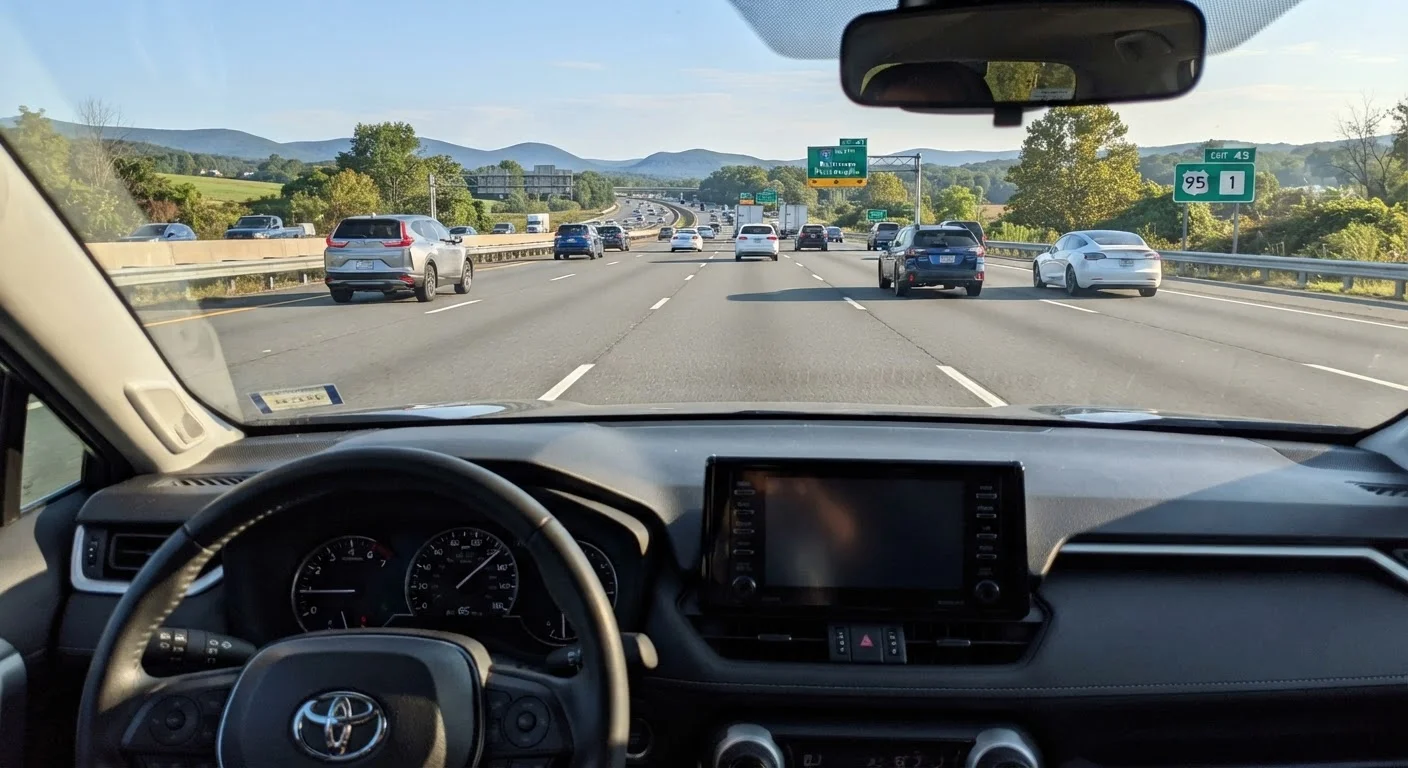
At 60 mph, looking away for just two seconds means traveling roughly 176 feet without watching where you're going. The fix is simple in principle: set everything before moving. If you need to make adjustments en route, do it at a stop or pull over safely. This also applies to GPS - recalculating a route mid-trip is a significant distraction trigger.
At highway speeds, a two-second glance at a dashboard screen covers nearly two car lengths of blind travel.
Eating or Drinking While Driving
Drive-through culture has normalized eating behind the wheel, but unwrapping food, managing spills, or reaching for a drink engages both hands and often requires visual attention. Spilling a hot beverage or dropping food creates an immediate startle response that can cause abrupt steering inputs at the worst moments.
Beyond the mechanics, eating introduces an ongoing source of intermittent manual distraction across however many minutes the meal lasts. It's one of the few distractions that can be entirely eliminated with a simple habit shift: finish eating before you drive, or wait until you've parked.
Eating while driving creates repeated, intermittent manual and visual distraction across the full length of a meal.
Loud or Emotionally Charged Music
Music affects driving behavior in measurable ways. Research has found associations between high-tempo or high-volume music and increased speed, reduced following distances, and delayed reaction times. The effect is partly physiological - music influences arousal and heart rate - and partly attentional, as engaging lyrics or a familiar song can pull cognitive focus.
This doesn't mean driving in silence, but choosing calmer, lower-volume audio on complex routes is a practical adjustment. Being honest with yourself about when a song is pulling your focus - and turning it down - is a small habit with a real safety payoff.
High-tempo music has been linked to faster speeds and slower reaction times in driving research.
Looking at Events Outside the Vehicle
Sometimes called "rubbernecking," looking at accidents, police stops, unusual roadside activity, or even attractive scenery is extremely common and widely underestimated as a hazard. It's a visual and cognitive distraction simultaneously, and it often happens on roads where other drivers are also distracted by the same event - concentrating the risk.
The instinct to look is natural, but training yourself to maintain road-ahead focus - rather than head-turning - takes conscious practice. It's a habit that connects directly to the broader skill of scanning rather than fixating, which is a core element of defensive driving.
Rubbernecking at roadside events creates clusters of inattentive drivers at exactly the wrong moment.
Building Better Pre-Drive Habits
The most effective moment to eliminate distractions is before you put the car in gear. Adjust mirrors, set your navigation, select your playlist, and secure any cargo while stationary. Tell passengers - especially young ones - what the ground rules are. Once the car is moving, changing these things costs you far more attention than you might expect.
Set a Pre-Drive Routine
Before shifting into drive, run a quick mental checklist: navigation set, mirrors adjusted, phone on Do Not Disturb, snacks put away. This two-minute habit eliminates most of the in-trip adjustments that fragment your attention. Over time it becomes automatic - which is precisely the goal.
Cognitive distraction doesn't disappear just because a conversation ends. Research has found that mental engagement can linger for several seconds after a call concludes - something worth remembering on busy roads. For a related look at how digital habits affect mental load even off the road, see how digital overload affects mental fatigue.
Distraction-aware driving is ultimately part of the same skill set as reading traffic, managing following distances, and anticipating hazards. If you want to build that full picture, stopping distances and following gaps is a useful companion read.
This article is for general informational and educational purposes only. Always follow your local traffic laws and consult official road safety guidelines for advice specific to your situation.