What Group Exercise Actually Involves
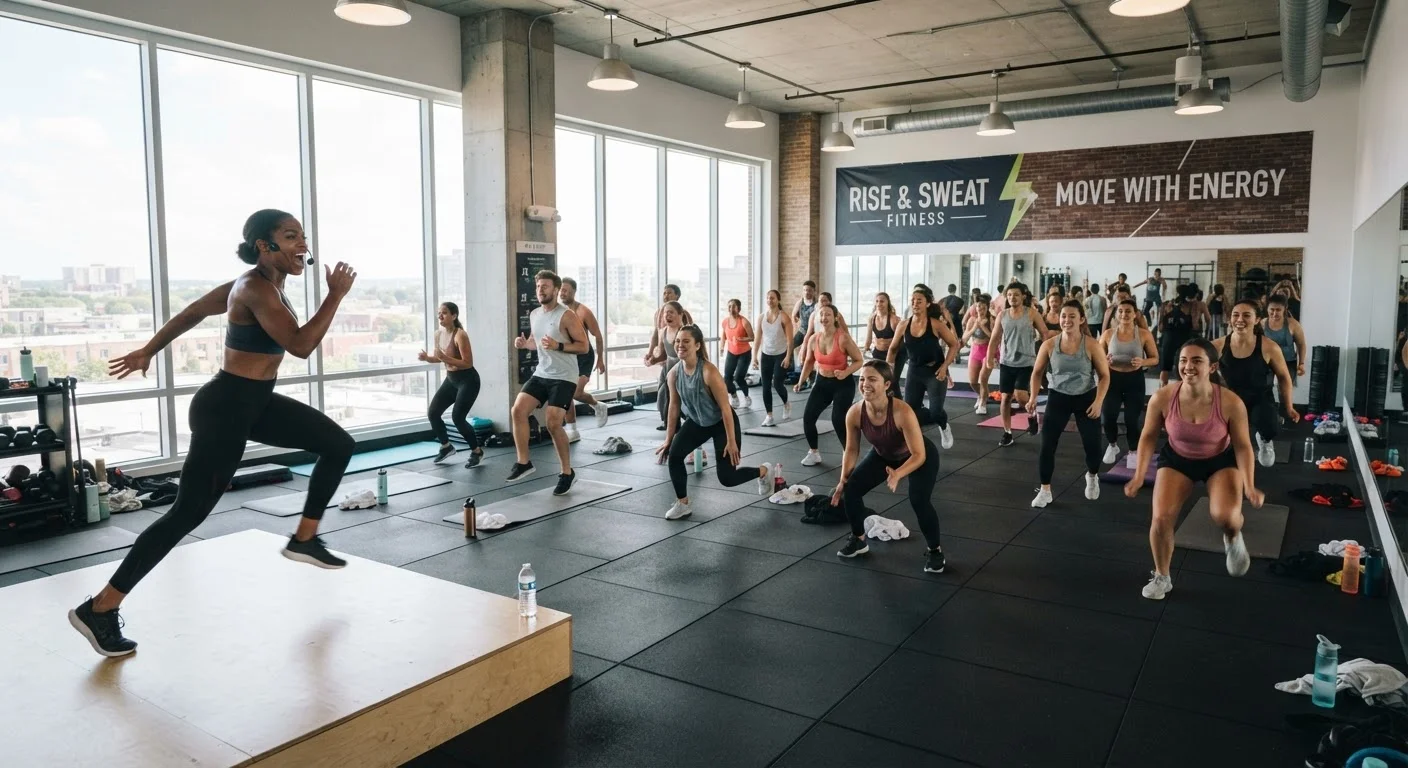
Group exercise covers a broad range of formats: structured fitness classes like cycling, yoga, dance cardio, and high-intensity interval training (HIIT), as well as community running clubs, recreational sport leagues, and bootcamp-style sessions. What they share is a common workout environment, often led by a qualified instructor, in which participants move together through a planned session.
For people just starting out, this structure can be enormously helpful. You don't need to design a workout, count sets, or decide what comes next - the instructor handles the programming while you focus on moving and learning. See our overview of strength training vs. cardio to understand how different exercise types fit together.
The Real Advantages of Working Out in a Group
Research in exercise psychology consistently points to social factors as some of the strongest drivers of physical activity. Here's what the evidence - and practical experience - suggests group settings do well.
Built-in accountability keeps attendance more consistent
Committing to a class - especially one you've booked in advance - creates a social contract that's harder to break than a self-made promise. Studies in behavioral psychology suggest external commitments are more reliable motivators than internal ones alone.
Instructor guidance reduces beginner form errors
A qualified instructor can spot and correct common technique mistakes in real time, which is particularly valuable for people new to exercise who may not yet recognize poor form themselves.
Social energy can push effort levels higher
Research on the 'Köhler effect' suggests people often work harder in group settings than alone, partly to keep pace with others and partly due to the motivating atmosphere. This can translate into genuinely more effective sessions.
Structured programming removes planning burden
The instructor designs the warm-up, workout, and cool-down. For beginners who don't yet know how to structure a safe, balanced session, this removes a significant barrier to getting started.
Variety keeps exercise from becoming monotonous
Many group formats introduce movements and training styles people wouldn't choose independently, helping build broader physical literacy and reducing the boredom that often derails long-term habits.
~20%
Greater effort output in group settings
Research published in the Journal of Sport & Exercise Psychology found participants exerted roughly 20% more effort when exercising in a group compared to training alone, an effect linked to social motivation.
26%
Reduction in stress among group exercisers
A study at the University of New England College of Osteopathic Medicine found that people who completed a group fitness program reported a 26% decrease in perceived stress over 12 weeks.
Beyond motivation, group classes often offer access to professional instruction at a lower cost than private personal training. An instructor can cue proper form for the whole class, reducing the risk of common beginner errors. For those new to movement, this real-time feedback is genuinely valuable - something that's harder to replicate with a solo workout app or video. Our guide on common exercise mistakes beginners make highlights exactly why guided instruction matters early on.
Where Group Exercise Falls Short
Group exercise isn't universally ideal. Understanding its limitations helps you use it more strategically rather than assuming it's the default best option.
Fixed schedule limits flexibility
Classes run at set times, which doesn't always align with unpredictable work schedules, travel, or life demands. Missed classes can lead to a gap in routine that's hard to restart.
Shared pace doesn't suit all fitness levels
In mixed-level classes, the pace is set for the group average. Beginners may find it too fast; more experienced participants may find it too slow to produce meaningful adaptation.
Limited personalization for specific goals
If you're working toward a defined goal - such as running a 5K or building functional strength - a general group class may not target the adaptations you specifically need.
Social environment can feel intimidating
For some beginners, exercising in front of others - particularly in a skill-based or choreographed class - creates anxiety that outweighs the motivational benefits, at least initially.
Cost can add up compared to solo training
Boutique fitness studios in particular can carry a high per-class price. Over a month, the cost may exceed a standard gym membership that offers more scheduling freedom.
Pacing is one of the most underappreciated limitations. In a group class, the instructor sets the tempo for everyone. If you're recovering from an injury, a beginner in a mixed-level class, or simply having an off day, keeping up can mean pushing harder than is appropriate - or feeling left behind. This matters especially for low-impact exercise approaches, where individual modification is often more important than group momentum.
Modification Is Always an Option
Most reputable group fitness instructors offer modifications for different ability levels within the same class. If you're new, injured, or returning after a break, it's worth arriving a few minutes early to let the instructor know - they can tailor cues and suggest safer alternatives for specific movements. Never feel obligated to match the group if it means compromising your safety.
How to Decide If It's Right for You
The question isn't whether group exercise is objectively good or bad - it's whether it fits your current goals, personality, and lifestyle. A few practical considerations can help clarify this.
If you find solo workouts easy to skip, a scheduled class with a booking commitment adds useful friction to quitting. If you're intimidated by gym equipment and unsure where to start, a structured class removes much of that uncertainty. On the other hand, if you have specific performance goals - building strength to a particular standard, training for an event - you may find group classes too general to meet your needs.
Many people get the most out of combining formats: attending two or three group classes per week for community and variety while doing one or two solo sessions tailored to personal goals. Our comparison of home workouts and gym sessions can help you think through where group classes fit within a broader routine.
This article is for general informational purposes only and does not constitute medical or fitness advice. Consult a qualified healthcare or fitness professional before beginning a new exercise program, particularly if you have any health conditions or injuries.