
Why Your Choice of Practice Actually Matters
Mental wellness habits are not one-size-fits-all. A practice you genuinely look forward to will always outperform a technically superior one you avoid. Journalling, meditation, and breathwork are three of the most widely researched self-care tools available - each with distinct mechanisms, time commitments, and best-fit personalities.
Understanding what each practice actually does helps you make an informed choice rather than defaulting to whatever feels trending. If you're also trying to build broader habits around reflection and growth, the Mindset & Habits hub offers a useful starting framework.
~58%
Adults reporting chronic daily stress
Surveys consistently indicate a majority of adults experience significant stress regularly, highlighting the need for accessible coping tools.
15 mins
Median effective session length in mindfulness studies
Research reviews suggest sessions as short as 10-15 minutes can produce measurable well-being benefits when practiced consistently.
Journalling: Thinking on Paper
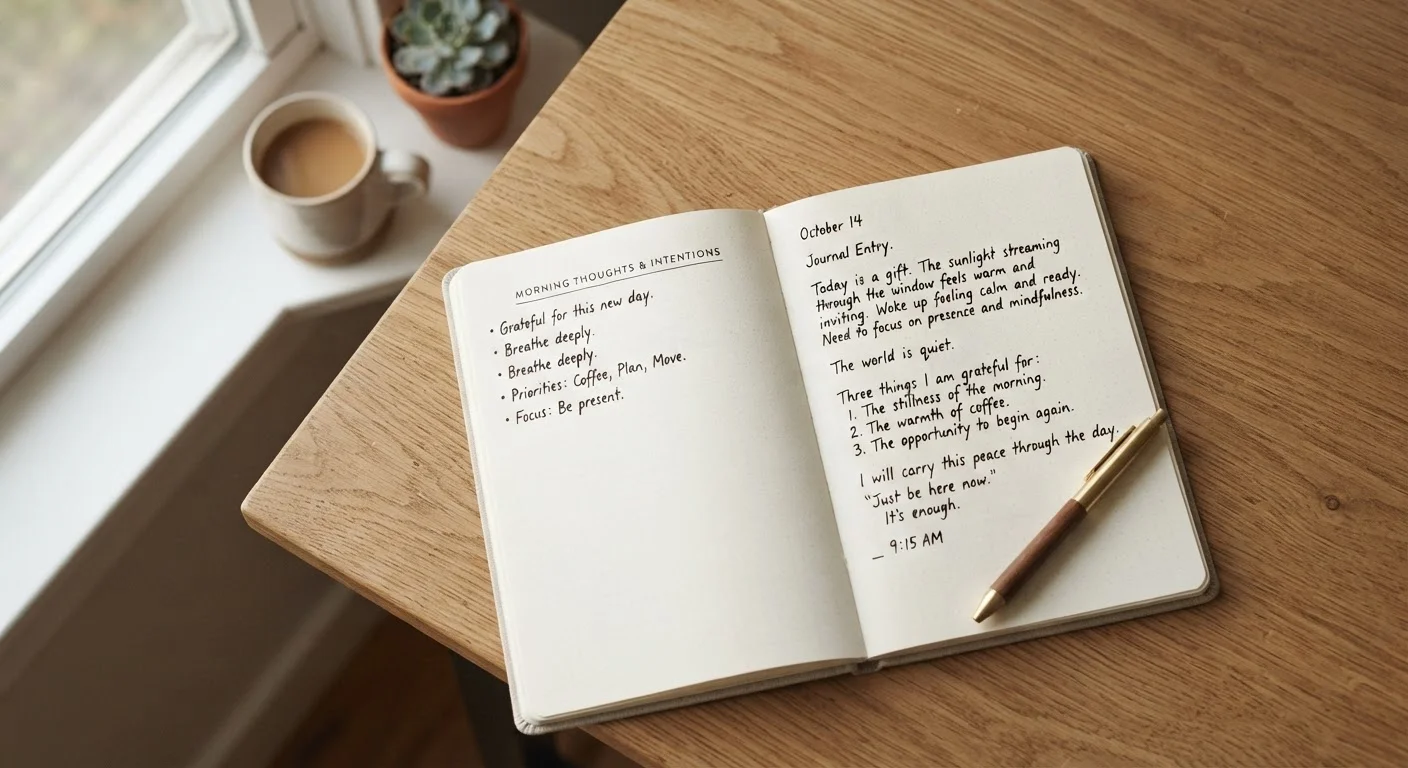
Journalling works by externalising internal mental chatter. Writing about stressful events - a process researchers call expressive writing - has been associated with reductions in psychological distress and improvements in emotional clarity in multiple peer-reviewed studies. It is particularly well-suited to people who feel overwhelmed by circular thinking or who want to track patterns in mood and behaviour over time.
The main limitation is that unstructured venting can occasionally reinforce rumination rather than resolve it. Structured prompts - such as gratitude lists, cognitive reframing questions, or brief reflections on what went well - tend to produce better outcomes than open-ended emotional dumping. For a deeper look at what the evidence says about different journalling approaches, see what works and what doesn't in journalling for self-reflection.
Time commitment: 5-15 minutes. No special equipment or conditions required.
Meditation: Training Attention and Emotional Regulation
Meditation is a broad term covering many techniques - mindfulness meditation, body scan, loving-kindness, and transcendental meditation among them. What most forms share is a deliberate focus on present-moment awareness, which research suggests strengthens the brain's capacity to regulate emotional responses over time. Meta-analyses have found mindfulness-based practices associated with reduced anxiety and improved attention, though effect sizes vary considerably across studies.
The barrier for beginners is often impatience: the early sessions can feel frustrating rather than calming. Guided audio apps and short sessions (starting at five minutes) significantly improve adherence. Meditation is best suited to those willing to invest a few weeks before noticing meaningful change. It pairs well with the weekly mental wellness check-in as a way of monitoring your progress honestly.
Time commitment: 5-20 minutes. Quiet space helpful but not strictly required.
Start Smaller Than You Think You Should
Consistency matters far more than duration when building any new mental wellness habit. Committing to just two to five minutes daily for the first two weeks reduces the friction that causes most people to quit. Once the routine feels automatic, extending the session becomes much easier - and the habit is far less likely to collapse during a busy week.
Breathwork: Fast-Acting Physiological Relief
Breathwork refers to intentional control of breathing rate and depth. Techniques such as diaphragmatic breathing, box breathing (equal counts of inhale, hold, exhale, hold), and the physiological sigh (a double inhale followed by a slow exhale) activate the parasympathetic nervous system - the body's rest-and-digest mode - often within minutes. Research published in peer-reviewed journals, including work from Stanford's neuroscience department, supports the idea that deliberate slow exhales can rapidly lower heart rate and perceived stress.
Unlike meditation, breathwork does not require sustained focus or quiet surroundings, making it accessible during a stressful commute or a tense moment at work. Its main limitation is that it addresses acute stress more effectively than it builds long-term emotional resilience. Pairing it with awareness of which daily habits might be quietly undermining your calm - explored in everyday habits that quietly erode your emotional resilience - can strengthen its effect.
Time commitment: 2-10 minutes. No equipment needed.
How to Choose - and Where to Start
| Journalling | Meditation | Breathwork | |
|---|---|---|---|
| Primary benefit | Emotional clarity, pattern recognition | Attention regulation, long-term calm | Fast acute stress relief |
| Time to feel results | Days to weeks | Weeks to months | Minutes |
| Learning curve | Low - prompts help beginners | Moderate - patience required early | Very low - technique is simple |
| Minimum daily time | 5 minutes | 5 minutes | 2 minutes |
| Best setting | Quiet, private space | Quiet space preferred | Anywhere, anytime |
| Evidence base | Strong (expressive writing research) | Strong (mindfulness meta-analyses) | Growing (autonomic nervous system studies) |
If you are genuinely unsure, breathwork is the lowest-friction entry point: it requires no learning curve, no equipment, and produces noticeable results quickly enough to provide motivation. From there, layering in journalling or meditation becomes more manageable.
For those who want a structured weekly rhythm that incorporates all three tools, the weekly mindset and habits reset checklist provides a practical audit to keep your practice consistent. Your physical environment also matters more than most people realise - small environment changes that support a calmer headspace offers actionable adjustments worth considering alongside any new practice.
This article is for general informational and educational purposes only and is not a substitute for professional mental health advice, diagnosis, or treatment. If stress, anxiety, or related symptoms are significantly affecting your daily life, please consult a qualified healthcare or mental health professional.