
Why the Distinction Matters
The terms mental health and mental wellness appear side by side in articles, apps, and everyday conversation - often as though they mean the same thing. They don't, and conflating them can lead to real confusion: underestimating when professional care is needed, or overlooking the value of everyday habits that protect psychological well-being.
Understanding where these two concepts differ - and where they overlap - helps you make more informed decisions about your own care. Think of it less as an either/or and more as two distinct but complementary dimensions of your psychological life.
This article is for general informational purposes only and does not constitute medical advice. Please consult a qualified mental health professional for any personal health concerns.
What 'Mental Health' Actually Means
Mental health is a clinical and medical concept. According to the World Health Organization, mental health encompasses emotional, psychological, and social well-being - but in practice, the term is most commonly used in the context of diagnosable conditions such as depression, anxiety disorders, bipolar disorder, and post-traumatic stress disorder (PTSD).
Mental health exists on a spectrum. Everyone has mental health, just as everyone has physical health. That health can be strong, compromised, or anywhere in between - and it can change over time in response to genetics, environment, life events, and access to care.
| Criterion | Mental Health | Mental Wellness |
|---|---|---|
| Primary focus | Diagnosing and treating conditions | Building resilience and balance |
| Framework | Clinical and medical | Lifestyle and behavioral |
| Who delivers it | Licensed professionals | Self-directed, with professional support |
| Goal | Reduce symptoms, restore function | Sustain everyday well-being |
| Examples | Therapy, medication, diagnosis | Mindfulness, sleep hygiene, exercise |
| Can exist without the other? | Yes - condition without wellness habits | Yes - wellness habits without a diagnosis |
When clinicians assess mental health, they look for specific symptoms, their duration, and how significantly they affect a person's ability to function in daily life. Treatment typically involves evidence-based interventions: psychotherapy, medication, or structured programs delivered by licensed professionals. To understand more about how self-help approaches compare with professional therapy, see our guide to therapy vs. self-help.
What 'Mental Wellness' Actually Means
Mental wellness is a broader, proactive concept. It refers to the day-to-day practices, habits, and mindsets that help a person feel emotionally balanced, purposeful, and resilient - not just the absence of a clinical diagnosis. For a deeper exploration, our article on what mental wellness actually means breaks this down in detail.
Mental wellness practices might include consistent sleep routines, physical activity, mindfulness or meditation, meaningful social relationships, and creative outlets. These are not medical treatments - but research consistently associates them with improved mood, reduced stress, and greater psychological resilience.
The Overlap Is Real - and Important
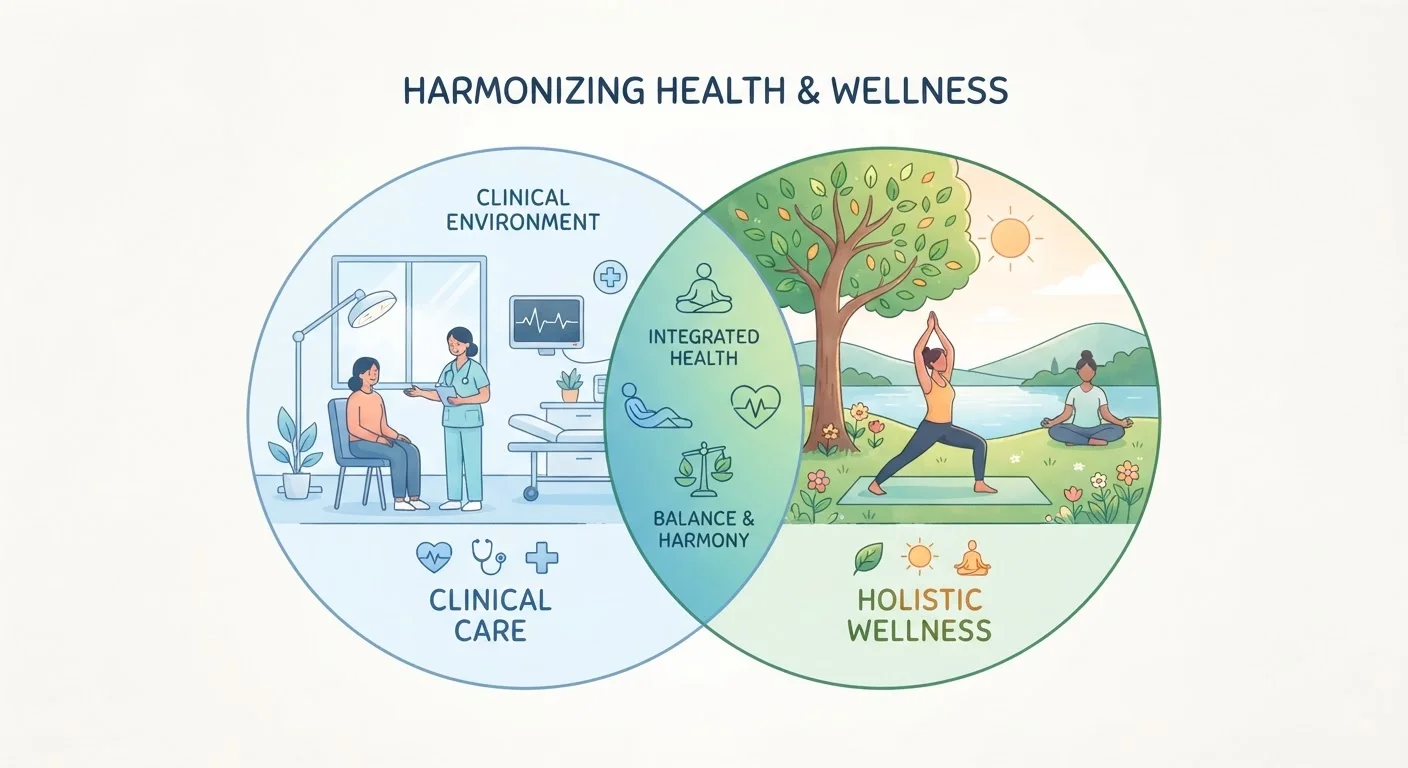
Mental health and mental wellness are not opposites, and they're not identical. Think of mental health as the clinical state of your psychological system, and mental wellness as the ongoing maintenance that supports it. Just as physical health involves both treating illness and building healthy habits, psychological well-being calls for both clinical care when needed and consistent wellness practices throughout life. Neither approach makes the other unnecessary.
An important nuance: someone can engage in excellent mental wellness habits and still develop a mental health condition. Wellness practices reduce risk and support recovery, but they don't prevent or cure diagnosable disorders. Likewise, someone managing a mental health condition can have robust wellness practices that complement their clinical care.
Putting Both to Work: Practical Starting Points
Understanding the distinction helps you take more targeted action. If you're noticing persistent changes in mood, sleep, concentration, or behavior that are affecting your daily life, the right first step is speaking with a licensed mental health professional - not simply adding a meditation app.
If you're generally functioning well but want to protect your psychological resilience, mental wellness practices are a practical and evidence-informed place to start. A weekly mental wellness check-in can help you spot patterns before they escalate.
1 in 5
U.S. adults experience a mental illness each year
According to the National Alliance on Mental Illness (NAMI), approximately 1 in 5 American adults lives with a mental health condition annually.
~50%
Reduction in stress linked to regular mindfulness practice
A meta-analysis published in JAMA Internal Medicine found mindfulness meditation programs associated with moderate improvements in anxiety, depression, and stress measures.
The two approaches work best in tandem. Clinical care addresses what's broken or imbalanced; wellness practices build the everyday foundation that makes psychological health sustainable. Neither is a replacement for the other - and recognizing which one a situation calls for is a meaningful skill in itself.
This content is intended for general educational purposes. Always seek the guidance of a qualified mental health professional for concerns about your mental health or well-being.