Why Floor Type Actually Changes How You Clean
It's easy to assume floors just need a mop and some cleaner - but the material underneath your feet determines nearly everything about how you should maintain it. Use the wrong method and you risk warping, dullness, mould, or voided warranties. The good news: once you understand what each surface is made of and what it can't tolerate, the right routine becomes obvious.
This guide covers the three most common residential floor types - solid or engineered timber, ceramic or porcelain tile, and laminate - and breaks down what each one actually needs. For a broader look at how floor care fits into your overall home upkeep, see our first-year homeowner maintenance guide.
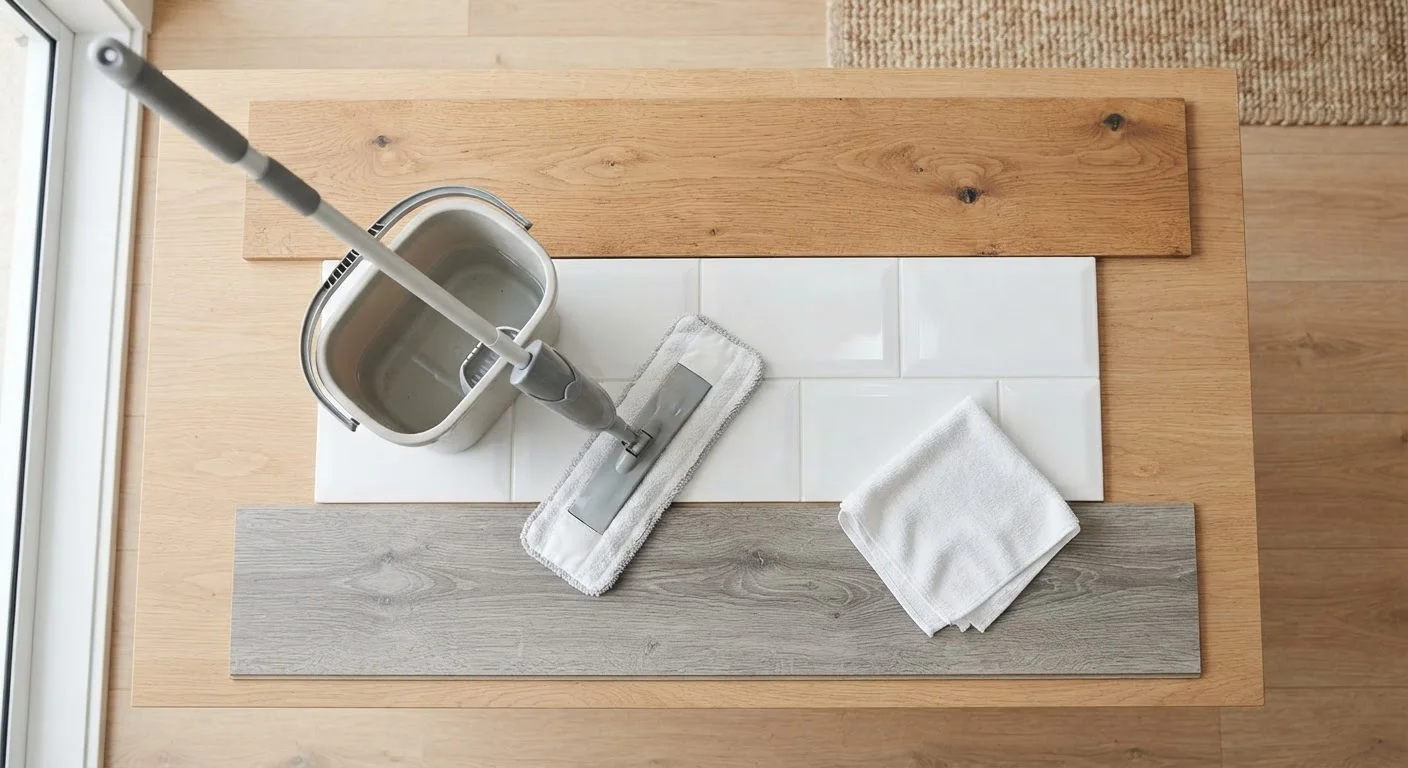
| Timber | Tile | Laminate | |
|---|---|---|---|
| Water tolerance | Low - wipe spills immediately | High - most water-resistant | Very low - no wet mopping |
| Steam mop safe? | No | Generally yes | No - voids most warranties |
| Recommended cleaner | pH-neutral hardwood cleaner | pH-neutral floor cleaner | Laminate-specific cleaner |
| Vulnerable area | Finish layer, seams | Grout lines | Seams, fibreboard core |
| Refinishable? | Yes, multiple times | Tile can be regrouted | No - wear layer cannot be sanded |
| Maintenance frequency | Weekly + periodic recoating | Weekly + monthly grout scrub | Weekly dry clean |
| Avoid | Vinegar, ammonia, steam | Abrasives, oil-based soaps | Steam, wax, excess water |
Timber Floors: Protect the Finish, Respect the Wood
Solid and engineered timber floors are finished with a protective coating - usually polyurethane or oil - and it's that finish you're mostly maintaining, not the wood itself. The key rule: keep moisture off it.
- Daily/weekly: Sweep or dry-mop to remove grit, which acts like sandpaper underfoot. A microfiber dust mop is ideal.
- Damp mopping: Use a well-wrung mop - it should feel barely damp, not wet. Water sitting on timber can seep into seams and cause swelling or cupping.
- Cleaners: Use a pH-neutral cleaner made for hardwood floors. Avoid vinegar, ammonia, or anything abrasive - these degrade the finish over time.
- Spills: Wipe up immediately. Even a few minutes of standing liquid can leave a mark or penetrate the finish.
- Long-term: Polyurethane-finished floors typically need recoating every 3-5 years depending on traffic. Oil-finished floors need periodic re-oiling.
Felt pads under furniture legs are one of the simplest protective habits you can build. Check out habits that quietly shorten the life of your home's surfaces for more on how daily routines add up.
Tile Floors: Tough Surface, Vulnerable Grout
Ceramic and porcelain tile is the most water-resistant of the three options and handles a wide range of cleaners without issue. The weak point isn't the tile itself - it's the grout.
- Regular cleaning: Sweep or vacuum first, then damp mop with a mild, pH-neutral floor cleaner. Tile tolerates more water than timber or laminate.
- Grout care: Grout is porous and stains easily. Scrub grout lines monthly with a stiff brush and a grout-appropriate cleaner. Sealing grout annually (or per the manufacturer's recommendation) dramatically reduces staining and mould growth.
- What to avoid: Highly acidic or abrasive cleaners can etch glazed tile surfaces. Steel wool and scouring pads scratch. Oil-based soaps leave a residue that attracts dirt.
- Grout discolouration: If grout has already darkened, a diluted oxygen bleach solution (check it's safe for your grout type) can lift staining. Avoid chlorine bleach on coloured grout - it can fade the pigment.
Seal Your Grout Before It Stains
Applying a grout sealer to freshly cleaned, dry grout is one of the most effective preventive steps you can take with tile floors. Most hardware stores carry penetrating sealers that soak in rather than sitting on the surface. Reapply roughly once a year, or whenever water stops beading on the grout surface - that's a reliable signal the sealer has worn through.
Tile's durability makes it genuinely low-effort, but neglected grout can become a hygiene issue and is costly to re-grout professionally. Consistency matters more than intensity here.
Laminate Floors: Looks Like Wood, Needs Different Rules
Laminate is a photographic image layer bonded to a fibreboard core with a protective wear layer on top. It mimics the look of timber convincingly, but its fibreboard core makes it highly vulnerable to moisture - arguably more so than real wood.
- Daily/weekly: Dry sweep or vacuum on a hard-floor setting (avoid beater bars, which can scratch the wear layer).
- Damp mopping: Use the minimum moisture possible - a spray mop with a lightly dampened pad works well. Never use a soaking wet mop or bucket-and-mop method.
- Steam mops: Avoid entirely. Steam forces moisture into seams and can cause the boards to swell, warp, or separate. Most laminate warranties explicitly exclude steam-related damage.
- Cleaners: Use a cleaner formulated for laminate. Avoid wax-based products (they build up and dull the surface), vinegar, and soap-based cleaners.
- Scratches: The wear layer resists light scratching but deep scratches aren't refinishable the way timber can be. Felt pads and avoiding dragging furniture are essential.
One common misunderstanding is treating laminate exactly like hardwood - home maintenance myths that could cost you money covers this and similar misconceptions worth knowing.
Building a Routine That Actually Sticks
The most effective floor care routine is the one you'll actually do consistently. A few structural habits help across all three floor types:
- Dry before damp: Always sweep or vacuum before any wet cleaning. Mopping grit into the floor damages surfaces and accelerates wear.
- Door mats and entry rules: A mat at every entry point reduces the volume of grit and moisture tracked in - this is probably the highest-impact single habit.
- Read your warranty documentation: Many floor warranties specify approved cleaners. Using the wrong product can void coverage, not just damage the surface.
- Seasonal checks: Timber in particular can react to humidity changes across seasons. Running a humidifier in dry winters and ensuring good ventilation in humid summers helps prevent gapping or cupping. For a broader seasonal framework, the seasonal home maintenance checklist is a useful reference.
Floor care is one part of a broader upkeep mindset - the same attention to detail that protects surfaces applies to systems throughout your home.