The Timeline: What Actually Happens After You Miss a Due Date
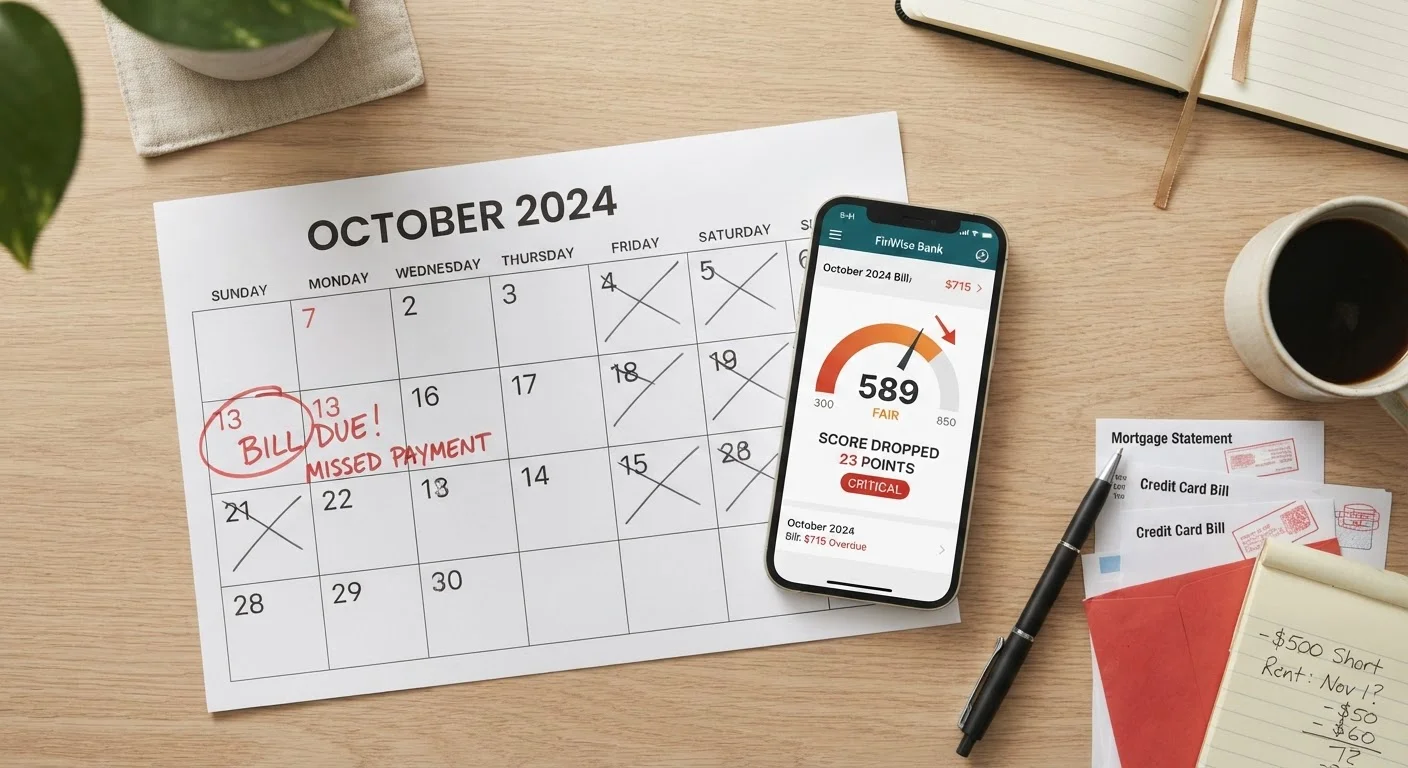
Missing a payment does not trigger an immediate catastrophe - but there is a clear sequence of events you should understand. Here is how it typically unfolds:
- Day 1-29: Your payment is late, and your lender will likely charge a late fee (often $25-$40 for credit cards). However, the missed payment has not yet been reported to the credit bureaus, so your credit score is unaffected at this stage.
- Day 30: Once 30 days have passed, most creditors report the delinquency to the three major credit bureaus - Equifax, Experian, and TransUnion. This is when your credit score is actually impacted.
- Day 60 and 90: Each additional 30-day interval without payment adds a more severe delinquency mark, causing compounding damage to your score.
- Day 120-180: At this point, many creditors charge off the account - meaning they write the debt off as a loss - and may sell it to a third-party debt collector. A charge-off is a serious negative mark on your report.
Understanding this timeline is important: if you realize you missed a payment, act as quickly as possible. Paying before the 30-day mark is your best chance to limit the damage.
Set Up Autopay to Prevent Future Misses
Enrolling in autopay for at least the minimum payment on each account removes the risk of forgetting a due date. You can always pay more manually, but autopay ensures you never accidentally cross the 30-day threshold. Check your bank or lender's account settings to enable this feature - it typically takes just a few minutes.
How a Missed Payment Affects Your Credit Score
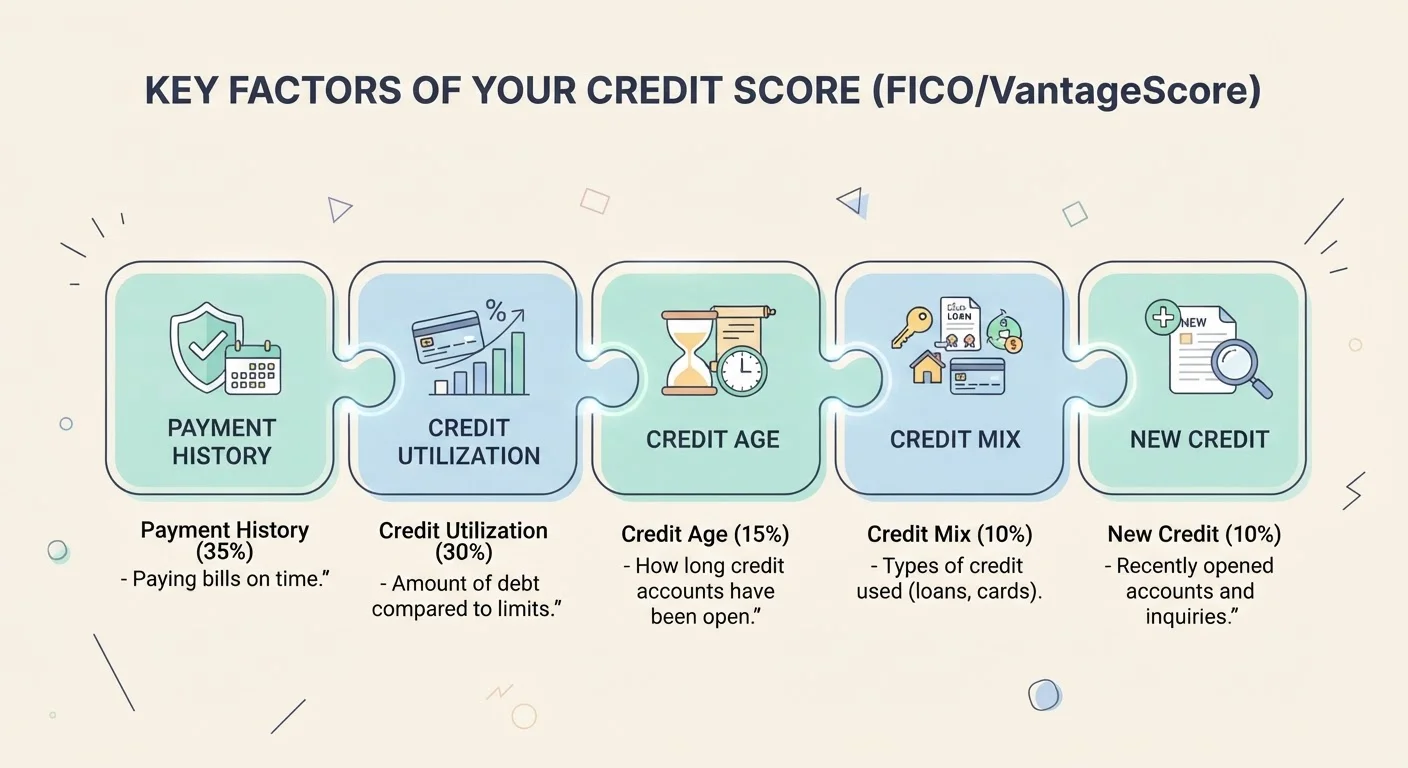
Your payment history is the single most influential factor in your FICO score, accounting for roughly 35% of the total. To understand why that matters so much, see our breakdown of the five factors that shape your credit score.
When a 30-day late payment is reported, the score drop can vary considerably based on two key variables:
- Your starting score: Counterintuitively, people with higher scores tend to see larger point drops from a single late payment. Someone with a score in the 780-800 range could see a drop of 90-110 points, while someone already in a lower range may see a smaller numerical decline.
- How late the payment is: A 30-day late mark does less damage than a 60-day or 90-day late mark. Each tier of delinquency is treated as progressively worse.
35%
Share of FICO score based on payment history
Payment history is the single largest factor in FICO scoring models, according to myFICO.com, making it the highest-leverage area to protect.
7 years
Maximum time a late payment stays on your report
Under the Fair Credit Reporting Act, negative payment marks can remain on your credit report for up to seven years from the original delinquency date.
30 days
Threshold before late payment is reported to bureaus
Most creditors report a delinquency to the three major credit bureaus only after a payment is 30 or more days past due, giving consumers a brief window to act.
Beyond the score itself, a lower score can affect the interest rates and terms you're offered on future borrowing. Our article on how your credit score shapes car finance deals illustrates one real-world area where this plays out directly.
How Recovery Works - and What Actually Helps
Recovery from a missed payment is straightforward in principle, though it requires patience. The most effective thing you can do is resume on-time payments immediately and consistently. Each month of positive payment history adds weight to the other side of the scale.
A few other steps worth taking:
- Pay the overdue balance as soon as possible. Getting current stops further delinquency tiers from compounding the damage.
- Contact your lender. If this is your first late payment and you have a good history, some creditors will waive the late fee or even consider a goodwill adjustment to remove the mark - though this is not guaranteed.
- Dispute errors only. If the late payment was reported incorrectly, file a dispute with the credit bureau under your FCRA rights. Do not dispute accurate information.
- Avoid new negative marks. One late payment on an otherwise clean record will fade. Multiple delinquencies, by contrast, compound the problem significantly.
Over time, the late payment's influence weakens. Most scoring models weight recent behavior more heavily, so 12-24 months of consistent on-time payments will generally improve your score meaningfully - even while the old mark is still technically on the report.
For a broader look at the behaviors that sustain strong credit long-term, see our guide on habits that support a healthy credit profile.
This article is for general informational and educational purposes only and does not constitute personalized financial or legal advice. For guidance specific to your situation, consider consulting a qualified financial professional.