
What Lenders Actually Look At
When you apply for a car loan or any finance agreement, the lender's first question is simple: how likely is this person to repay what they borrow? Your credit score gives them a quick, data-driven answer. But the score itself is a summary - lenders also review the underlying report, which details your payment history, how much existing debt you carry, the age of your accounts, and any derogatory marks like missed payments or collections.
To understand what's in your own file before a lender sees it, learn what a credit score actually measures and how each piece of data feeds into that three-digit number. Knowing what lenders see puts you in a much stronger position to anticipate their decision.
Lenders typically place applicants into risk tiers. Those in higher tiers receive lower interest rates because the lender views them as less likely to default. Those in lower tiers are charged more to compensate the lender for taking on greater risk.
How Your Score Translates to a Real Dollar Difference
The gap between a good credit score and a poor one isn't just abstract - it shows up directly in your monthly payment and the total amount you repay. Consider a $25,000 auto loan over 60 months. A borrower with a strong score might qualify for an APR around 6%, resulting in roughly $483 per month and about $28,980 paid in total. A borrower with a significantly lower score might face an APR closer to 16%, pushing the monthly payment to around $608 and the total cost to approximately $36,480 - a difference of over $7,500 for the exact same vehicle.
~$7,500+
Extra cost over a 60-month loan with poor vs. good credit
Based on a $25,000 loan comparing a 6% APR tier to a 16% APR tier over 60 months - illustrating the real financial impact of credit score differences.
14-45 days
Rate-shopping window before multiple inquiries count as one
Most major credit scoring models treat multiple auto loan inquiries within this window as a single hard inquiry, so comparing lenders does not compound score damage.
670+
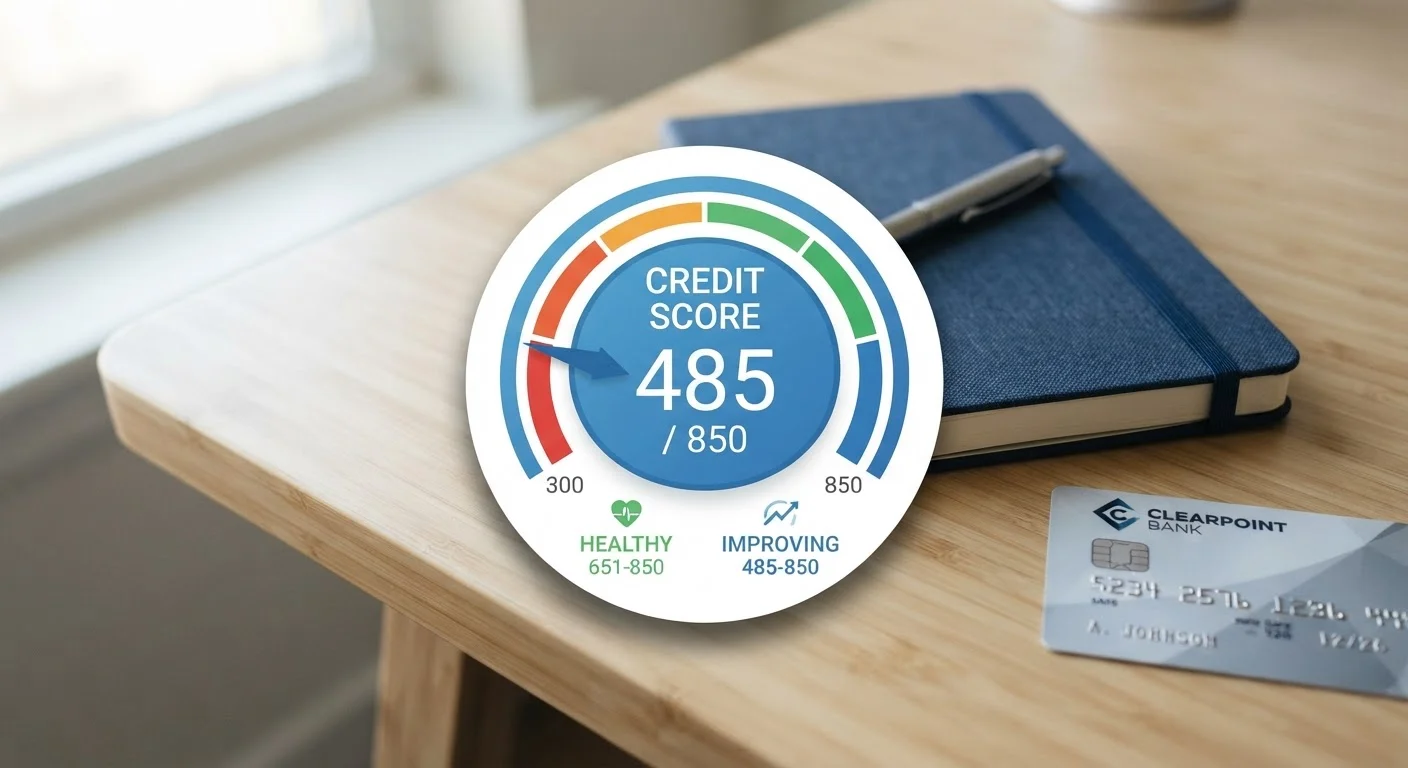
Score generally considered 'good' by most auto lenders
Scores above 670 on the 300-850 scale typically access more competitive APR tiers, though individual lender criteria vary widely.
This is why your credit position matters so much before you step into any financing conversation. For a plain-English comparison of the different finance products you might encounter, see Car Finance Explained: PCP, HP, and Personal Loans Side by Side.
The Key Factors Moving Your Score Right Now
Your credit score isn't static - it responds to your financial behavior on a rolling basis. The factors that carry the most weight include payment history (the biggest single driver), your credit utilization ratio, the length of your credit history, the mix of credit types you hold, and how recently you've opened new accounts.
For a detailed breakdown of how each factor is weighted and what you can realistically do about each one, explore the five factors that shape your credit score. Understanding these levers is the first step to deliberately improving your profile before you apply.
Rate-Shop Within a Short Window
If you plan to compare offers from multiple lenders, submit all your applications within a 14-45 day period. Most credit scoring models treat these as a single inquiry rather than penalizing you for each one separately. This gives you room to shop without worrying about repeated score hits.
Practical Steps Before You Apply
Checking your own credit report is a free, zero-risk starting point - pulling your own report counts as a soft inquiry and has no effect on your score. You're entitled to a free report from each bureau annually at AnnualCreditReport.com. Review each report carefully for errors such as accounts you don't recognize or payments incorrectly marked as late, and dispute any inaccuracies directly with the bureau.
If your score needs work, even three to six months of on-time payments and reduced balances can produce a noticeable improvement. If you're ready to move forward, run through a pre-commitment checklist before signing any car finance contract to make sure you understand every term.
For broader guidance on managing credit as part of your overall financial picture, the Credit & Debt hub covers loans, scores, and responsible debt management in one place.
This article is for general informational and educational purposes only and does not constitute financial advice. Consult a qualified financial professional for guidance specific to your situation.