
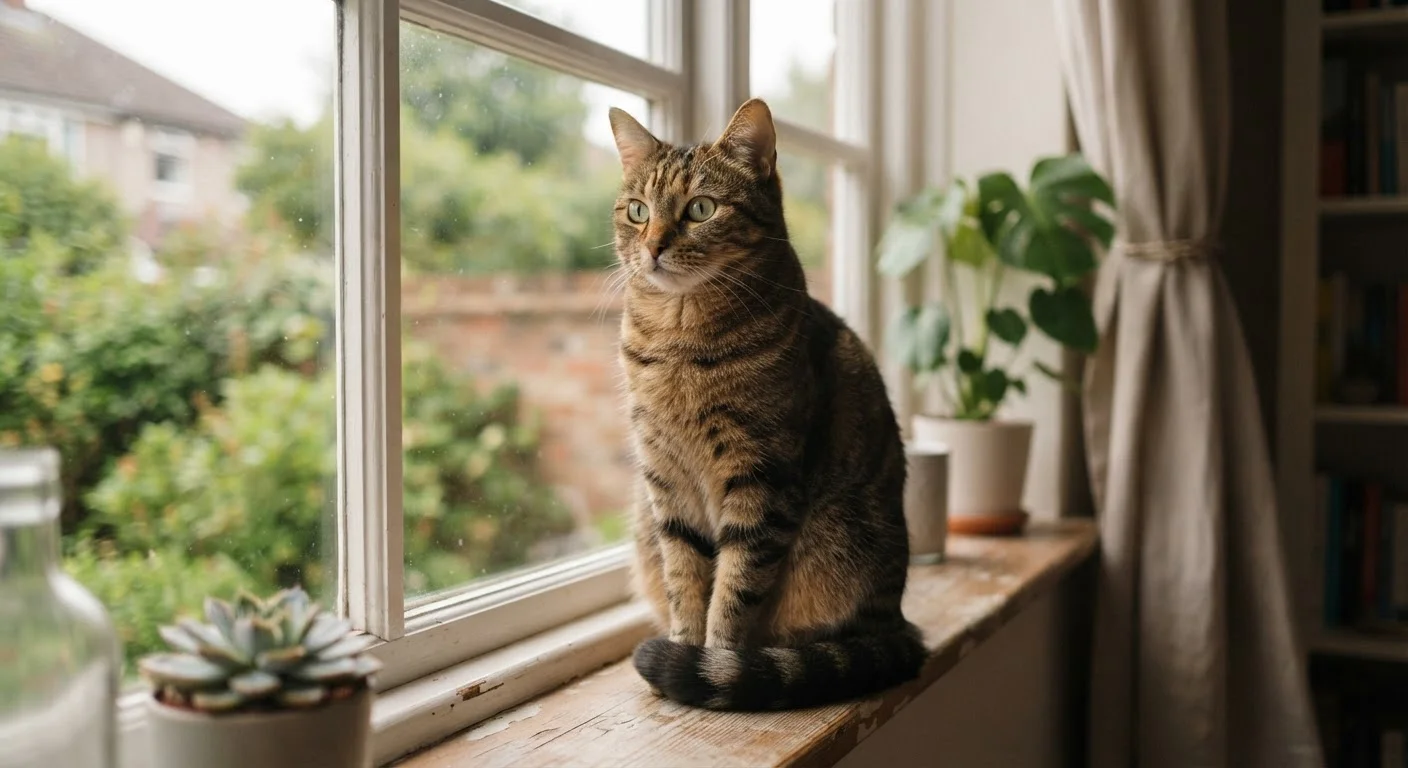
Why Feline Body Language Matters
Cats don't meow to other cats in the wild - that vocalization evolved largely as a way to communicate with humans. But the deeper language of feline emotion lives in the body: ears, eyes, tail, posture, and whiskers all shift in response to how your cat is feeling moment to moment.
Learning to read these signals is one of the most practical skills a new cat owner can develop. It reduces accidental stress on your pet, helps you spot discomfort early, and makes every interaction feel more intentional. This guide gives you a reliable reference for the most common signals your cat sends every day.
For a broader look at what healthy behavior looks like, see signs of a thriving pet that first-time owners often miss.
| Primary communication channel | Body posture and movement |
| Trust signal to look for | Slow blink with relaxed posture |
| Warning sign requiring space | Flattened ears plus puffed tail |
| Tail-up greeting means | Confident, friendly approach |
| Rapid tail lashing signals | Irritation or overstimulation - stop petting |
| Exposed belly indicates | Deep relaxation, not necessarily a touch invitation |
Decoding the Key Body Signals
Ears
Forward-pointing ears signal curiosity or engaged attention. Ears rotated sideways - sometimes called "airplane ears" - indicate mild unease or overstimulation. Ears flattened tightly against the skull are a clear warning: your cat feels threatened or is preparing to defend itself. Always give a flat-eared cat space before attempting contact.
Eyes and Slow Blinks
Dilated pupils in a brightly lit room can signal fear, excitement, or pain rather than low light. Narrowed pupils in a relaxed cat often mean calm contentment. The famous slow blink - a long, deliberate closing and reopening of the eyes - is widely considered a feline signal of trust and comfort. Returning a slow blink to your cat is a simple, evidence-supported way to reinforce your bond.
Tail Position
A tail held high and upright is a confident, social greeting - cats approaching you this way are comfortable and friendly. A puffed tail indicates fear or arousal. A low, tucked tail signals anxiety. Rapid side-to-side lashing is not happiness; it usually means your cat is overstimulated or irritated, and petting should stop.
Whiskers and Posture
Whiskers fanned forward suggest curiosity. Whiskers pinned back against the face accompany stress or aggression. A cat with a rounded, hunched posture and tucked limbs is trying to appear small - a sign of fear or discomfort. An exposed belly, by contrast, signals deep relaxation but is not always an invitation to touch; many cats find belly contact overstimulating.
Slow blink
A deliberate, unhurried closing and reopening of a cat's eyes, generally interpreted as a signal of trust and relaxed comfort. Returning a slow blink to your cat is a commonly recommended bonding technique.
Airplane ears
A colloquial term for ears rotated sideways or outward from the head. This posture signals mild stress, irritation, or sensory overload and often precedes full ear-flattening.
Piloerection
The involuntary raising of fur along the back and tail, creating a puffed appearance. It occurs in response to fear or high arousal and is not under the cat's conscious control.
Kneading
A rhythmic pushing motion made with alternating front paws, often against soft surfaces or a trusted person. It originates from nursing behavior and is generally a strong indicator of contentment.
Overstimulation
A state where a cat's nervous system becomes overwhelmed by too much physical contact or sensory input, often signaled by tail lashing, skin rippling, or sudden biting during what seemed like a pleasant petting session.
Bunting
The behavior of pressing the forehead or cheeks against a person or object. Cats deposit scent through facial glands this way, and bunting toward a person is a clear sign of social affiliation and comfort.
Reading Combined Signals - and When to Act
No single cue tells the whole story. A cat with dilated pupils and flattened ears and a puffed tail is expressing strong fear or aggression - these signals compound each other. A cat who slow-blinks, holds its tail upright, and kneads softly is communicating deep contentment across multiple channels simultaneously.
Context matters just as much as posture. A new environment, a stranger in the home, a recent vet visit, or an unfamiliar smell can all shift your cat's baseline. When reading your cat, ask: What changed recently? That question often reveals the cause.
Sudden or dramatic shifts in body language - especially hiding, prolonged crouching, or unusual stillness - can sometimes point to physical discomfort rather than just emotion. The signs your pet may be in pain guide covers what to watch for and when to involve a veterinarian. Similarly, sudden behaviour changes in pets deserve closer attention than most owners initially give them.
When in doubt about whether a behavioral change reflects emotion or health, consult your veterinarian. Body language is a tool for understanding your cat better - not a substitute for professional veterinary assessment.
This article is for general informational and educational purposes only and does not constitute veterinary advice. Always consult a licensed veterinarian for guidance specific to your pet's health and behavior.